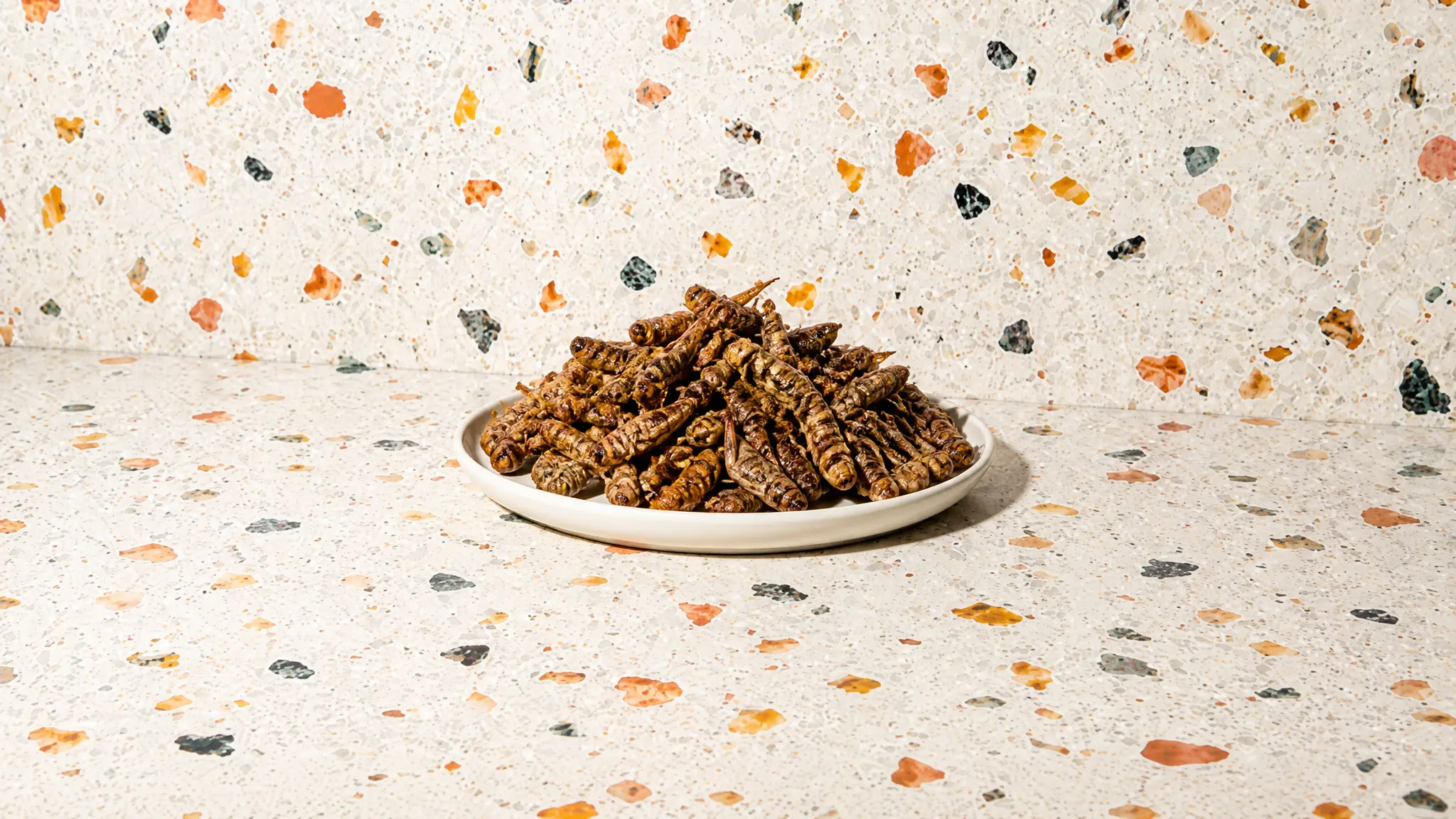
Grasshoppers
Insect
Last updated July 5, 2026. The Tummi Food Team maintains this Can I Feed This safety guide guide. Supporting links appear in Sources when available.



Clinically reviewed by Andria Procopio and Arefa Mohamed
Direct answer
Can babies eat Grasshoppers?
Yes, babies can eat cooked grasshoppers around 6 months, prepared in an age-appropriate, safe manner, and observing choking risk precautions.
- Serve Age6+months
Most babies start solids around 6 months once they show readiness signs. Match the texture and serving size to your baby's skills.
- No Allergens
Grasshoppers is not flagged as one of the major allergens tracked in this database. Still watch your baby closely when serving any new food.
- Choking Risk123455
Higher choking risk. Watch the prep steps closely, especially because this food can be small and round, hard, and fibrous or stringy.
This guide is for everyday food prep questions. Ask your pediatrician about medical concerns, feeding delays, allergy plans, or serious reactions.
How Do You Serve Grasshoppers?
How to serve Grasshoppers to babies 6 months and older
- 1Remove legs, wings, and tail; rinse briefly and pat dry.
- 2Cook thoroughly until fully dry or crisp with no raw texture remaining.
- 3Puree: Blend cooked grasshoppers with breastmilk, formula, or cooking liquid to a smooth, lump-free texture; ensure it can be scooped or mashed easily.
- 4Powder: Grind into a very fine powder and sprinkle sparingly over soft finger foods or mix into pancakes, patties, or meatballs—start with a small pinch.
- 5Source and safety: Use reputable suppliers, ensure insects are thoroughly cooked and contaminant-free, and introduce in small amounts while watch for reactions for several days.
How to serve Grasshoppers to babies 9 months and older
- 1Offer just one or two small, easy-to-pick pieces at a time while your child is seated and closely supervised to reduce shoveling and choking risk.
- 2Cook chapulines thoroughly, then remove hard parts (legs, wings, tails) and chop or crush larger insects so pieces are light, flaky, and easy to mash with gums.
- 3Avoid serving whole large species; for early chewers, serve finely chopped or lightly crushed textures that break apart easily in the mouth.
- 4Introduce chapulines as a single new food and watch for allergy signs for 2–3 days; contact your pediatrician if you see rash, vomiting, swelling, or breathing changes.
How to serve Grasshoppers to babies 24 months and older
- 1Confirm the child has molars and mature chewing skills; start with a single grasshopper to check tolerance.
- 2Offer a whole fried or roasted grasshopper — you may remove legs, wings, and tail if preferred — and let the child handle it briefly to explore texture.
- 3Model thorough chewing by placing the food on your molars and exaggerating the chewing motion; encourage the child to chew until pieces are small and easy to swallow.
- 4Always supervise in an upright, distraction-free, seated position; pre-chew or finely chop the insect if you have any swallowing concerns.
- 5Avoid stale or overly firm insects and introduce new foods one at a time, watching for allergic reactions over the next 48–72 hours.
Is Grasshoppers a Common Allergen?
Grasshoppers (edible insects) can trigger allergic reactions in people with shellfish (crustacean) allergies because they share muscle proteins (tropomyosin), and cross‑reactivity with dust mites and cockroaches has been reported. If your child has a known shellfish/crustacean allergy or severe dust‑mite/cockroach allergy/asthma, avoid grasshoppers unless cleared by an allergist. Be aware of possible cross‑contact during processing (nuts, gluten, dairy, etc.) and contaminants like pesticides; always check product labeling. For children with prior anaphylaxis, consult an allergist before introduction and ensure emergency medication (epinephrine) is available.
Is Grasshoppers a Choking Hazard?
High Choking Risk
Whole cooked grasshoppers are a notable choking hazard because they tend to be firm, cylindrical, and dry, making them harder for babies to chew and swallow. Stay within arm’s reach in a safe eating environment, keep the baby seated upright, watch closely for gagging or choking, and be prepared with infant first-aid/CPR knowledge in case of an emergency.
Have More Questions?
It depends. Grasshoppers can be stored in a cool, dry place for a few days or frozen for longer storage; always store in airtight containers to maintain freshness.
It depends. Freezing grasshopper purees is possible, and they should be stored in airtight containers or freezer bags for up to 3 months for best quality.
Yes. Choosing organic grasshoppers may reduce exposure to pesticides and environmental contaminants, but conventional options are safe if sourced from reputable suppliers.
It depends. Combining grasshoppers with vegetables or grains can diversify baby's diet, but introduce new foods gradually and one at a time to monitor reactions.
It depends. Typical portion sizes for babies are small, about 1-2 teaspoons of cooked, mashed grasshoppers, and should be adapted based on the child's age and appetite.
Save Grasshoppers to your food log
Track foods, reactions, and prep notes in Tummi when you want to keep your baby's feeding history in one place.
Sources
- Entomophagy: A Narrative Review on Nutritional Value, Safety, Cultural Acceptance and A Focus on the Role of Food Neophobia in Italy doi.org
- Food Safety Issues Related to Uses of Insects for Feeds and Foods doi.org
- Inorganic pollutants in edible grasshoppers (Ruspolia nitidula) of Uganda and their major public health implications doi.org
- Insect (food) allergy and allergens doi.org
Source-Linked Guidance
See the evidence behind the guide.
Food guides show direct links to public-health guidance and research when supporting references are available. Source inclusion does not imply endorsement.
 Centers for Disease Control and Prevention
Developmental milestones, nutrition guidelines, and allergen introduction timelines.
 American Academy of Pediatrics
Evidence-based feeding recommendations from the leading pediatric authority.
 National Institutes of Health
Peer-reviewed research on infant nutrition, allergies, and food safety.