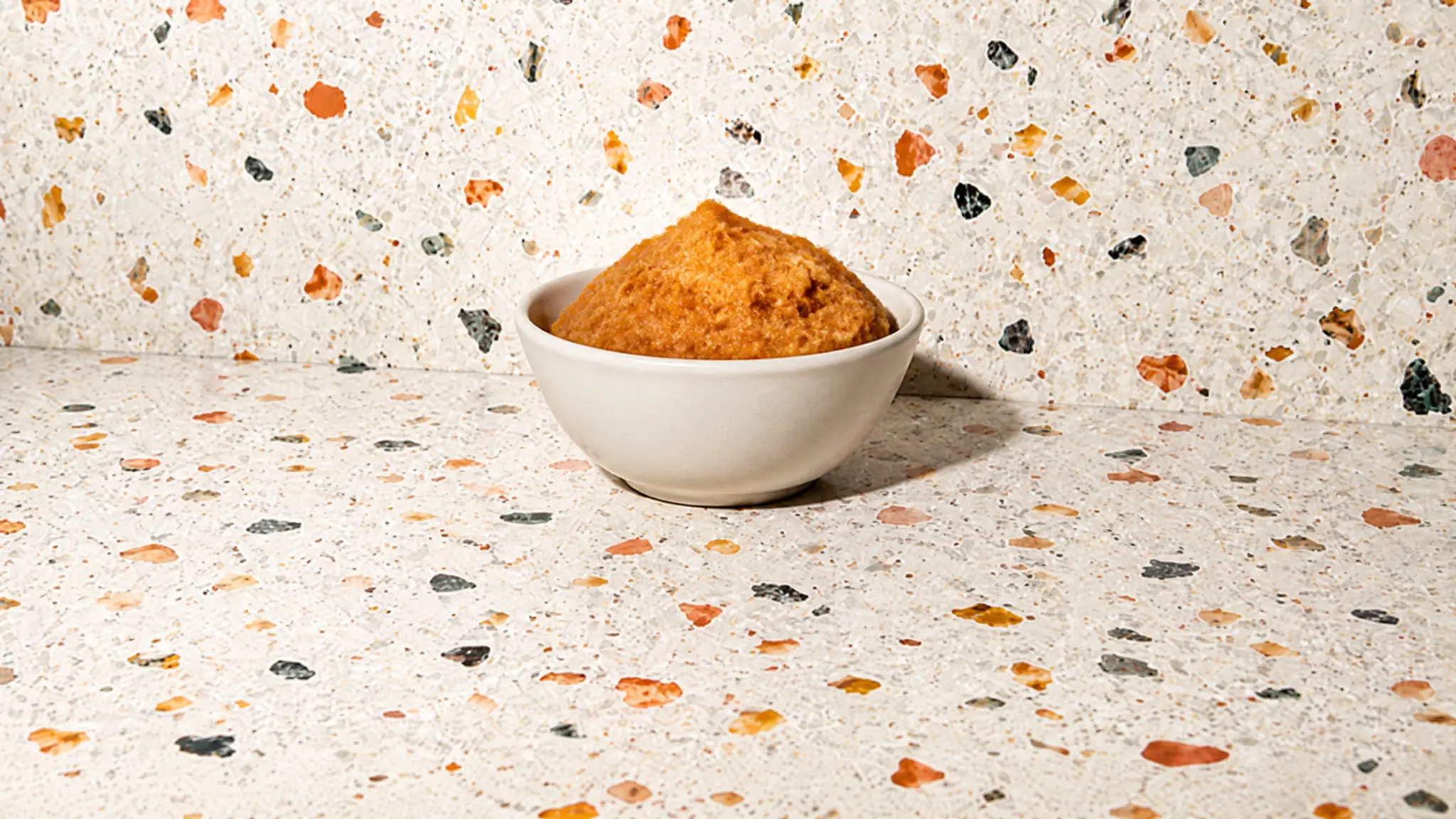
Miso
Condiment
Last updated July 5, 2026. The Tummi Food Team maintains this Can I Feed This safety guide guide. Supporting links appear in Sources when available.



Clinically reviewed by Andria Procopio and Arefa Mohamed
Direct answer
Can babies eat Miso?
Yes, miso can be introduced around 6 months of age when baby is ready to start solids, in small, diluted amounts due to its sodium content.
- Serve Age6+months
Most babies start solids around 6 months once they show readiness signs. Match the texture and serving size to your baby's skills.
- Allergens
Miso is flagged for soy. Introduce common allergens in a baby-safe form and follow your clinician's advice if your baby is higher risk.
- Choking Risk123451
Lower choking risk when served in the right texture. Always supervise meals and adjust the shape for your baby.
This guide is for everyday food prep questions. Ask your pediatrician about medical concerns, feeding delays, allergy plans, or serious reactions.
How Do You Serve Miso?
How to serve Miso to babies 6 months and older
- 1Offer only a small taste of family foods seasoned with miso after soy and any other ingredients in the dish have already been introduced and tolerated; start with 1–2 teaspoons to check acceptance.
- 2Prepare textures that are easy to chew. For example, flake miso-glazed fish into boneless strips or cut soft miso ramen noodles into short, manageable pieces.
- 3Avoid firm, hard, sticky, or chewy miso candies and whole chunks that pose a choking risk; prefer soft, moist preparations.
- 4Serve a small portion, supervise closely, and monitor for any allergic or intolerance signs (rash, vomiting, swelling, difficulty breathing); seek medical help if severe symptoms develop.
How to serve Miso to babies 12 months and older
- 1Stir a small amount of miso into family dishes (sauces, marinades, or soups) rather than serving it as chunks; start with low-sodium or diluted portions to limit salt exposure.
- 2Serve solids from soups on a separate plate to encourage independent chewing, and offer a small amount of cooled broth in an open cup for sipping practice.
- 3Avoid hard, sticky, or chewy miso-containing candies and whole pieces of miso, as these increase choking and chewing risks.
- 4If the child has a soy allergy or other dietary restrictions, do not use miso. Always supervise mealtimes and introduce new textures slowly.
Is Miso a Common Allergen?
Miso is made from fermented soybeans, so it contains soy and should be avoided by children with a soy allergy. Some miso varieties or commercial miso soups may contain barley/wheat (gluten) or be made with dashi (fish), so always read ingredient labels and allergen statements. Cross-contamination with sesame, nuts, or other allergens is possible in manufacturing; fermentation does not remove allergenicity. When unsure, choose clearly labeled products and consult your child’s allergist.
Is Miso a Choking Hazard?
Very Low Choking Risk
Miso itself poses a low choking risk when it’s part of other foods, but firm, sticky, or chewy miso-containing items (for example, candies or dense pieces) can increase the chance of airway blockage. Always supervise babies closely during meals and be cautious with any food texture that could be hard, large, or sticky enough to obstruct breathing. Watch for gagging or signs of distress and seek prompt help if you’re concerned.
Have More Questions?
Yes, miso can be introduced to babies around 6 months old as part of a varied diet. It is important to serve it in moderation due to its sodium content.
Yes, miso is a flavorful seasoning that can enhance your baby's meals, but should be used sparingly and after the baby has tolerated plain foods without issues.
Yes, small amounts of miso can be stored in the refrigerator for a few weeks, but check for signs of spoilage before use.
Yes, you can freeze miso in an airtight container for up to 3 months, then thaw and use as needed.
Yes, organic miso is generally produced without synthetic pesticides or fertilizers, providing a potentially cleaner option for your baby's diet.
Save Miso to your food log
Track foods, reactions, and prep notes in Tummi when you want to keep your baby's feeding history in one place.
Sources
- Does salt intake in the first two years of life affect the development of cardiovascular disorders in adulthood? (Strazzullo P., Nutr Metab Cardiovasc Dis. 2012) pubmed.ncbi.nlm.nih.gov
- Sodium: Too Much of a Good Thing (Soloway R.A., National Capital Poison Center) poison.org
- Infants' and Children's Salt Taste Perception and Liking: A Review (Liem D. G., Nutrients. 2017) mdpi.com
- Avoidance of added salt for 6-12-month-old infants: A narrative review (Yang S., Wang H., Archives de pediatrie. 2023) sciencedirect.com
- Miso: A traditional nutritious & health-endorsing fermented product (Saeed F. et al., Food Sci Nutr. 2022) onlinelibrary.wiley.com
- Fermentation and the microbial community of Japanese koji and miso: A review (Allwood JG, Wakeling LT, Bean DC., J Food Sci. 2021) ift.onlinelibrary.wiley.com


Source-Linked Guidance
See the evidence behind the guide.
Food guides show direct links to public-health guidance and research when supporting references are available. Source inclusion does not imply endorsement.
 Centers for Disease Control and Prevention
Developmental milestones, nutrition guidelines, and allergen introduction timelines.
 American Academy of Pediatrics
Evidence-based feeding recommendations from the leading pediatric authority.
 National Institutes of Health
Peer-reviewed research on infant nutrition, allergies, and food safety.