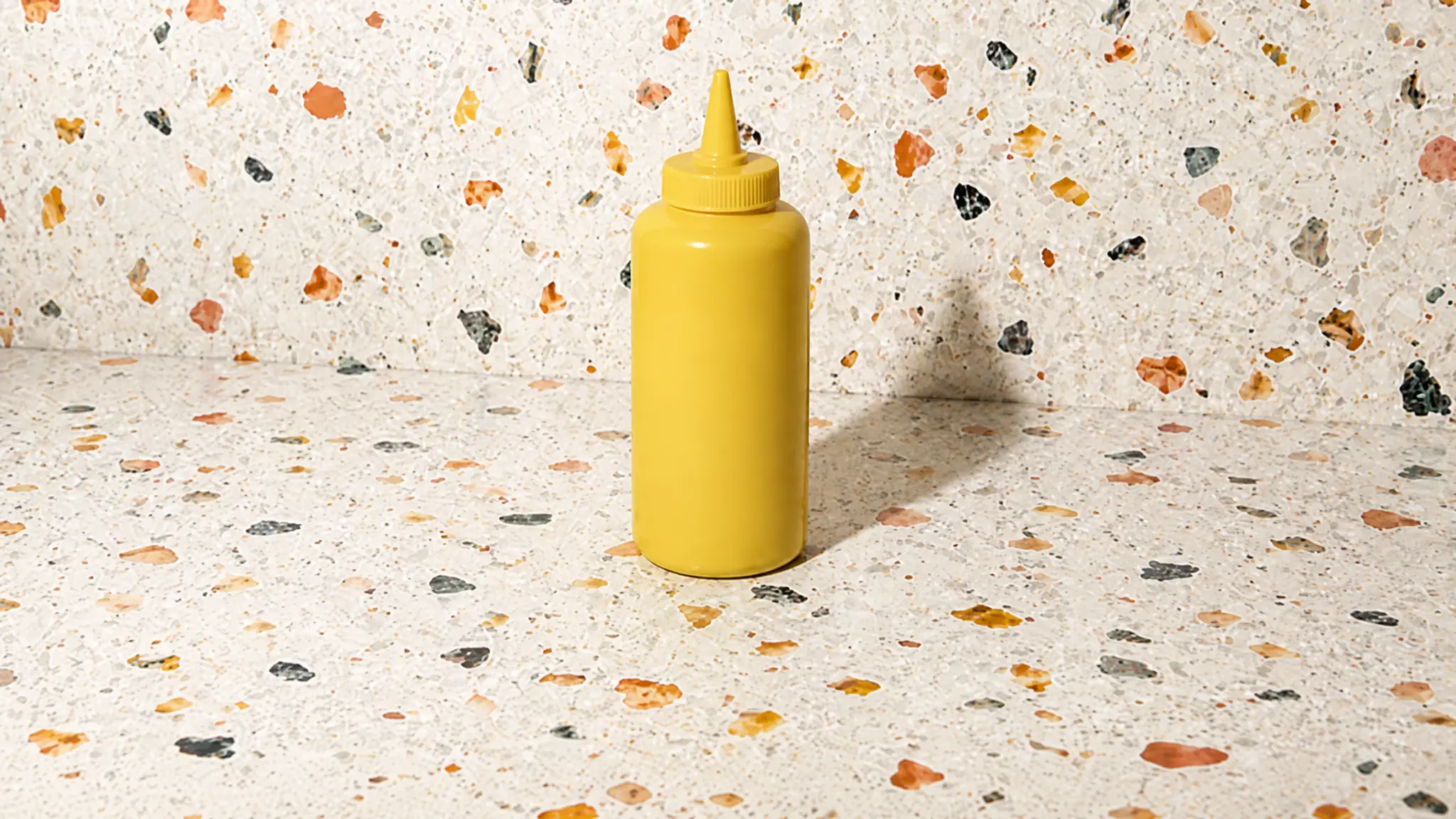
Mustard
Condiment
Last updated July 5, 2026. The Tummi Food Team maintains this Can I Feed This safety guide guide. Supporting links appear in Sources when available.



Clinically reviewed by Andria Procopio and Arefa Mohamed
Direct answer
Can babies eat Mustard?
Yes, mustard can be introduced around 6 months as long as it is honey-free and given in small amounts.
- Serve Age6+months
Most babies start solids around 6 months once they show readiness signs. Match the texture and serving size to your baby's skills.
- No Allergens
Mustard is not flagged as one of the major allergens tracked in this database. Still watch your baby closely when serving any new food.
- Choking Risk123451
Lower choking risk when served in the right texture. Always supervise meals and adjust the shape for your baby.
This guide is for everyday food prep questions. Ask your pediatrician about medical concerns, feeding delays, allergy plans, or serious reactions.
How Do You Serve Mustard?
How to serve Mustard to babies 6 months and older
- 1Start with a very small smear or stir a tiny amount into dressings so the mustard adds subtle flavor rather than heat.
- 2Taste first to check how spicy it is; mellow strong flavors by mixing into plain yogurt or sour cream before serving.
- 3Choose smooth, plain or mild varieties and read labels carefully; avoid any mustard that lists honey.
- 4Use sparingly and watch for any reaction after the first offering. Introduce it when no other new foods are being tried so you can spot issues quickly.
- 5Prefer low-sodium options when possible and keep mustard as an occasional flavoring rather than a staple.
How to serve Mustard to babies 12 months and older
- 1Use mustard sparingly as a thin spread or mixed into marinades and dips to add flavor without overwhelming dishes.
- 2For dipping, offer small portions on a plate or shallow dish and pair with soft, easy-to-eat foods like soft pretzels, savory pancakes, or well-cooked, thinly sliced meats.
- 3Cut long or cylindrical items (e.g., hot dogs, sausages) into short, thin pieces to reduce choking risk. Always supervise during eating.
- 4Serve mustard in small amounts for dipping or spreading and check prepared varieties for added sugar or high sodium.
How to serve Mustard to babies 24 months and older
- 1Choose mild varieties (like yellow or honey mustard) and serve tiny samples in a shallow dipping cup so flavors are easy to try.
- 2Use mustard sparingly as a light seasoning—brush or mix a very small amount into sauces or on finger foods to avoid overpowering the dish.
- 3Model how to squeeze a soft bottle or spread with a child-safe plastic knife, then invite the child to try to build fine motor skills while offering gentle help as needed.
- 4Start with very small amounts, watch for any allergic reactions, and avoid spicy mustards until you know the child’s tolerance.
Is Mustard a Common Allergen?
Mustard is a recognized food allergen that can cause reactions ranging from mild to severe, including anaphylaxis in some people. It is commonly found in condiments, dressings, sauces and many processed foods, and cross‑contamination is possible in kitchens and factories. In the UK/EU mustard must be declared on labels—always read ingredient lists and ask about hidden mustard in prepared foods. If your child has a known mustard allergy, avoid foods containing mustard, carry prescribed emergency medication (eg, epinephrine) and see an allergist for diagnosis and an action plan.
Is Mustard a Choking Hazard?
Very Low Choking Risk
Mustard itself is low risk for choking because it’s a spreadable condiment, but large globs can trigger gagging in young infants. Be mindful that mustard is often paired with foods that are more likely to choke (for example, hot dogs), so watch what it’s served alongside. Always stay within arm’s reach and monitor for signs of gagging or choking when introducing condiments.
Have More Questions?
Yes, babies can have small amounts of mustard once they are ready for solids, typically around 6 months, as long as it is honey-free. Always introduce in moderation, considering sodium content.
Yes, sharing mustard is safe for babies if it does not contain honey and is served in small quantities. Monitor your baby for any signs of sensitivity or reaction.
No, mustard is not a common allergen globally, but it is allergenic in some regions like Canada and Europe. Be aware of potential allergies, especially if there's a family history.
No, mustard is not considered a choking hazard for babies if prepared in an age-appropriate way, such as in small amounts and mixed with other foods.
Yes, you can give mustard seeds to babies once they are eating solids, but usually in small, pureed or mixed forms to ensure safety and ease of consumption.
Save Mustard to your food log
Track foods, reactions, and prep notes in Tummi when you want to keep your baby's feeding history in one place.
Sources
- Food Allergens - International Regulatory Chart (University of Nebraska–Lincoln, FARRP) farrp.unl.edu
- Mustard - A priority food allergen (Government of Canada, 2017) canada.ca
- Dangerous anaphylactic reaction to mustard (Pałgan et al., 2018) pmc.ncbi.nlm.nih.gov
- A Comprehensive Review on Mustard-Induced Allergy (Sharma et al., 2019) pubmed.ncbi.nlm.nih.gov
- Clinical characteristics of patients with mustard hypersensitivity (Caballero et al., 2002) pubmed.ncbi.nlm.nih.gov
- Mustard allergy confirmed by double-blind placebo-controlled food challenges (Figueroa et al., 2005) pmc.ncbi.nlm.nih.gov
- Oral Allergy Syndrome (OAS) or Pollen-Food Syndrome (American Academy of Allergy, Asthma & Immunology) aaaai.org
- Sulfite sensitivity (Cleveland Clinic, 2020) my.clevelandclinic.org
Source-Linked Guidance
See the evidence behind the guide.
Food guides show direct links to public-health guidance and research when supporting references are available. Source inclusion does not imply endorsement.
 Centers for Disease Control and Prevention
Developmental milestones, nutrition guidelines, and allergen introduction timelines.
 American Academy of Pediatrics
Evidence-based feeding recommendations from the leading pediatric authority.
 National Institutes of Health
Peer-reviewed research on infant nutrition, allergies, and food safety.