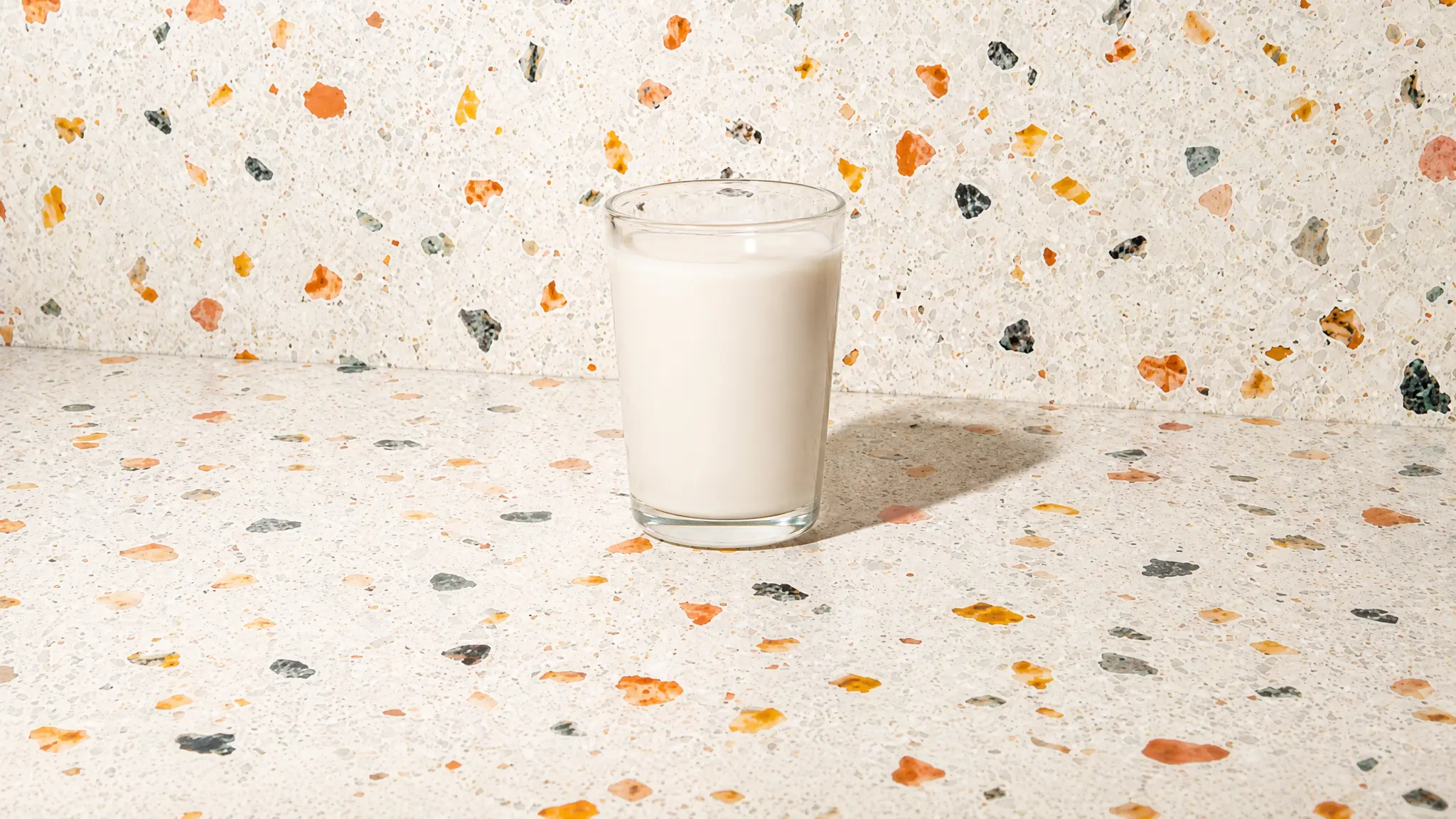
Cashew Milk
Drink
Last updated July 5, 2026. The Tummi Food Team maintains this Can I Feed This safety guide guide. Supporting links appear in Sources when available.



Clinically reviewed by Andria Procopio and Arefa Mohamed
Direct answer
Can babies eat Cashew Milk?
Cashew milk may be used as an ingredient in solid foods from around 6 months, once your baby is developmentally ready, but it should not be offered as a milk drink before 12 months.
- Serve Age6+months
Most babies start solids around 6 months once they show readiness signs. Match the texture and serving size to your baby's skills.
- Allergens
Cashew Milk is flagged for tree nut. Introduce common allergens in a baby-safe form and follow your clinician's advice if your baby is higher risk.
- Choking Risk123451
Lower choking risk when served in the right texture. Always supervise meals and adjust the shape for your baby.
This guide is for everyday food prep questions. Ask your pediatrician about medical concerns, feeding delays, allergy plans, or serious reactions.
How Do You Serve Cashew Milk?
How to serve Cashew Milk to a 11-month-old baby
- 1Start by mixing a small amount (about 1–2 teaspoons) of unsweetened cashew milk into porridges, purees, or mashed foods to add creaminess and calories; not as a drink.
- 2Choose plain, unsweetened cashew milk with no added sugars, salt, or thickeners.
- 3Continue to prioritize breast milk or formula as the main source of fluids and nutrition.
- 4Serve smooth, age-appropriate textures and introduce cashew-containing foods alone, waiting 3–5 days between new foods to monitor for intolerance or allergic reactions.
How to serve Cashew Milk to a 12-month-old baby
- 1Offer very small sips (about 1–2 teaspoons) of cashew milk from an open cup during meals to practice sipping and cup-handling skills.
- 2Keep breast milk or formula as the main drink—offer cashew milk only occasionally and not as a replacement.
- 3Use cashew milk in foods (for example, stirred into oatmeal or purees); start with about 1–2 tablespoons to introduce the flavor.
- 4Watch closely for signs of an allergic reaction or digestive upset (rash, vomiting, diarrhea); stop and contact your pediatrician if these occur.
- 5Introduce one new food at a time and wait 2–3 days before offering another to help identify any reactions.
How to serve Cashew Milk to babies 12 months and older
- 1Offer cashew milk as part of meals and snacks and keep total milk (plant or dairy) to about 16 oz (~480 mL) per day to preserve appetite for solid foods.
- 2Choose unsweetened, fortified cashew milk for calcium, vitamin D, and B12—prefer fortified varieties when possible.
- 3Cashew milk is low in protein and fat compared with whole dairy; always pair servings with protein or energy-dense foods (eggs, yogurt, beans, nut butters) to support growth.
- 4Serve chilled in a cup (not a bottle), shake well before use, avoid added sugars or flavored versions, and consult your pediatrician if you have allergy concerns or questions about nutrition.
Is Cashew Milk a Common Allergen?
Cashew milk is made from cashews and is a tree‑nut product — do not give to anyone with a cashew or tree‑nut allergy. Many commercial cashew milks are dairy‑ and often soy‑free, but always read the ingredient list and any “may contain” or facility statements for cross‑contact with other allergens. If a child has a history of severe allergic reactions, consult their allergist before offering cashew milk. When in doubt, choose a product explicitly free of the specific allergens of concern.
Is Cashew Milk a Choking Hazard?
Very Low Choking Risk
Cashew milk presents a low risk of choking, but any food or drink can pose a choking hazard. Always stay within arm’s reach and closely supervise your baby while they’re eating or drinking so you can respond immediately if needed. If your child frequently coughs, gags, or has trouble swallowing, consult your pediatrician or a feeding specialist.
Have More Questions?
No, cashew milk should not be given as a drink to babies under 12 months, as it does not provide complete nutrition and may displace breast milk or formula.
Yes, cashew milk can be used as an ingredient in solid foods for babies starting solids, but should not replace breast milk or formula during the first year.
No, do not give cashew milk to a baby with a diagnosed cashew allergy or when you have been advised to avoid cashew. If cashew allergy is suspected, seek advice from your baby’s clinician before offering it.
Cashew milk is a thin liquid and does not present the size, shape, or hardness hazards associated with whole cashews, but babies should still be seated upright and closely supervised while eating or drinking.
Cashew milk can provide calcium and vitamin D when it is fortified, but nutrient content varies by product, so check the label. It should not replace breast milk or infant formula before 12 months.
Save Cashew Milk to your food log
Track foods, reactions, and prep notes in Tummi when you want to keep your baby's feeding history in one place.
Sources
- Cow's Milk and Milk Alternatives | Infant and Toddler Nutrition - CDC cdc.gov
- Cow's Milk Alternatives: Parent FAQs - HealthyChildren.org (American Academy of Pediatrics) healthychildren.org
- Plant-Based Milks: Cashew - UF/IFAS EDIS edis.ifas.ufl.edu
- Plant-Based Milk Alternatives in Child Nutrition - PMC (NIH) ncbi.nlm.nih.gov
What Other Drink Can Babies Eat?
See all →
Source-Linked Guidance
See the evidence behind the guide.
Food guides show direct links to public-health guidance and research when supporting references are available. Source inclusion does not imply endorsement.
 Centers for Disease Control and Prevention
Developmental milestones, nutrition guidelines, and allergen introduction timelines.
 American Academy of Pediatrics
Evidence-based feeding recommendations from the leading pediatric authority.
 National Institutes of Health
Peer-reviewed research on infant nutrition, allergies, and food safety.