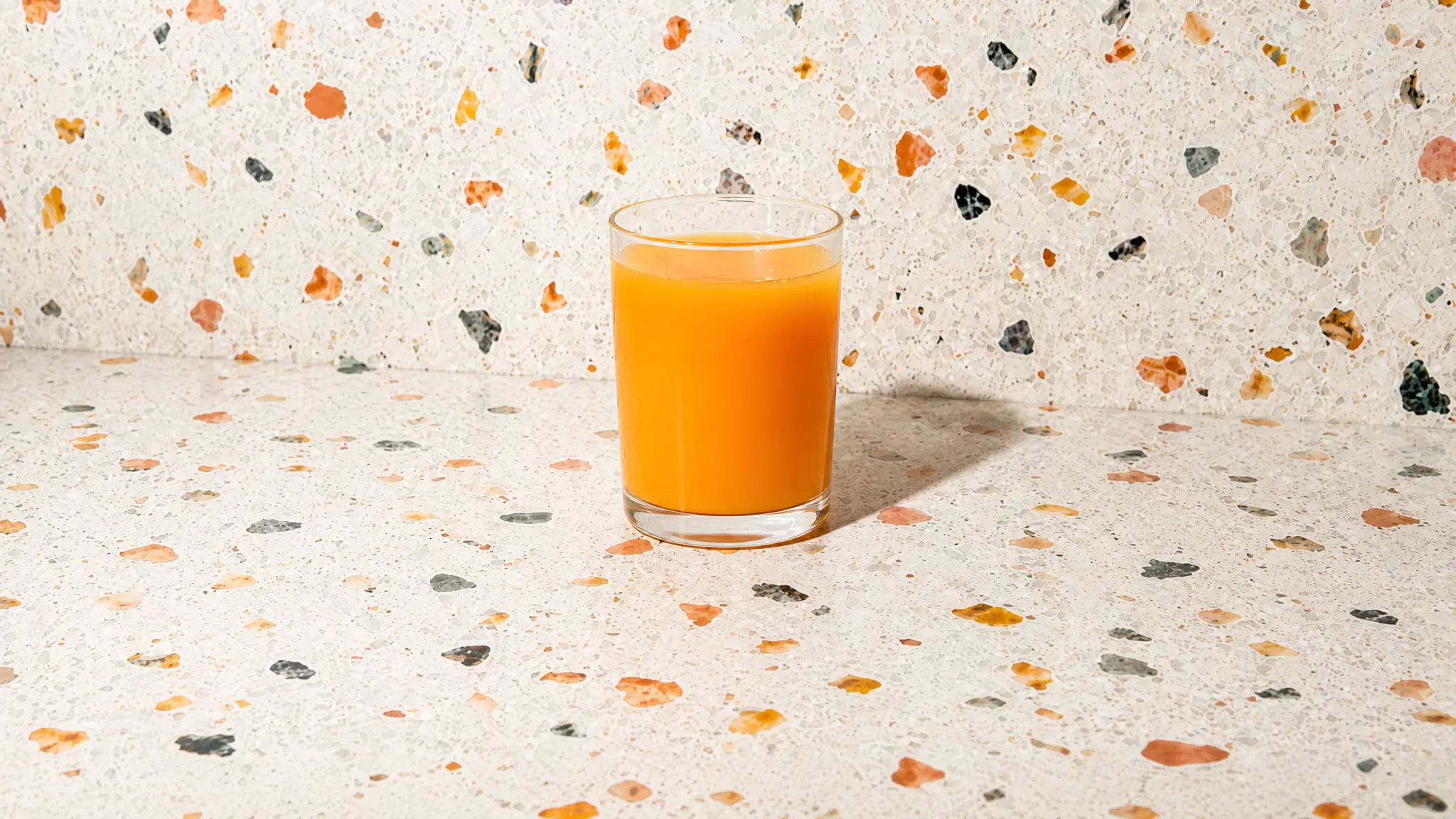
Juice
Drink
Last updated July 5, 2026. The Tummi Food Team maintains this Can I Feed This safety guide guide. Supporting links appear in Sources when available.



Clinically reviewed by Andria Procopio and Arefa Mohamed
Direct answer
Can babies eat Juice?
No, juice should not be given to babies under 12 months; it may be introduced in small amounts after age one, preferably later for health reasons.
- Serve Age12+months
Juice may need to wait. Read the answer and prep notes before offering it.
- No Allergens
Juice is not flagged as one of the major allergens tracked in this database. Still watch your baby closely when serving any new food.
- Choking Risk123451
Lower choking risk when served in the right texture. Always supervise meals and adjust the shape for your baby.
This guide is for everyday food prep questions. Ask your pediatrician about medical concerns, feeding delays, allergy plans, or serious reactions.
How Do You Serve Juice?
How to serve Juice to a 12-month-old baby
- 1Do not offer juice as a drink—breastmilk or formula provide adequate nutrition and hydration.
- 2If juice is used at all, serve it only rarely and as an ingredient in shared solid foods (for example, mixed into yogurt or oatmeal) to reduce sugar exposure.
- 3If a healthcare provider prescribes juice for a medical reason, follow their exact amount and give it in an open or straw cup; not a bottle.
- 4When adding juice to foods, choose 100% fruit juice and use a very small amount to flavor rather than as the main ingredient.
How to serve Juice: 2-5 years
- 1Offer up to 4 oz (120 mL) of pasteurized, 100% juice per day in a single sitting using an open cup or straw cup. Dilute with water to lower sugar concentration.
- 2Serve juice only occasionally and with a meal or snack so it doesn’t replace nutrient-dense foods like milk, whole fruits, vegetables, or grains.
- 3Avoid raw/unpasteurized juices; refrigerate opened containers and follow package storage instructions to keep juice safe.
- 4Check for medication interactions (for example, grapefruit) and offer water or have the child rinse/brush after juice to help reduce cavity risk.
How to serve Juice to a 23-month-old baby
- 1Minimize juice to help the child learn a taste for unsweetened foods; offer water and whole foods instead.
- 2If you give juice, limit it to 4 oz (120 mL) total per day and serve it all at once during a meal or snack.
- 3Dilute juice with water (try a 1:1 ratio) to reduce sweetness, and use an open cup or straw cup so the child drinks in one sitting — avoid bottles or letting them sip throughout the day.
- 4Favor whole fruit whenever possible for fiber and chewing practice; offer small pieces or mashed fruit depending on chewing ability.
Is Juice a Common Allergen?
Plain fruit juice is not typically a source of the major top allergens (milk, eggs, peanuts, tree nuts, soy, wheat/gluten, fish, shellfish, sesame). However, cross-contact can occur during manufacturing or from added ingredients (e.g., nut-based flavorings, dairy additives, or wheat-containing thickeners), so always check the ingredient list and any "may contain" statements. For children with severe allergies, choose products labeled allergen-free or contact the manufacturer if unsure.
Is Juice a Choking Hazard?
Very Low Choking Risk
Juice is not a common choking hazard, but liquids can be aspirated into the airway. When introducing juice, keep your baby seated and within arm’s reach so you can quickly respond if they cough or have trouble breathing. If coughing doesn’t clear their airway or they show signs of distress (persistent coughing, blue lips, difficulty breathing), seek emergency help immediately.
Have More Questions?
Yes, but it is generally recommended to wait until after the second birthday to serve juice regularly due to its high sugar content and potential impact on diet and dental health.
No, juice is not considered healthy for babies under 12 months, as their diet should mainly consist of breast milk or formula, and juice can displace these essential nutrients.
No, juice is not a common choking hazard since it is a liquid, but always serve it in small amounts and while the baby is seated and supervised.
No, most juices do not contain common allergens. However, raw or unpasteurized juice may pose a risk of foodborne illness.
It depends. For young children, especially under 12 months, juice should generally be avoided unless advised by a healthcare professional, due to high sugar and potential risks.
Save Juice to your food log
Track foods, reactions, and prep notes in Tummi when you want to keep your baby's feeding history in one place.
Sources
- Heyman M., Abrams S. (2017) - Fruit Juice in Infants, Children, and Adolescents (Pediatrics) doi.org
- American Academy of Allergy, Asthma & Immunology - Oral Allergy Syndrome (OAS) aaaai.org
- Dartmouth Toxic Metals Superfund Research Program - Arsenic in fruits, juices, and vegetables sites.dartmouth.edu
- U.S. House of Representatives (2021) - New disclosures show dangerous levels of toxic heavy metals in even more baby foods oversight.house.gov
- U.S. Food & Drug Administration, CFSAN (2023) - Action level for inorganic arsenic in apple juice: Guidance for industry fda.gov
- Jenco M. (2022) - FDA proposes lower lead levels for juice (AAP) aappublications.org
- U.S. Food & Drug Administration (2018) - Fruits, veggies and juices: Food safety for moms to be fda.gov
- Auerbach BJ et al. (2018) - Review of 100% Fruit Juice and Chronic Health Conditions (Advances in Nutrition) doi.org
- National Institute of Dental and Craniofacial Research (2021) - Oral Health in America: Advances and Challenges nidcr.nih.gov
- Rao S., Brenner DM. (2021) - Efficacy and Safety of Over-the-Counter Therapies for Chronic Constipation (AJG) doi.org
What Other Drink Can Babies Eat?
See all →
Source-Linked Guidance
See the evidence behind the guide.
Food guides show direct links to public-health guidance and research when supporting references are available. Source inclusion does not imply endorsement.
 Centers for Disease Control and Prevention
Developmental milestones, nutrition guidelines, and allergen introduction timelines.
 American Academy of Pediatrics
Evidence-based feeding recommendations from the leading pediatric authority.
 National Institutes of Health
Peer-reviewed research on infant nutrition, allergies, and food safety.