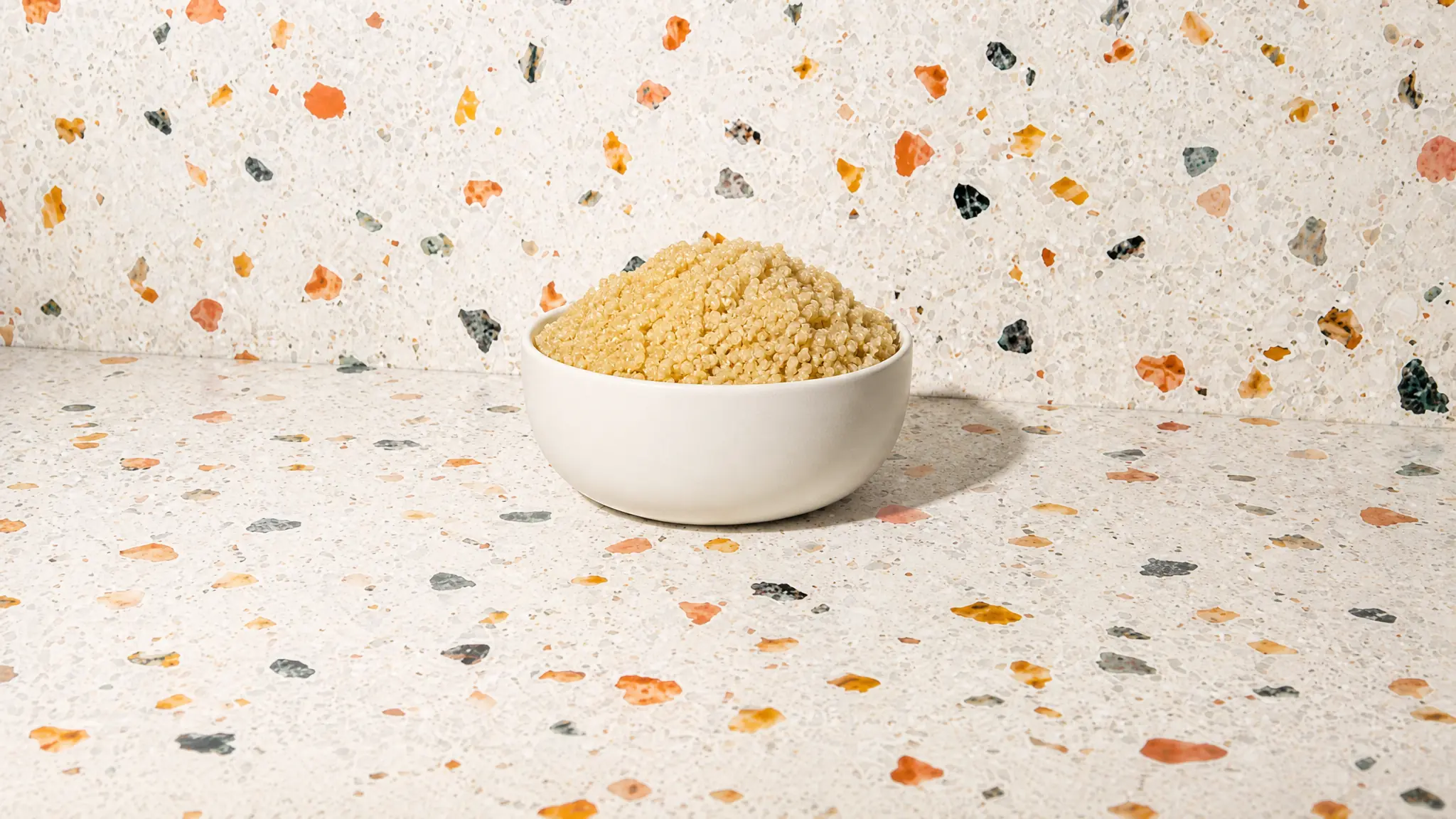
Quinoa
Pseudograin
Last updated July 5, 2026. The Tummi Food Team maintains this Can I Feed This safety guide guide. Supporting links appear in Sources when available.


Clinically reviewed by Andria Procopio and Arefa Mohamed
Direct answer
Can babies eat Quinoa?
Yes, babies can eat cooked quinoa from around 6 months of age, once they are ready to start solids.
- Serve Age6+months
Most babies start solids around 6 months once they show readiness signs. Match the texture and serving size to your baby's skills.
- No Allergens
Quinoa is not flagged as one of the major allergens tracked in this database. Still watch your baby closely when serving any new food.
- Choking Risk123451
Lower choking risk when served in the right texture. Always supervise meals and adjust the shape for your baby.
This guide is for everyday food prep questions. Ask your pediatrician about medical concerns, feeding delays, allergy plans, or serious reactions.
How Do You Serve Quinoa?
How to serve Quinoa to babies 6 months and older
- 1Rinse quinoa well, then cook 1 cup quinoa with 2 cups water — bring to a boil, reduce to a simmer, cover and cook ~15 minutes until tender; fluff with a fork.
- 2Make a scoopable porridge by mixing cooked quinoa with breastmilk, formula, or milk/yogurt until a soft, cohesive texture that can be easily scooped or mashed.
- 3Form large, soft quinoa patties or balls by combining cooked quinoa with mashed vegetables or fruit and a small binder, then press to at least 1/2 inch thickness and cook briefly until set. Make them big enough to grasp and test that they squash easily with a finger.
- 4Use quinoa flakes or lightly popped quinoa in moist porridges or baked recipes so they don’t scatter as loose grains; incorporate them into batter or mix with wet ingredients.
- 5Always supervise feeding, expect harmless gagging as babies learn to manage textures, and avoid serving dry, loose grains that can spread across the mouth.
How to serve Quinoa to babies 12 months and older
- 1Rinse quinoa, then cook 1 part quinoa to 2 parts water; simmer 12–15 minutes until water is absorbed and grains are tender, then fluff with a fork.
- 2Mix warm quinoa with a little sauce, melted cheese, yogurt, or olive oil to help grains cling together, which makes scooping or forming bites easier.
- 3Serve as small, easy-to-grasp options — loose quinoa on a spoon if your child can scoop, or make small patties, balls, or baked bites from cooked quinoa, quinoa flakes, or popped quinoa.
- 4Always cool food to lukewarm, press or mash any larger pieces, and supervise meals to reduce choking risk.
Is Quinoa a Common Allergen?
Quinoa is naturally gluten‑free and is not one of the common top‑9 allergens, so it’s commonly used as a wheat/gluten substitute. True allergy to quinoa is rare but has been reported, including isolated cases of anaphylaxis. Cross‑reactivity with other plant proteins and cross‑contact during processing are possible, so check packaging if severe allergies are present. If a child has known food allergies or shows any reaction after trying quinoa, stop giving it and consult an allergist.
Is Quinoa a Choking Hazard?
Very Low Choking Risk
Quinoa isn’t usually a high choking hazard, but loose cooked grains or firm clumps (such as baked or fried forms) can be aspirated during an uncoordinated swallow. Because the tiny grains can enter the airway, stay within arm’s reach and watch closely for signs that your baby is gagging versus truly choking. If your baby cannot cough, breathe, or make sounds, call emergency services and begin choking first aid immediately.
Have More Questions?
Yes, parents can store cooked quinoa in an airtight container in the refrigerator for up to 4-5 days, ensuring it is cooled quickly and kept covered.
Yes, freezing cooked quinoa in portions is possible and can extend its shelf life for up to 1 month, making meal prep easier.
Yes, choosing organic quinoa can reduce exposure to pesticides and chemicals, though both organic and conventional quinoa are safe for babies if properly prepared.
Yes, combining quinoa with vegetables or fruit purees creates nutrient-rich complementary foods suitable for babies.
Typically, a portion size for a baby starting solids is about 1-2 tablespoons of cooked quinoa per feeding, gradually increasing with age and appetite.
Save Quinoa to your food log
Track foods, reactions, and prep notes in Tummi when you want to keep your baby's feeding history in one place.
Sources
- Lim JG, Park HM, Yoon KS. (2019). Analysis of saponin composition and comparison of the antioxidant activity of various parts of the quinoa plant (Chenopodium quinoa Willd.). Food Sci Nutr. doi.org
- Hong J., Convers K., Reeves N., & Temprano J. (2013). Anaphylaxis to quinoa. Annals of Allergy, Asthma & Immunology. doi.org
- Astier C., Moneret-Vautrin D. A., Puillandre E., & Bihain B. E. (2009). First case report of anaphylaxis to quinoa. Allergy. doi.org
- Graf B., Rojas-Silva P., Rojo L., Delatorre-Herrera J., Baldeón M., Raskin I. (2015). Innovations in Health Value and Functional Food Development of Quinoa. Comprehensive Reviews in Food Science and Food Safety. doi.org
What Other Pseudograin Can Babies Eat?
See all →
Source-Linked Guidance
See the evidence behind the guide.
Food guides show direct links to public-health guidance and research when supporting references are available. Source inclusion does not imply endorsement.
 Centers for Disease Control and Prevention
Developmental milestones, nutrition guidelines, and allergen introduction timelines.
 American Academy of Pediatrics
Evidence-based feeding recommendations from the leading pediatric authority.
 National Institutes of Health
Peer-reviewed research on infant nutrition, allergies, and food safety.