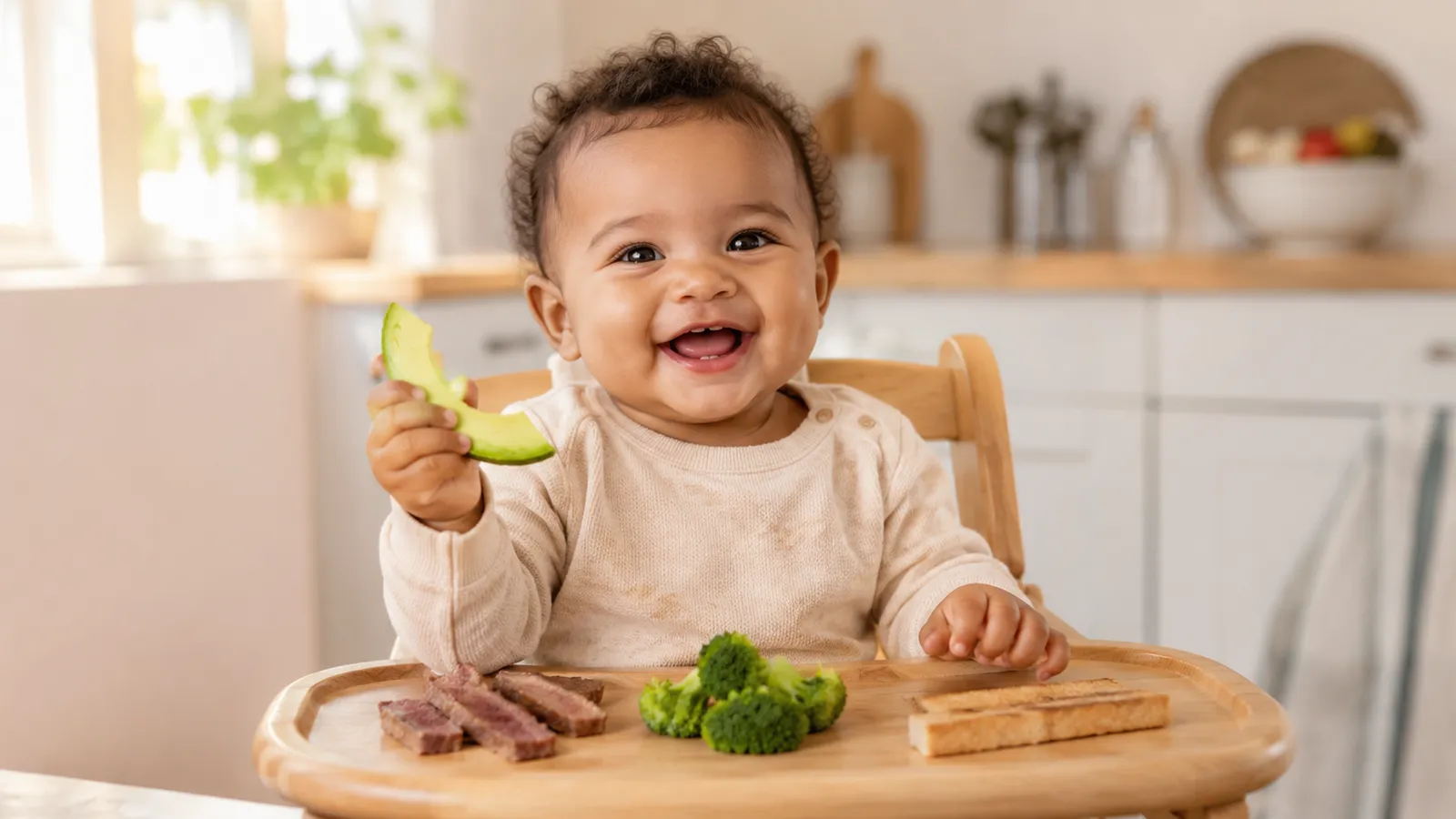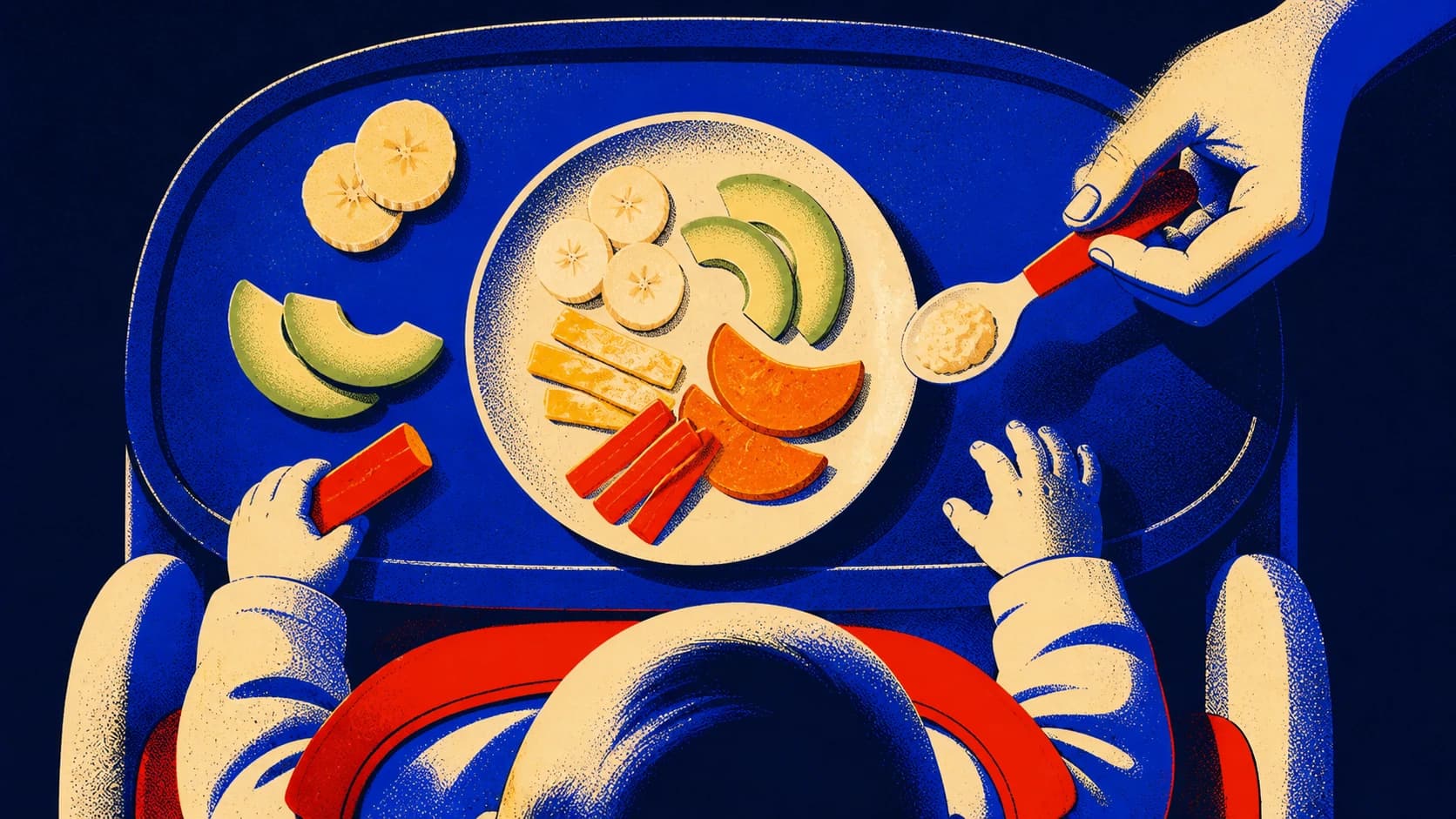
Baby-led weaning can sound more dramatic than it is. The basic idea is simple: once a baby is developmentally ready for complementary foods, the caregiver offers safe, graspable food and lets the baby bring it to their own mouth.
The adult is still responsible for the menu, preparation, seating, and supervision. The baby gets to decide whether to eat and how much. Purees are not dangerous or inferior, and families can combine approaches without ruining the benefits of self-feeding.
The quick answer
Baby-led weaning (BLW) is a method of starting solids in which a developmentally ready baby self-feeds soft finger foods and preloaded spoons instead of receiving every bite from an adult.
Most babies begin complementary foods at about 6 months. A safe BLW routine has four parts:
- Wait for developmental readiness.
- Prepare food in a shape and texture the baby can manage.
- Include nutrient-dense choices, especially iron-rich foods.
- Keep the baby seated upright and supervised for the entire meal.
The word weaning can be confusing in the United States. BLW does not mean abruptly stopping breast milk or infant formula. It describes the start of complementary feeding while milk feeds continue.
How baby-led weaning works
At a baby-led meal, the caregiver chooses a few appropriate foods and places them within reach. The baby explores, grasps, tastes, and stops when they are done. Spoonable foods such as yogurt, oatmeal, or mashed beans can be offered on a preloaded spoon.
Baby-led does not mean hands-off. The caregiver:
- Chooses what food is available
- Makes the texture, shape, and size safer for the baby's current skills
- Provides an upright seat and close supervision
- Offers a balanced variety over time
- Watches hunger and fullness cues without pressuring the baby to finish
The baby decides what to touch, what to bring to their mouth, and how much to swallow from what is offered.
BLW vs purees vs hybrid feeding
| Approach | Who moves food to the baby's mouth? | Common textures | What stays the same |
|---|---|---|---|
| Baby-led weaning | Mostly the baby | Soft finger foods and preloaded spoons | Safe prep, supervision, balanced nutrition, responsive feeding |
| Traditional spoon-feeding | Mostly the caregiver | Pureed, mashed, then increasingly textured foods | Safe prep, supervision, balanced nutrition, responsive feeding |
| Hybrid or combo feeding | Baby and caregiver | Finger foods, mashed foods, and purees | Safe prep, supervision, balanced nutrition, responsive feeding |
A hybrid approach is often the most practical. You might offer omelet strips at breakfast, spoon-feed soup responsively at lunch, and hand your baby a preloaded spoon of yogurt at dinner. Feeding skills develop through repeated practice, not loyalty to a label.
The American Academy of Pediatrics explicitly notes that families can flex the baby-led concept and that pureed foods can be nutritious. If spoon-feeding makes a meal easier, it does not erase your baby's opportunity to learn independent eating.
Is your baby ready for baby-led weaning?
The CDC and the American Academy of Pediatrics recommend introducing foods other than breast milk or infant formula at about 6 months. Readiness signs are more useful than a birthday alone.
Look for your baby to:
- Control their head and neck
- Sit upright alone or with support
- Bring objects to their mouth
- Reach for or grasp food and other objects
- Swallow food rather than automatically push it back out
Interest in your dinner is encouraging, but it is not enough on its own. Babies born prematurely or those with feeding, swallowing, neurological, developmental, or growth concerns may need individualized timing and texture advice from their clinician or feeding specialist.
How to prepare food for baby-led weaning
Start with texture. Early food should be soft enough to mash easily between your fingers. Remove bones, pits, tough skin, and other hard parts. Avoid hard, round, sticky, or tough foods that can block the airway.
Common early shapes include larger soft pieces a young baby can grasp with a whole fist. As a baby's pincer grasp develops, smaller pieces may become easier to pick up. There is no single cutting rule that works for every food and every developmental stage.
The CDC specifically warns about foods such as whole nuts, uncut grapes or cherry tomatoes, raw chunks of apple or carrot, popcorn, hot dogs, large chunks of cheese or meat, and spoonfuls of nut butter.
Search the Can I Feed This food library for preparation ideas by food and stage. Treat any online shape guide as general education; adjust for your baby's skills and ask a qualified clinician when you have feeding concerns.
How to build a balanced BLW meal
A fruit-and-vegetable tray may be colorful but can miss nutrients that matter during this transition. The AAP recommends including foods that provide iron and zinc, such as meat or iron-fortified infant cereal.
A simple planning formula is:
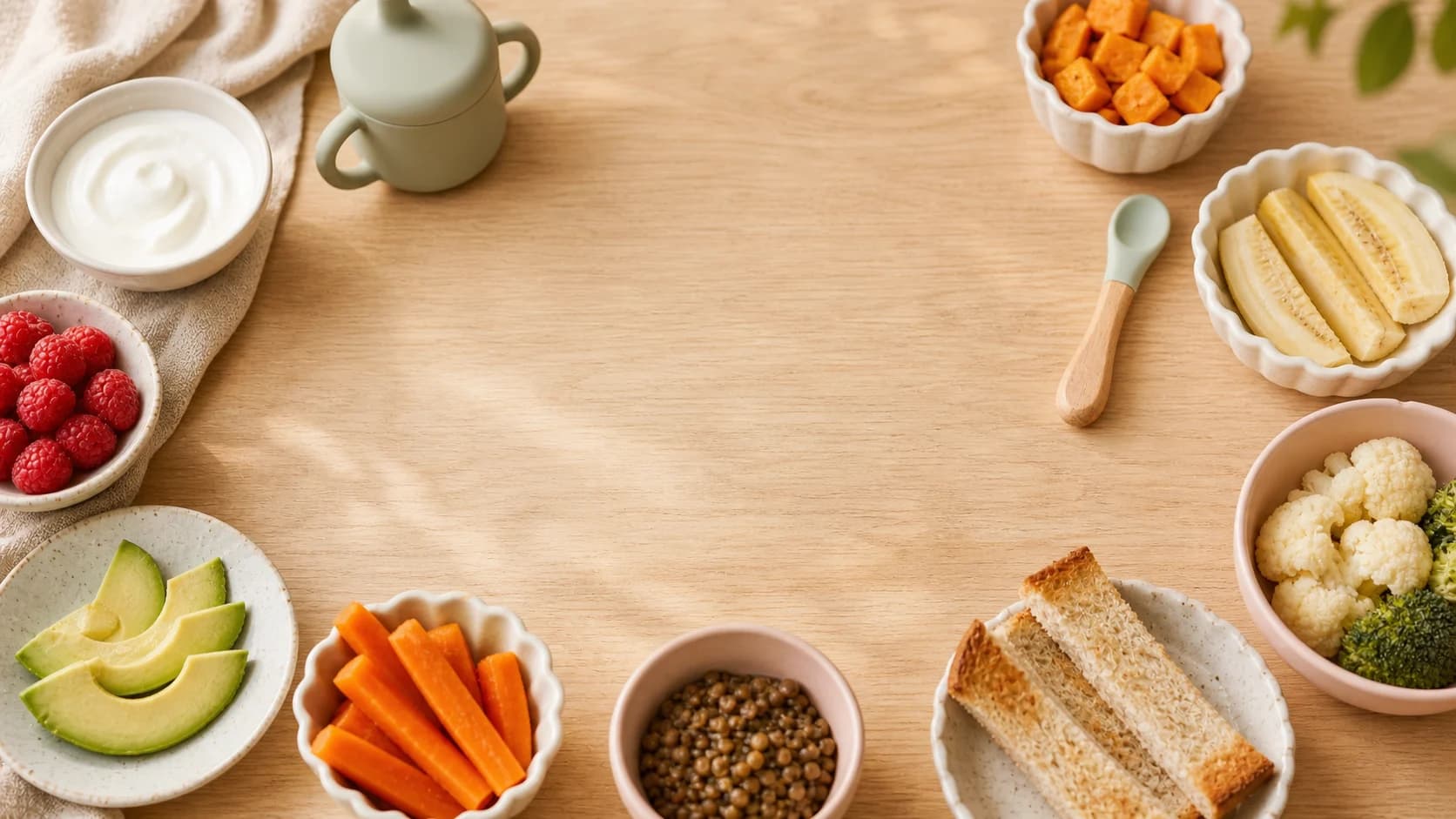
- An iron-rich food: meat, fish, egg, beans, lentils, tofu, or iron-fortified infant cereal
- An energy-rich food: avocado, full-fat plain yogurt, egg, a safe nut-butter preparation, hummus, or a little oil added to soft food
- A fruit or vegetable: prepared for the baby's current skills
This is a guide, not a requirement to create three separate recipes. Foods can fill more than one role, and balance is built across days as well as within a single meal.
Breast milk or iron-fortified infant formula remains an important source of nutrition during the first year while food intake gradually increases.
Gagging and choking are not the same
Gagging is a protective reflex that can be noisy and dramatic. A gagging baby may cough, make sounds, or push food forward. Choking means the airway is blocked; a choking baby may be unable to breathe, cry, or cough effectively.
Do not rely on an article alone to prepare for an emergency. Learn infant choking first aid and CPR from a qualified course, ask your baby's clinician what to do, and keep the baby upright and watched throughout every meal.
Research has not found a statistically significant difference in choking risk between baby-led and traditional spoon-feeding in the available studies, but that does not make either approach risk-free. A 2024 systematic review emphasized food modification and caregiver education across all feeding methods.
What does the research say about BLW?
BLW is popular, but the evidence is smaller and less certain than many social posts imply. Definitions vary between studies, and families who choose BLW may differ from families who do not.
The available research suggests:
- Choking risk has not been shown to differ significantly by feeding approach in the studies reviewed, when families receive appropriate preparation guidance.
- Claims that BLW prevents overweight or reliably improves self-regulation are not established.
- Nutrition depends on what is offered. Iron-rich, energy-rich, and varied foods still need attention.
The strongest practical takeaway is not that BLW wins. It is that responsive feeding, appropriate textures, nutrient-dense foods, and close supervision matter whichever method a family uses.
A simple way to start
For the first few meals:
- Choose a calm time when the baby is alert and not extremely hungry.
- Seat the baby upright in a stable high chair.
- Offer one or two familiar, very soft foods in manageable shapes.
- Let the baby explore without putting food into their mouth.
- End the meal when the baby turns away, closes their mouth, or loses interest.
Expect touching, dropping, smearing, gagging, and very small amounts swallowed. Early meals are practice. Increase variety and texture as skills develop rather than measuring success by an empty tray.
Tools that can help with starting solids
A useful app can answer preparation questions, help another caregiver serve the same food safely, and remember which foods or allergens have already been offered. It should lower the mental load, not turn feeding into a scorecard.
Our comparison of the 5 best apps for starting solids looks at food libraries, preparation guidance, recipes, meal planning, tracking, and personalized help. For a more structured baby-led framework, read What Is the BLISS Hybrid Feeding Method?.
Frequently asked questions
What is baby-led weaning?
Baby-led weaning is a way to introduce complementary foods in which a developmentally ready baby self-feeds soft, graspable foods and controls what and how much to eat from the food offered.
What age can a baby start baby-led weaning?
Most babies start complementary foods at about 6 months, once they can control their head and neck, sit upright with support, bring objects to their mouth, and swallow food instead of pushing it back out.
Does a baby need teeth for baby-led weaning?
No. A baby can manage foods that are soft enough to mash between your fingers with their gums. Food still needs to be prepared in a developmentally appropriate shape, size, and texture.
Can you combine baby-led weaning and spoon-feeding?
Yes. Many families use a hybrid approach that combines finger foods with responsive spoon-feeding or preloaded spoons. Safe preparation, supervision, balanced nutrition, and respect for hunger and fullness cues matter more than following one method perfectly.
Sources
- CDC: When, What, and How to Introduce Solid Foods
- CDC: Choking Hazards
- American Academy of Pediatrics: Baby-Led Weaning—Is It Safe?
- World Health Organization: Complementary feeding guideline
- Systematic review: Complementary feeding approaches and choking risk
- Systematic review and meta-analysis: Responsive feeding, BLW, and growth outcomes
Can I Feed This provides educational information, not medical advice. Ask your pediatrician about your baby's readiness, growth, allergies, or feeding concerns. If you suspect a severe allergic reaction or choking emergency, seek emergency help.