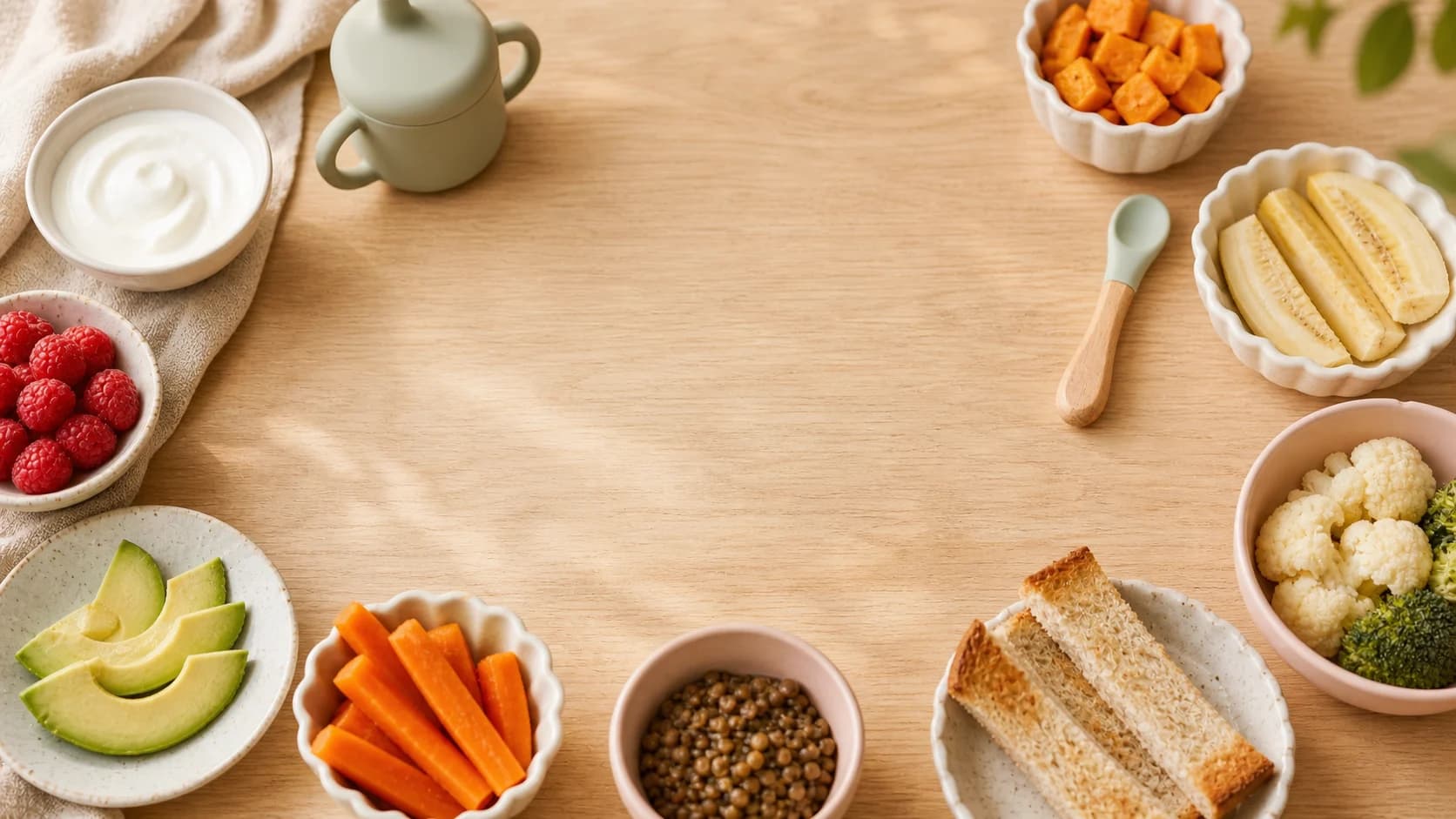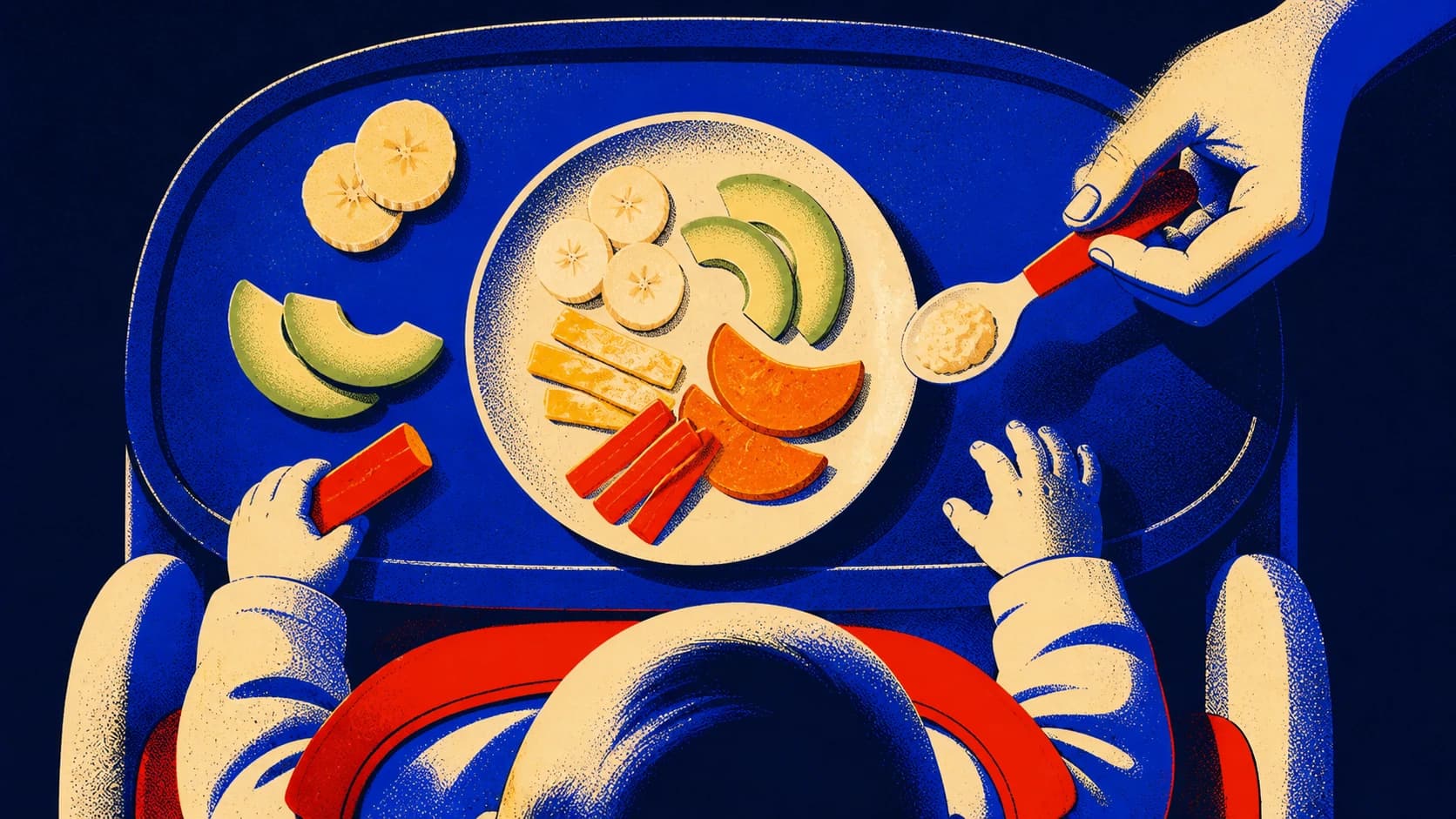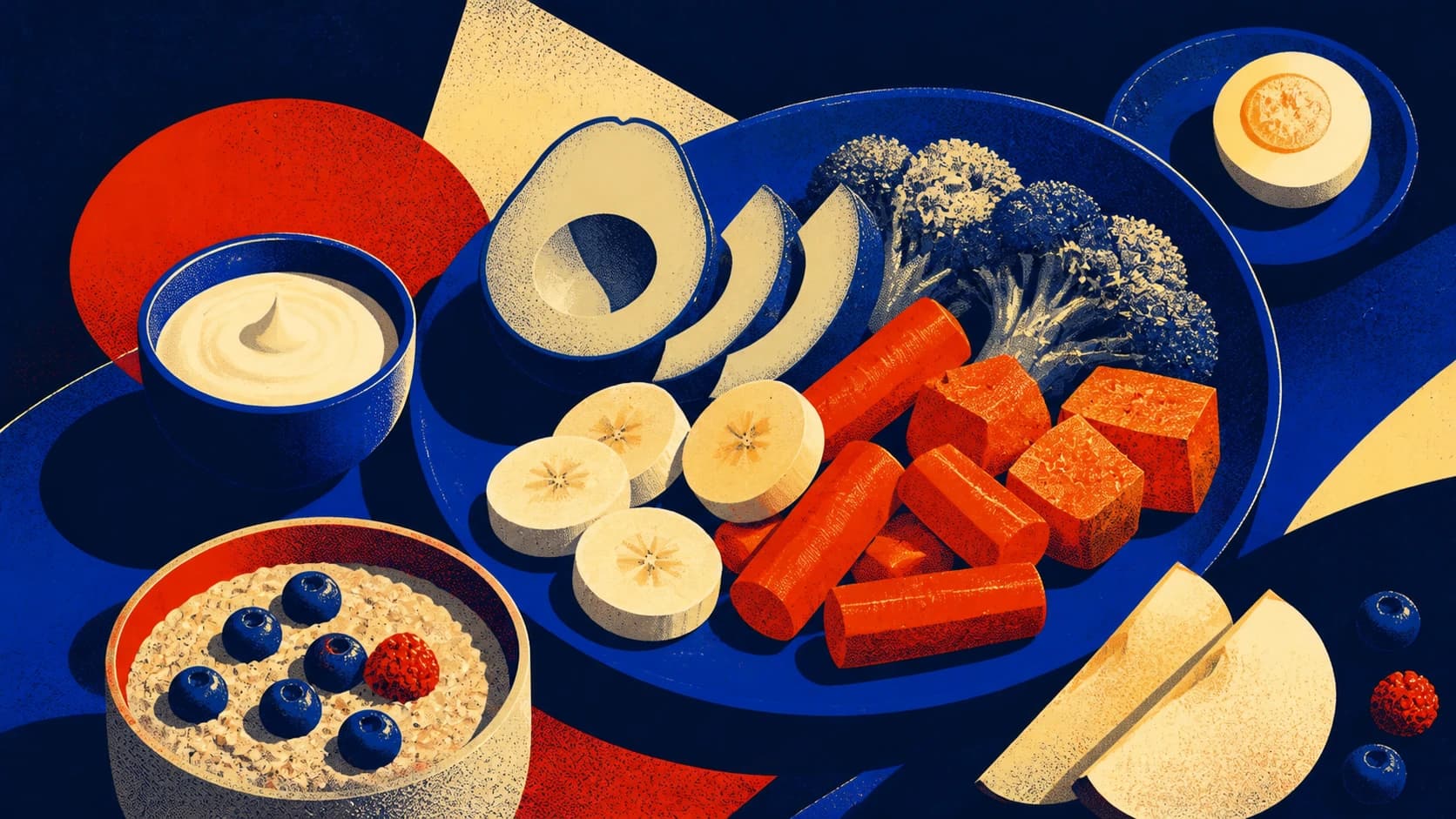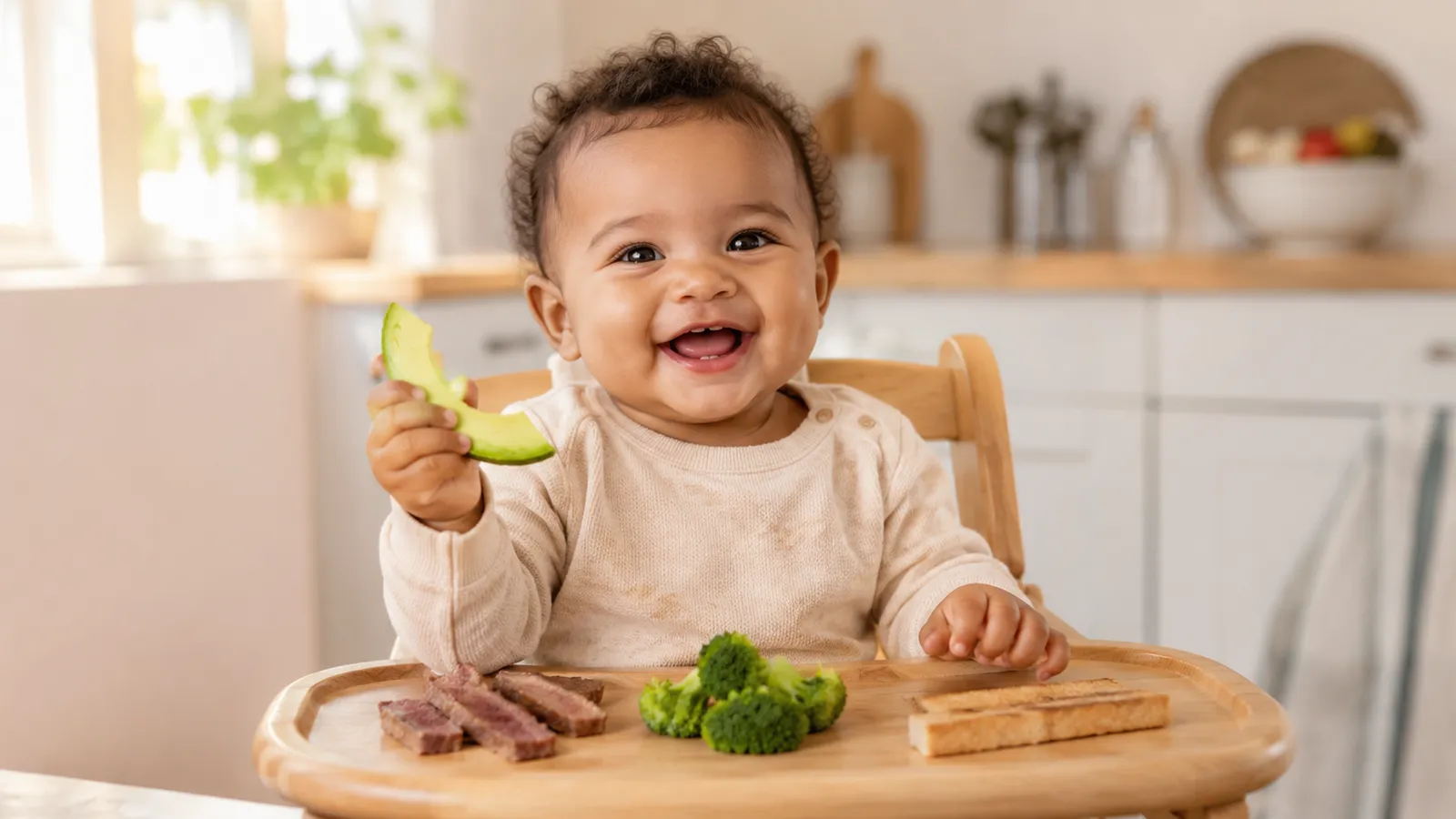
BLISS sounds like a brand-new feeding philosophy. It is better understood as a more structured version of baby-led weaning: your baby still self-feeds, while you use a short meal checklist designed around common nutrition and safety concerns.
The method came from University of Otago researchers who wanted to study a baby-led approach without ignoring questions about iron, energy intake, growth, and choking. The result was Baby-Led Introduction to SolidS, shortened to BLISS.
The quick answer
The BLISS hybrid feeding method keeps the autonomy of baby-led weaning and adds three guardrails to each meal:
- Offer an iron-rich food.
- Offer an energy-rich food.
- Avoid foods that pose a high choking risk, and prepare every food for your baby's current skills.
Calling BLISS a hybrid does not mean that every meal must combine finger foods and adult spoon-feeding. It means the method blends baby-led self-feeding with a structured nutrition-and-safety framework. Families can still use preloaded spoons or responsive spoon-feeding when that works better.
Why BLISS is a hybrid feeding method
Standard baby-led weaning is defined mostly by who controls the food: the caregiver chooses what to offer, and the baby brings the food to their mouth and decides how much to eat. BLISS keeps that division of responsibility but gives the caregiver a more specific job when building the plate.
That is the hybrid: baby-led eating plus parent-led meal structure.
The distinction matters because a tray of only soft fruit can look perfectly baby-led while still being light on iron and energy. BLISS asks the adult to think about nutritional coverage before handing control back to the baby.
Where the BLISS method came from
Researchers at the University of Otago developed BLISS as a modified baby-led weaning intervention. The study protocol focused on concerns that had made clinicians cautious about unmodified BLW: possible iron deficiency, inadequate energy intake or growth, and choking.
The main randomized trial enrolled 206 families in New Zealand. Families in the BLISS group received repeated education and support, so the findings describe a supported version of the method, not simply a label parents applied on their own.
That context is important. BLISS is a researched framework, but it is not proof that one feeding style is best for every baby.
The three BLISS rules
1. Offer an iron-rich food
Iron becomes especially important during complementary feeding. The American Academy of Pediatrics recommends including foods that provide iron and zinc, such as meat and iron-fortified infant cereal.
Practical options include:
- Tender shredded meat or a soft strip of slow-cooked meat
- Flaked fish with every bone removed
- Egg served in a soft, manageable texture
- Mashed beans or lentils on a preloaded spoon or spread thinly on toast
- Iron-fortified infant cereal on a preloaded spoon
- Tofu cut or prepared to match your baby's current skills
You do not need a different iron food at every meal. Repeating a food is useful practice, and pairing plant sources of iron with fruit or vegetables rich in vitamin C can help the meal do more nutritional work.
2. Offer an energy-rich food
Babies have small stomachs, so BLISS encourages an energy-rich option alongside lower-energy produce. Examples include:
- Avocado
- Full-fat plain yogurt
- Nut or seed butter thinned or spread very thinly, never served as a sticky spoonful
- Egg
- Hummus or another bean spread prepared without excess salt
- Olive oil stirred into soft foods
One food can cover more than one role. Egg can contribute both iron and energy; a bean spread can do the same.
3. Avoid high-choking-risk foods
No feeding method removes choking risk. Food texture, shape, seating, supervision, and the baby's developmental skills all matter.
The CDC advises preparing foods in the right shape, size, and texture for the child, keeping the child seated upright, and watching them throughout the meal. Avoid hard, round, sticky, or tough foods such as whole nuts, uncut grapes, raw apple or carrot pieces, popcorn, hot dog coins, and spoonfuls of nut butter.
Use the Can I Feed This food library to check age-aware preparation ideas before serving an unfamiliar food.
BLISS vs BLW vs hybrid feeding
| Approach | Who brings food to the baby's mouth? | Typical textures | Main structure |
|---|---|---|---|
| Baby-led weaning | Mostly the baby | Soft finger foods and preloaded spoons | Baby controls whether and how much to eat |
| BLISS | Mostly the baby | Soft finger foods and preloaded spoons | Add an iron-rich food, an energy-rich food, and choking-risk controls |
| General hybrid or combo feeding | Baby and caregiver | Finger foods, mashed foods, and purees | Flexible mix with responsive feeding |
These categories are not medical diagnoses, and families do not need to pass a purity test. A responsive hybrid approach can preserve the most useful baby-led principle: notice and respect the baby's hunger and fullness cues.
What the BLISS research found
The best-known findings are reassuring but narrower than some online summaries suggest.
- In the randomized choking study, choking frequency did not differ significantly between the BLISS and usual-care groups.
- In the iron study, researchers found no significant differences in iron intake, iron status, or iron-deficiency outcomes at the measured ages. Their conclusion was that a baby-led approach did not appear to increase iron-deficiency risk when parents were advised to offer high-iron foods at each meal.
- In the growth trial, BLISS did not produce a significant difference in body-mass-index z score at 12 or 24 months.
Those results do not mean BLISS prevents choking, guarantees iron sufficiency, or improves growth. They show that a supported, modified baby-led approach performed similarly to usual care on those measured outcomes in one main trial population.
A practical BLISS plate
You can use three questions instead of building a special menu:
- Where is the iron? Egg, meat, fish, beans, lentils, tofu, or fortified cereal.
- Where is the energy? Avocado, full-fat yogurt, egg, a safe nut-butter preparation, or added oil.
- Is everything prepared safely? Check texture, shape, bones, pits, round pieces, and sticky foods.
A meal might be a soft omelet strip, avocado, and well-cooked broccoli. Another could be lentil mash on a preloaded spoon, toast fingers with a thin spread, and ripe pear. The framework is meant to simplify the check, not require three unrelated recipes.
Breast milk or infant formula remains an important source of nutrition during the first year while complementary foods gradually take a larger role.
Is your baby ready for BLISS?
Most babies begin complementary foods at about 6 months, but readiness matters more than the calendar alone. CDC readiness signs include being able to control the head and neck, sit upright alone or with support, bring objects to the mouth, and swallow food instead of pushing it back out.
Talk with your baby's clinician before starting if your baby was born prematurely, has trouble sitting or controlling their head, has swallowing or oral-motor concerns, is not growing as expected, or has a condition that changes feeding needs.
Can BLISS include spoons or purees?
Yes, a family can borrow the BLISS meal checklist without banning spoons. Thick yogurt, oatmeal, mashed beans, and other spoonable foods can be offered on a preloaded spoon so the baby participates. A caregiver can also use responsive spoon-feeding: wait for the baby to open and lean forward, pause when they turn away, and never pressure them to finish.
The goal is a safe, nutritionally thoughtful meal—not winning an argument about whether a food counts as baby-led.
For a broader introduction to self-feeding, read What Is Baby-Led Weaning?.
Tools that can make the method easier
The mental load of BLISS is remembering what you served, how you prepared it, and which allergens or reactions you are tracking. A food guide or feeding log can help, but it should reduce work rather than create another checklist to maintain.
Our guide to the 5 best apps for starting solids compares food libraries, preparation guidance, meal planning, recipes, and tracking tools. You can also browse more than 400 foods in the free Can I Feed This database.
Frequently asked questions
What does BLISS stand for?
BLISS stands for Baby-Led Introduction to SolidS. It is a modified baby-led weaning approach developed for research on iron intake, energy intake and growth, and choking risk.
Is BLISS the same as baby-led weaning?
BLISS keeps baby-led self-feeding but adds explicit meal-planning and safety guardrails: an iron-rich food, an energy-rich food, and avoidance of foods that pose a high choking risk at each meal.
Does BLISS include purees or spoon-feeding?
The research protocol centered on self-feeding, but families can serve spoonable textures on a preloaded spoon or combine baby-led and responsive spoon-feeding. Nutritious mashed foods do not need to be excluded.
Does BLISS prevent choking?
No. In a randomized trial, choking frequency did not differ significantly between the BLISS and usual-care groups. Safe preparation, upright seating, close supervision, and caregiver readiness remain essential.
Sources
- CDC: When, What, and How to Introduce Solid Foods
- CDC: Choking Hazards
- American Academy of Pediatrics: Baby-Led Weaning—Is It Safe?
- University of Otago researchers: BLISS randomized trial protocol
- Randomized trial: BLISS and choking risk
- Randomized trial: BLISS and iron intake and status
- Randomized trial: BLISS and infant growth
Can I Feed This provides educational information, not medical advice. Ask your pediatrician about your baby's readiness, growth, allergies, or feeding concerns. If you suspect a severe allergic reaction or choking emergency, seek emergency help.