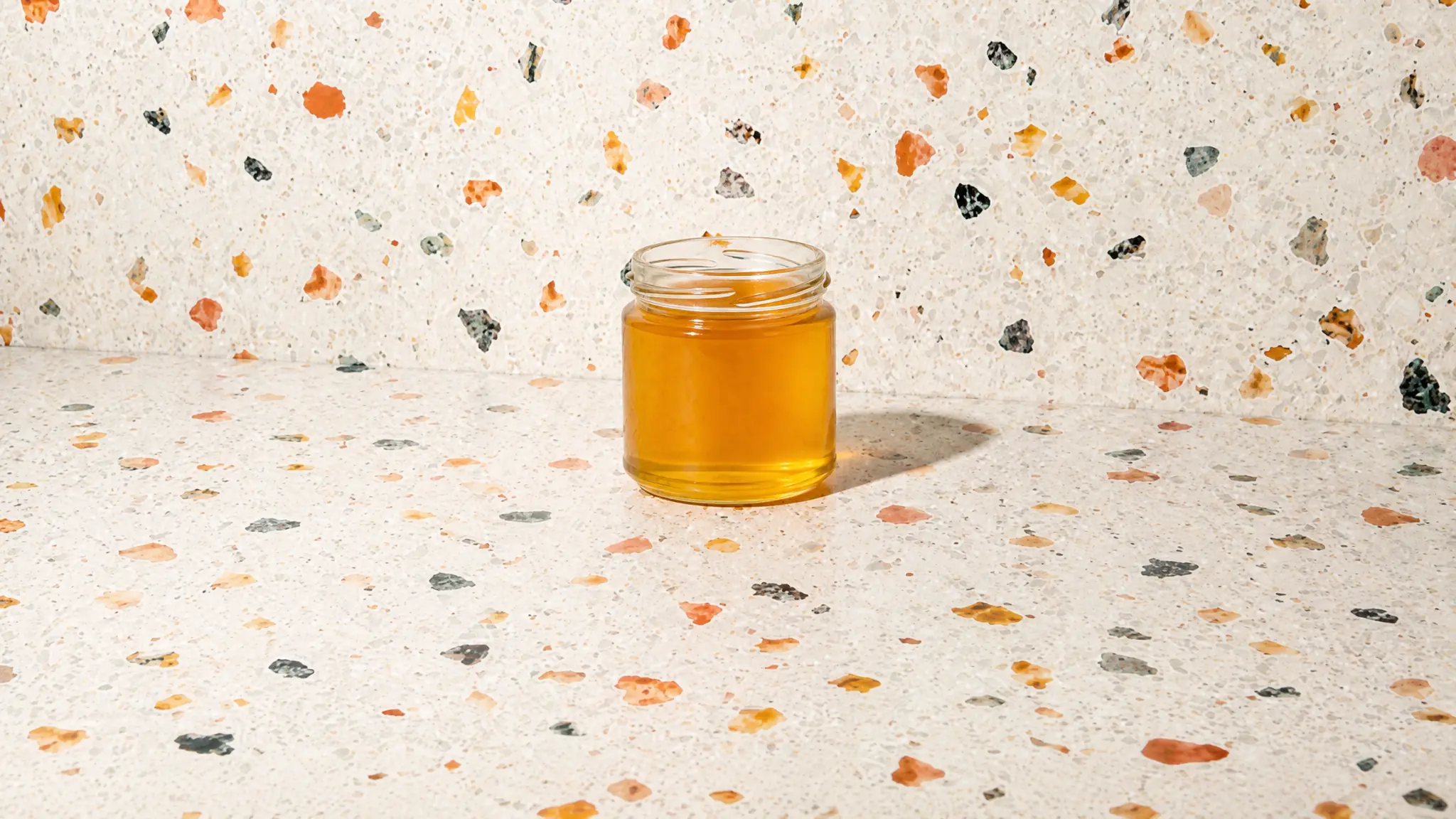
Honey
Sweetener
Last updated July 5, 2026. The Tummi Food Team maintains this Can I Feed This safety guide guide. Supporting links appear in Sources when available.



Clinically reviewed by Andria Procopio and Arefa Mohamed
Direct answer
Can babies eat Honey?
Honey should not be offered before 12 months because of the risk of infant botulism. Any preparation guidance for ages 6 to 11 months is avoidance guidance, not an introduction stage, and applies to raw, pasteurized, cooked, baked, and processed honey.
- Serve Age12+months
Most babies start solids around 6 months once they show readiness signs. Match the texture and serving size to your baby's skills.
- No Allergens
Honey is not flagged as one of the major allergens tracked in this database. Still watch your baby closely when serving any new food.
- Choking Risk123451
Lower choking risk when served in the right texture. Always supervise meals and adjust the shape for your baby.
This guide is for everyday food prep questions. Ask your pediatrician about medical concerns, feeding delays, allergy plans, or serious reactions.
How Do You Serve Honey?
How to serve Honey to a 11-month-old baby
- 1Do not give honey in any form — raw, cooked, or in processed foods — because it can contain spores that cause infant botulism.
- 2Avoid foods and baked goods that list honey, honey crystals, or bee pollen as ingredients.
- 3If the baby accidentally eats honey, stop offering that food and save any packaging or a sample if possible for the clinician.
- 4Monitor for symptoms for up to 30 days: watch for weakness, constipation, poor feeding, decreased movement, or limpness; seek medical care immediately if any appear.
- 5When unsure, call your pediatrician or local poison control for guidance.
How to serve Honey to babies 12 months and older
- 1Only introduce honey when official infant-feeding guidance says it’s appropriate — honey can contain bacteria that cause infant botulism, so it should not be given during the infant stage.
- 2Use honey sparingly as a flavoring in family meals (in dressings, baked goods, or thin spreads) and treat it as an occasional sweet to help limit added sugars.
- 3Avoid serving honeycomb or large sticky pieces; cut or thinly spread honey and always supervise eating to reduce choking risk.
- 4Introduce any foods containing other common allergens on separate days so you can clearly observe and track any reactions.
Is Honey a Common Allergen?
Honey is not a common food allergen for older children or adults, though people with pollen-related allergies may rarely have oral allergy–type reactions. Critically, do not give honey to infants under 12 months because it can contain Clostridium botulinum spores that may cause infant botulism. If an older child or adult develops hives, throat swelling, breathing difficulty, or other allergic symptoms after eating honey, seek medical care.
Is Honey a Choking Hazard?
Very Low Choking Risk
Honey as a liquid or ingredient is not typically a choking hazard for older infants and toddlers. However, honeycomb’s waxy, chewy texture can become gummy in the mouth and may pose a choking risk, particularly if offered in large pieces. Keep in mind this texture-related risk and supervise closely when kids try honeycomb or similar chewy foods.
Have More Questions?
No. Honey should be avoided in babies under 12 months due to the risk of infant botulism, a serious condition caused by spores that can grow in a baby's intestines.
No. Cooking honey does not eliminate the spores that cause infant botulism, so it remains unsafe for babies under 12 months even when baked or processed.
Yes, honey can cause an allergic reaction because it may contain bee-derived allergenic proteins. Do not offer honey before 12 months because of the separate risk of infant botulism.
Honey's choking risk depends on how it is served and on the texture of the food containing it. After 12 months, avoid hard or sticky honey-containing sweets such as hard candy or caramels, prepare food for the child's developmental abilities, and supervise eating.
If a baby under 12 months eats honey, do not panic, but stop offering it and watch for symptoms over the next 3 to 30 days. Contact a doctor promptly if the baby develops constipation, poor feeding or sucking, a weak cry, drooping eyelids, unusual tiredness, weakness, floppiness, or breathing difficulty.
Save Honey to your food log
Track foods, reactions, and prep notes in Tummi when you want to keep your baby's feeding history in one place.
Sources
- Spädbarnsbotulism – skäl att inte ge honung till barn under ett år (Wikström & Holst, 2017) pubmed.ncbi.nlm.nih.gov
- Botulism Prevention (Centers for Disease Control & Prevention, 2019) cdc.gov
What Other Sweetener Can Babies Eat?
See all →
Source-Linked Guidance
See the evidence behind the guide.
Food guides show direct links to public-health guidance and research when supporting references are available. Source inclusion does not imply endorsement.
 Centers for Disease Control and Prevention
Developmental milestones, nutrition guidelines, and allergen introduction timelines.
 American Academy of Pediatrics
Evidence-based feeding recommendations from the leading pediatric authority.
 National Institutes of Health
Peer-reviewed research on infant nutrition, allergies, and food safety.