Sugar
Sweetener
Last updated July 5, 2026. The Tummi Food Team maintains this Can I Feed This safety guide guide. Supporting links appear in Sources when available.



Clinically reviewed by Andria Procopio and Arefa Mohamed
Direct answer
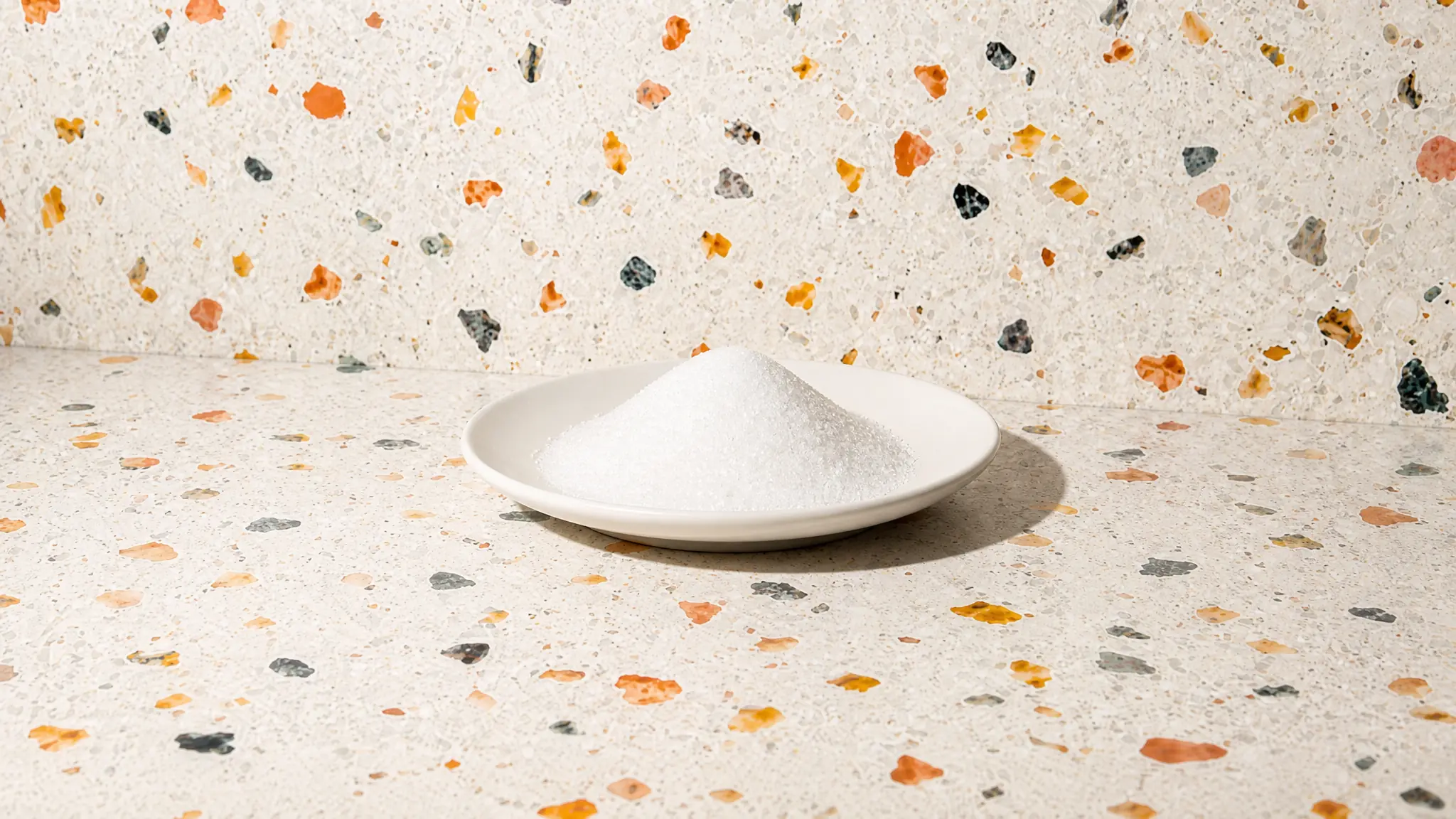
Can babies eat Sugar?
No. Children younger than 2 years should avoid foods and drinks with added sugar because complementary foods need to be nutrient-dense and sugar contributes to tooth decay.
- Serve Age24+months
Sugar may need to wait. Read the answer and prep notes before offering it.
- No Allergens
Sugar is not flagged as one of the major allergens tracked in this database. Still watch your baby closely when serving any new food.
- Choking Risk123451
Lower choking risk when served in the right texture. Always supervise meals and adjust the shape for your baby.
This guide is for everyday food prep questions. Ask your pediatrician about medical concerns, feeding delays, allergy plans, or serious reactions.
How Do You Serve Sugar?
How to serve Sugar to babies 6 months and older
- 1Offer foods or treats that contain added sugar only occasionally, not as routine—added sugar isn’t needed for healthy growth.
- 2Avoid honey and sweetened drinks (like juice) at this stage to reduce risk and unnecessary sugar exposure.
- 3Skip artificial sweeteners because there is limited safety data for infants.
- 4Encourage a wide variety of flavors and textures so the baby learns to enjoy many foods—introduce new tastes gradually.
- 5Prepare foods to match developmental skills: serve soft, appropriately sized pieces, supervise at meals, and watch for choking as skills develop.
How to serve Sugar to babies 12 months and older
- 1Serve sweets alongside balanced family meals in small portions so desserts are one choice among many rather than the main focus.
- 2Prepare textures to reduce choking risk: cut soft desserts into small pieces, mash or puree sticky foods, and avoid whole nuts or hard candies while supervising mealtimes.
- 3Don’t use sweets as rewards or punishments; instead, set gentle limits by offering treats occasionally at meals or celebrations.
- 4Choose healthier options when possible—fruit, plain yogurt with mashed fruit, or small homemade baked goods—and continue limiting sweetened drinks, offering water or milk instead.
Is Sugar a Common Allergen?
Plain table sugar (sucrose) is not a common food allergen—true immune-mediated sugar allergies are extremely rare, though sugar intolerances (digestive enzyme issues) can occur. However, processed or flavored sugars and sugary products may contain additives or be produced in facilities that also handle common allergens (milk, nuts, soy, wheat/gluten, sesame), so cross-contact is possible. Always read ingredient lists and “may contain/made in a facility” statements, and contact the manufacturer if labels are unclear. For children with severe allergies, treat packaged sugary products with the same caution as other processed foods.
Is Sugar a Choking Hazard?
Very Low Choking Risk
Granulated sugar itself presents low choking risk, but hard candies, sugar cubes, and other solid sugary items are choking hazards. Keep babies supervised around such items and be vigilant for signs of gagging or choking. Have a plan for responding to choking and keep emergency first-aid guidance accessible.
Have More Questions?
No. When a developmentally ready baby starts solid foods around 6 months, choose nutrient-dense foods without added sugar.
No. Babies and young children under 2 should not routinely be given foods or drinks with added sugar; choose options without added sugar instead.
No. Do not add sugar to homemade baby food; sugars naturally present in its ingredients are not the same as added sugar.
No. Do not add sugar to a baby's purees; offer foods without added sugar instead.
Yes. Avoid adding sugar to a baby's food; children younger than 2 should have foods and drinks without added sugar.
Save Sugar to your food log
Track foods, reactions, and prep notes in Tummi when you want to keep your baby's feeding history in one place.
Sources
- Fruit Juice in Infants, Children, and Adolescents: Current Recommendations (Heyman & Abrams, 2017) doi.org
- Sugar in Infants, Children and Adolescents: A Position Paper (Fidler Mis et al., 2017) doi.org
- It's not all about the honey (Siu et al., 2017) doi.org
- Association between honey consumption and infant botulism (Tanzi & Gabay, 2002) doi.org
- Coca-Cola allergy identified as fructose-induced anaphylaxis (Jung et al., 2018) doi.org
What Other Sweetener Can Babies Eat?
See all →
Source-Linked Guidance
See the evidence behind the guide.
Food guides show direct links to public-health guidance and research when supporting references are available. Source inclusion does not imply endorsement.
 Centers for Disease Control and Prevention
Developmental milestones, nutrition guidelines, and allergen introduction timelines.
 American Academy of Pediatrics
Evidence-based feeding recommendations from the leading pediatric authority.
 National Institutes of Health
Peer-reviewed research on infant nutrition, allergies, and food safety.