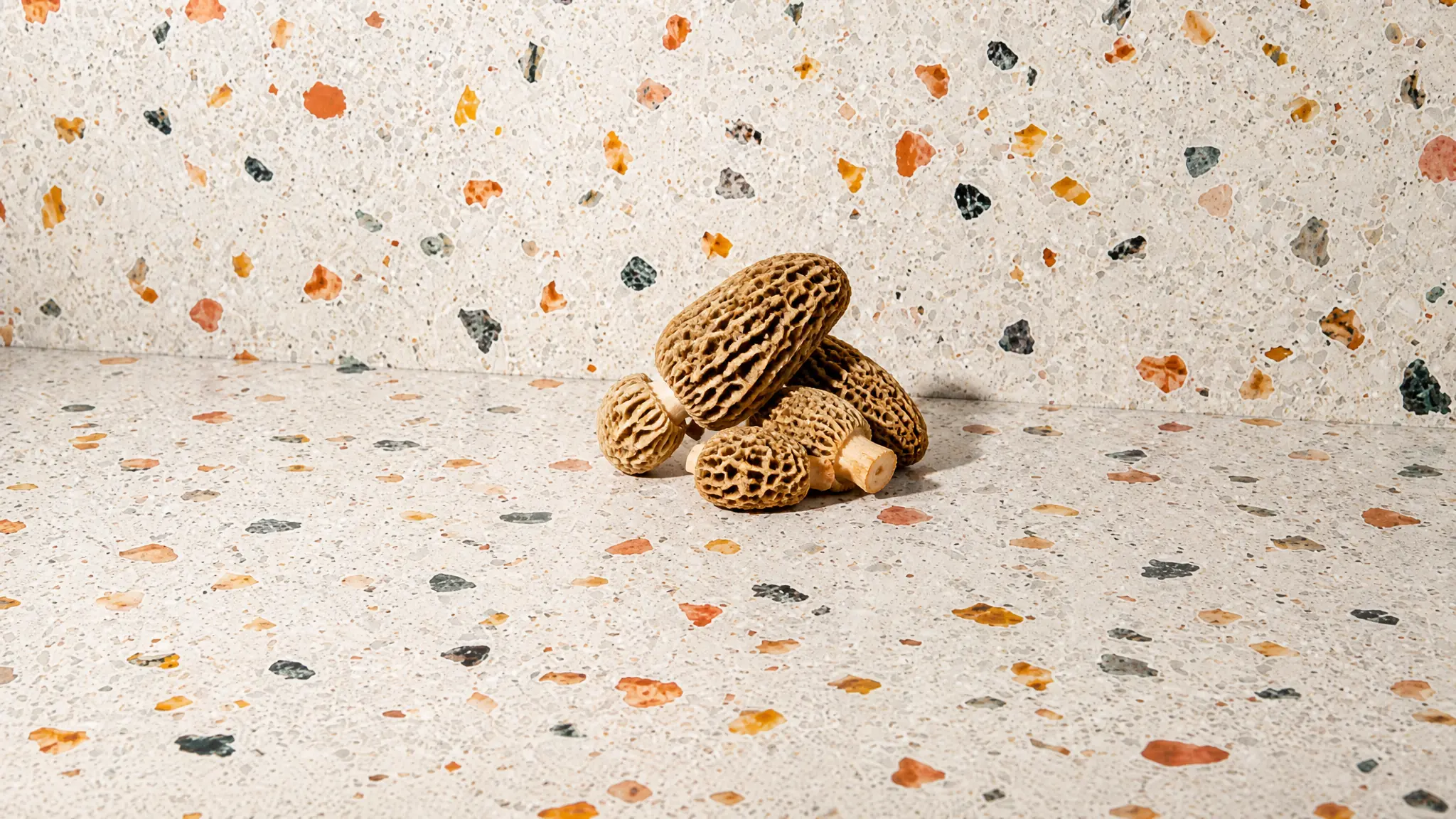
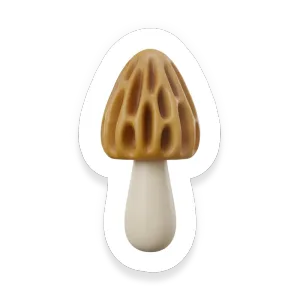
Morel Mushrooms
Fungi
Last updated July 5, 2026. The Tummi Food Team maintains this Can I Feed This safety guide guide. Supporting links appear in Sources when available.



Clinically reviewed by Andria Procopio and Arefa Mohamed
Direct answer
Can babies eat Morel Mushrooms?
Yes, babies can eat thoroughly cooked small amounts of morel mushrooms starting around 6 months, when they are ready to begin solids.
- Serve Age6+months
Most babies start solids around 6 months once they show readiness signs. Match the texture and serving size to your baby's skills.
- No Allergens
Morel Mushrooms is not flagged as one of the major allergens tracked in this database. Still watch your baby closely when serving any new food.
- Choking Risk123453
Some choking risk. Use the prep section to change the size, shape, or texture before serving.
This guide is for everyday food prep questions. Ask your pediatrician about medical concerns, feeding delays, allergy plans, or serious reactions.
How Do You Serve Morel Mushrooms?
How to serve Morel Mushrooms to babies 6 months and older
- 1Finely chop or mince thoroughly cooked morels and mix a very small amount into familiar, easy-to-grasp foods like egg strips, rice balls, mashed vegetables, porridge, or yogurt so the flavor is introduced while choking risk is minimized.
- 2Offer only tiny, infrequent portions — a pinch per serving is enough. Wait a few days between offers to watch for any allergic or digestive reactions.
- 3Never serve raw or undercooked morels; cook until soft and fully done to reduce food-safety and digestion risks.
- 4Avoid home-foraged mushrooms unless a qualified expert has positively identified them as safe; commercially purchased mushrooms are the safer choice.
- 5Make sure your baby is comfortable with chewing soft solids first; cut any pieces very small and remove tough stems or woody parts.
How to serve Morel Mushrooms to babies 9 months and older
- 1Clean and trim morels: slice larger mushrooms open and rinse or gently brush to remove grit and insects.
- 2Cook fully — do not serve raw; thorough cooking (sautéing, simmering, or baking) makes them safer and easier to digest.
- 3Cut into small, bite-size pieces or fold finely chopped morels into soft dishes like frittata, noodles, or pilaf so pieces stay easy to chew.
- 4Serve only a few pieces at a time as an occasional food, and watch closely for any adverse reaction for several hours after eating.
- 5If there’s a family history of mushroom allergy or known food sensitivities, check with your child’s healthcare provider before introducing morels.
How to serve Morel Mushrooms to babies 18 months and older
- 1Cook morels thoroughly until soft, then chop into small, easy-to-chew pieces to reduce choking risk.
- 2Offer only when the child shows reliable chewing and self-feeding skills; only offer whole cooked morels if they consistently chew well and don’t overstuff their mouth.
- 3Limit servings to about once a week; always purchase from a reputable supplier and never serve wild-foraged morels to young children.
- 4Supervise every bite. Remove tough stems or gritty parts, avoid serving raw, introduce a small test portion first, and watch for any digestive or allergic reactions over the next 24–48 hours.
Is Morel Mushrooms a Common Allergen?
Morel mushrooms are not a common food allergen, but mushroom allergies do occur in rare cases; watch for allergic symptoms (hives, swelling, breathing problems). True morels should always be thoroughly cooked—eating raw or undercooked morels can cause gastrointestinal illness, and false morels contain toxic compounds and must never be eaten. If your child has a known mold/mushroom sensitivity or develops signs of an allergic reaction after eating mushrooms, seek medical help promptly.
Is Morel Mushrooms a Choking Hazard?
Moderate Choking Risk
Mushrooms are a common choking hazard for babies because of their chewy, rubbery texture and tendency to stay whole in the mouth. Dried mushrooms can be particularly risky if not softened and may be harder for little ones to manage. Always supervise closely at mealtimes and remain within arm’s reach until your child can reliably chew and swallow them.
Have More Questions?
No. Do not give a baby raw or undercooked morel mushrooms. Cooking morels thoroughly can reduce the risk of illness, but FDA cautions that cooking does not guarantee safety.
Morel mushrooms are commonly foraged from the wild and are also sometimes cultivated for commercial sale. Because poisonous false morels can resemble true morels, FDA advises confirming the identity of every mushroom and consulting a knowledgeable expert when preparing wild morels.
Yes, when well-cooked and offered in small portions occasionally, morel mushrooms are nutritious for babies, providing vitamin D, iron, zinc, and vitamin B6, which support development and health.
Morel mushrooms can pose a choking risk if their size or texture is not appropriate for the baby’s development. Cook them thoroughly, prepare them in an appropriate size and texture, and watch the baby continuously while eating; cooking reduces illness risk but does not guarantee safety.
Morel mushrooms are not one of the nine major food allergens recognized under U.S. law, but that does not mean an allergic reaction is impossible. Stop serving the food and seek medical advice if symptoms of an allergic reaction occur.
Save Morel Mushrooms to your food log
Track foods, reactions, and prep notes in Tummi when you want to keep your baby's feeding history in one place.
Sources
- Lagrange, E., & Vernoux, J. P. (2020). Warning on False or True Morels and Button Mushrooms with Potential Toxicity Linked to Hydrazinic Toxins: An Update. Toxins, 12(8), 482. doi.org
- Koivikko, A., & Savolainen, J. (1988). Mushroom allergy. Allergy, 43(1), 1-10. doi.org
- Dauby, P.A., Whisman, B.A., & Hagan, L. (2002). Cross-reactivity between raw mushroom and molds in a patient with oral allergy syndrome. Annals of allergy, asthma & immunology, 89(3), 319–321. doi.org
- Pravettoni, V., Primavesi, L., & Piantanida, M. (2014). Shiitake mushroom (Lentinus edodes): A poorly known allergen in Western countries responsible for severe work-related asthma. International Journal of Occupational Medicine and Environmental Health, 27(5), 871-874. doi.org
- Gabriel, M. F., González-Delgado, P., Postigo, I., Fernández, J., Soriano, V., Cueva, B., & Martínez, J. (2015). From respiratory sensitization to food allergy: Anaphylactic reaction after ingestion of mushrooms (Agaricus bisporus). Medical mycology case reports, 8, 14–16. doi.org
- Branicka, O., Rozłucka, L., & Gawlik, R. (2021). A case of anaphylactic reaction following oyster mushroom (Pleurotus ostreatus) inhalation. International journal of occupational medicine and environmental health, 34(4), 575–579. doi.org
- Lee, C.G. (2009). Chitin, chitinases and chitinase-like proteins in allergic inflammation and tissue remodeling. Yonsei medical journal, 50(1), 22–30. doi.org
- Kayode, O.S., Siew, L., Pillai, P., Haque, R., Rutkowski, K., & Caballero, M. R. (2020). Mushroom allergy: Case series. The journal of allergy and clinical immunology. In practice, 8(1), 375–379. doi.org
- Kashyap, R.R., & Kashyap, R.S. (2015). Oral Allergy Syndrome: An Update for Stomatologists. Journal of allergy, 2015, 543928. doi.org
- Jayachandran, M., Xiao, J., & Xu, B. (2017). A Critical Review on Health Promoting Benefits of Edible Mushrooms through Gut Microbiota. International journal of molecular sciences, 18(9), 1934. doi.org
- Quagliani, D., & Felt-Gunderson, P. (2016). Closing America's Fiber Intake Gap: Communication Strategies From a Food and Fiber Summit. American journal of lifestyle medicine, 11(1), 80–85. doi.org
- Gecan, J.S., & Cichowicz, S.M. (1993). Toxic Mushroom Contamination of Wild Mushrooms in Commercial Distribution. Journal of Food Protection, 56(8), 730-734. doi.org
What Other Fungi Can Babies Eat?
See all →
Source-Linked Guidance
See the evidence behind the guide.
Food guides show direct links to public-health guidance and research when supporting references are available. Source inclusion does not imply endorsement.
 Centers for Disease Control and Prevention
Developmental milestones, nutrition guidelines, and allergen introduction timelines.
 American Academy of Pediatrics
Evidence-based feeding recommendations from the leading pediatric authority.
 National Institutes of Health
Peer-reviewed research on infant nutrition, allergies, and food safety.