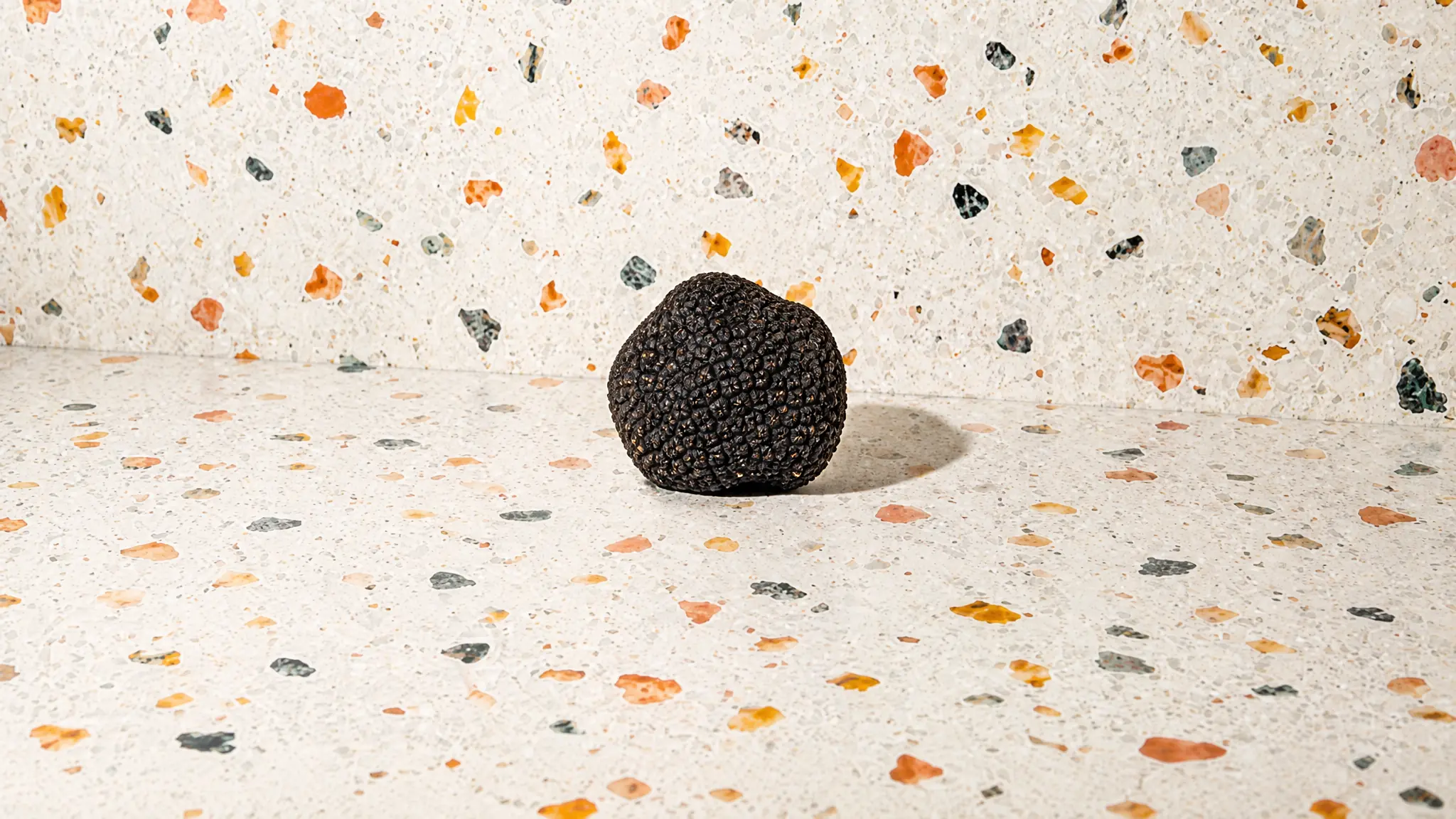
Truffle
Fungi
Last updated July 5, 2026. The Tummi Food Team maintains this Can I Feed This safety guide guide. Supporting links appear in Sources when available.



Clinically reviewed by Andria Procopio and Arefa Mohamed
Direct answer
Can babies eat Truffle?
Truffle may be introduced in a small amount from around 6 months, once your baby shows the developmental signs of readiness for solid foods. Finely grate or shave it into a soft dish, and check the full ingredient and allergen label on any truffle product.
- Serve Age6+months
Most babies start solids around 6 months once they show readiness signs. Match the texture and serving size to your baby's skills.
- No Allergens
Truffle is not flagged as one of the major allergens tracked in this database. Still watch your baby closely when serving any new food.
- Choking Risk123451
Lower choking risk when served in the right texture. Always supervise meals and adjust the shape for your baby.
This guide is for everyday food prep questions. Ask your pediatrician about medical concerns, feeding delays, allergy plans, or serious reactions.
How Do You Serve Truffle?
How to serve Truffle to babies 6 months and older
- 1Grate or very finely shave a tiny pinch of truffle and stir it into warm, soft, scoopable foods (pasta, polenta, or purees) so the flavor is evenly dispersed and there are no large pieces.
- 2Start with a tiny pinch (less than 1/8 teaspoon) and increase gradually on later servings after assessing tolerance and preference.
- 3If using dried truffle, grind it to a fine powder and add to stocks before cooking grains or sprinkle a small amount into finished baby food for mild flavor.
- 4For truffle oil, use a light drizzle (just a few drops) over porridge or finger foods—choose oils without added salt and use sparingly.
- 5Ensure the truffle is fully integrated and the texture stays smooth to avoid choking; observe for any adverse reactions when introducing new flavors.
How to serve Truffle to babies 12 months and older
- 1Start with a very small amount — a light pinch of finely grated or thinly shaved truffle mixed into a meal so the flavor is present but not overpowering.
- 2Incorporate into soft, well-mixed dishes (mashed potatoes, scrambled eggs, or soft purees) so truffle pieces are easy to swallow.
- 3Increase the amount gradually over several meals only if tolerated, and never serve chunks — always keep shavings thin and evenly distributed.
- 4Use truffles that are thoroughly cleaned and purchased from reputable suppliers; if using truffle butter or truffle oil, apply a light spread or drizzle rather than large quantities.
Is Truffle a Common Allergen?
Current records list no common allergens for “Truffle.” Note that “truffle” can mean a chocolate truffle (often contains milk and may contain soy or tree nuts) or the truffle fungus used in savory dishes; packaged or prepared truffles can also have traces of gluten, eggs, or other allergens from shared equipment. Parents of children with allergies should always check ingredient labels and allergen statements, ask the manufacturer or chef if unsure, and avoid serving if there's any concern about dairy, nuts, soy, gluten, or cross-contact. When in doubt, treat truffles as potentially dairy- or nut-containing until verified.
Is Truffle a Choking Hazard?
Very Low Choking Risk
Truffles present a low choking risk for babies when introduced at the appropriate developmental stage, but any food can potentially cause choking. Always supervise your baby at mealtimes within arm’s reach and watch for coughing, gagging, or difficulty breathing as signs of trouble. Be sure you know infant choking first aid and call emergency services immediately if your baby shows signs of airway obstruction.
Have More Questions?
Yes, babies can eat small amounts of cooked truffles once they are ready for solids around 6 months. Ensure they are prepared simply and served in age-appropriate textures.
It depends on the truffle oil or product: check the full ingredient and allergen label, and avoid products with added salt when serving a baby. Use only a small amount mixed into an age-appropriate food once your baby is ready for solids around 6 months.
Yes, you can store an untouched portion of a prepared truffle dish for a later baby meal if you cool it promptly, refrigerate it, and use it within 2 days. Discard food left in the baby's bowl or any portion the baby has already eaten from.
Serve only a small amount of truffle mixed into the meal, and let your baby decide how much to eat according to their appetite. There is no need to encourage a fixed portion.
Dishes containing truffle may be offered from around 6 months, once your baby shows the developmental signs of readiness for solid foods. Serve the dish in a texture your baby can manage, use only finely grated or shaved truffle, and check packaged products for added salt and allergens.
Save Truffle to your food log
Track foods, reactions, and prep notes in Tummi when you want to keep your baby's feeding history in one place.
Sources
- Nutritional value, chemical composition and antioxidant activity of three Tuber species from China doi.org
- Mushrooms and truffles: historical biofactories for complementary medicine in Africa and in the middle East doi.org
- Potentials of truffles in nutritional and medicinal applications: a review doi.org
- Mushroom allergy doi.org
- Cross-reactivity between raw mushroom and molds in a patient with oral allergy syndrome doi.org
- Shiitake mushroom (Lentinus edodes): A poorly known allergen in Western countries responsible for severe work-related asthma doi.org
- From respiratory sensitization to food allergy: Anaphylactic reaction after ingestion of mushrooms (Agaricus bisporus) doi.org
- A case of anaphylactic reaction following oyster mushroom (Pleurotus ostreatus) inhalation doi.org
- Allergic contact dermatitis caused by mushrooms doi.org
- Chitin, chitinases and chitinase-like proteins in allergic inflammation and tissue remodeling doi.org
- Mushroom allergy: Case series doi.org
- Oral Allergy Syndrome: An Update for Stomatologists doi.org
What Other Fungi Can Babies Eat?
See all →
Source-Linked Guidance
See the evidence behind the guide.
Food guides show direct links to public-health guidance and research when supporting references are available. Source inclusion does not imply endorsement.
 Centers for Disease Control and Prevention
Developmental milestones, nutrition guidelines, and allergen introduction timelines.
 American Academy of Pediatrics
Evidence-based feeding recommendations from the leading pediatric authority.
 National Institutes of Health
Peer-reviewed research on infant nutrition, allergies, and food safety.