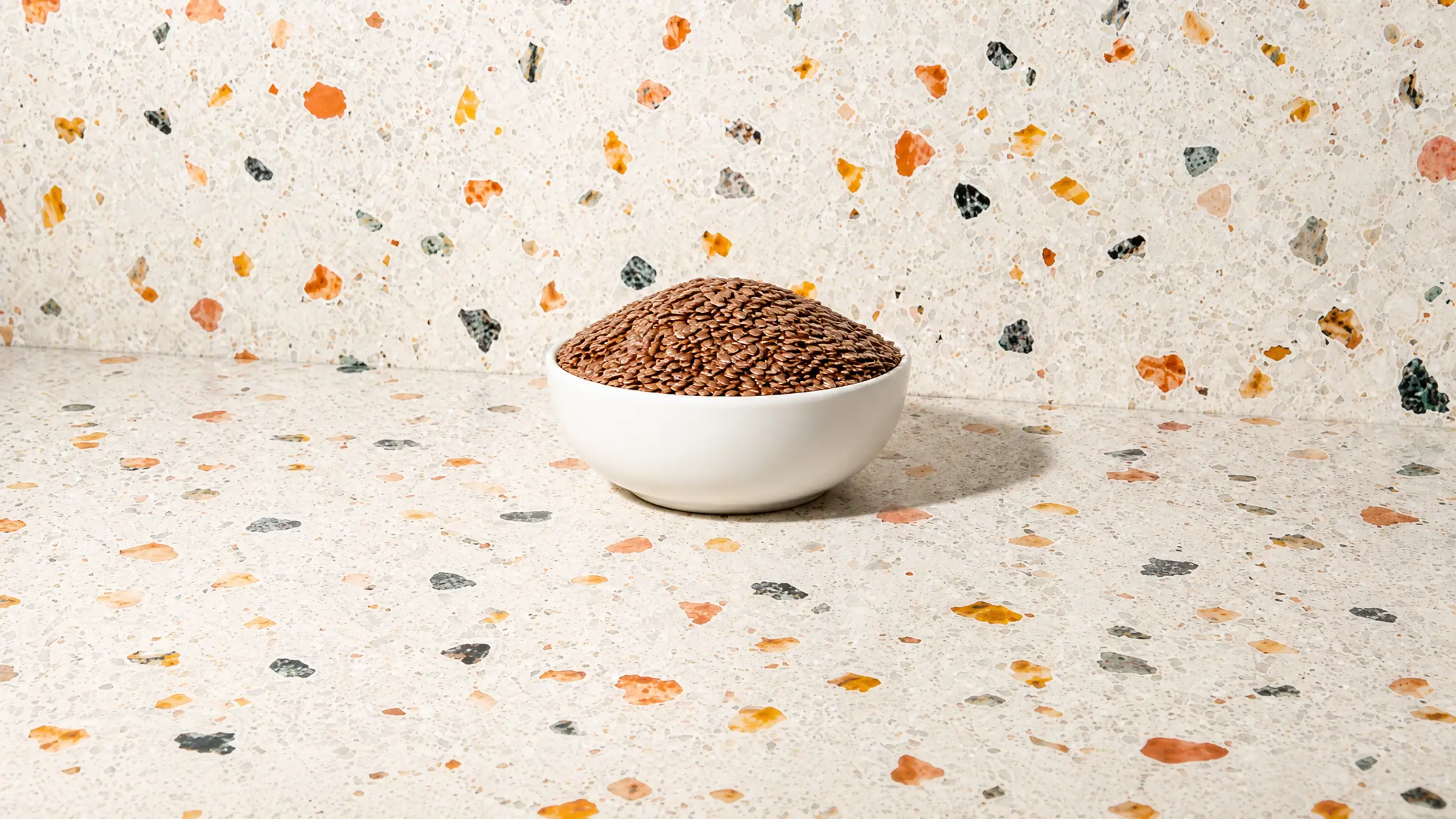
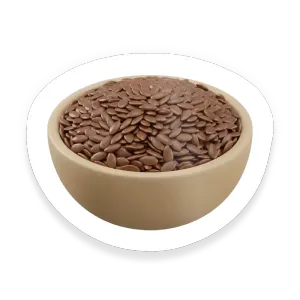
Flaxseed (Linseed)
Seed
Last updated July 5, 2026. The Tummi Food Team maintains this Can I Feed This safety guide guide. Supporting links appear in Sources when available.



Clinically reviewed by Andria Procopio and Arefa Mohamed
Direct answer
Can babies eat Flaxseed (Linseed)?
Yes, flaxseed can be introduced around 6 months, preferably ground and mixed into baby foods, to ensure safety and easy digestion.
- Serve Age6+months
Most babies start solids around 6 months once they show readiness signs. Match the texture and serving size to your baby's skills.
- No Allergens
Flaxseed (Linseed) is not flagged as one of the major allergens tracked in this database. Still watch your baby closely when serving any new food.
- Choking Risk123451
Lower choking risk when served in the right texture. Always supervise meals and adjust the shape for your baby.
This guide is for everyday food prep questions. Ask your pediatrician about medical concerns, feeding delays, allergy plans, or serious reactions.
How Do You Serve Flaxseed (Linseed)?
How to serve Flaxseed (Linseed) to babies 6 months and older
- 1Sprinkle finely ground flaxseed or flaxseed meal into moist foods (soft purees, warm cereals, mashed vegetables, or yogurt) so baby can scoop or eat from a pre-loaded spoon; avoid offering loose dry seeds.
- 2Start with a small amount—about ½ teaspoon per serving—and increase slowly as tolerated.
- 3You can also stir a small amount of flaxseed oil into foods, or mix ground flax into batters for muffins or pancakes; avoid adding whole seeds.
- 4Keep ground flaxseed cold to prevent rancidity. Store in the refrigerator and use within 2–3 weeks after opening.
How to serve Flaxseed (Linseed) to babies 9 months and older
- 1Sprinkle about 1/2–1 teaspoon ground flaxseed or flaxseed meal into a serving of cereal, yogurt, or pureed fruit so it spreads evenly.
- 2Stir flax into warm (not hot) foods to soften it and avoid dry, loose spoonfuls that can be a choking risk.
- 3Add flax to baked goods, then break or cut them into small, soft pieces so the baby can practice picking up food with their fingers.
- 4Always use ground flaxseed or flaxseed meal rather than whole seeds, which can pass undigested and pose a choking hazard.
- 5Introduce one flax-containing food at a time and watch for any signs of allergy or digestive upset; supervise all feeding.
How to serve Flaxseed (Linseed) to babies 18 months and older
- 1Grind whole flaxseeds before serving and use ground flax or modest amounts of flaxseed oil mixed into meals, smoothies, energy balls, or baked goods.
- 2Start with small amounts—about 1/2 to 1 teaspoon per serving—and increase slowly while watching tolerance.
- 3Ensure texture is soft by stirring ground flax into yogurt, porridge, purees, or batter rather than offering whole seeds to reduce choking risk.
- 4Store ground flaxseed in the fridge or freezer and use flaxseed oil cold (do not heat); introduce gradually and watch for allergic reactions or digestive changes.
Is Flaxseed (Linseed) a Common Allergen?
Flaxseed (linseed) can cause true allergic reactions — including rare but reported anaphylaxis — and reactions have occurred after both eating and skin contact. While flaxseed allergy is uncommon, reports are increasing as flax is added to more foods and supplements. Cross‑reactivity between seeds is not well established, so exercise caution in children with other seed allergies and consult an allergist if concerned. Introduce flax cautiously, watch for hives, vomiting, wheeze or breathing trouble, and seek immediate care for severe symptoms.
Is Flaxseed (Linseed) a Choking Hazard?
Very Low Choking Risk
Flaxseeds are a low choking risk when offered appropriately, but loose dry seeds or spoonfuls of dry flaxseed or meal can be aspirated and should be avoided. Keep baby seated and within arm’s reach during meals, and watch closely for coughing, gagging, or signs of airway trouble. If you’re ever worried about an episode, seek immediate help and review choking-first-aid guidance.
Have More Questions?
Yes. Flaxseed can be introduced to babies around 6 months old as part of a balanced diet, after they start solids.
Yes. Flaxseed provides beneficial nutrients that support a baby’s growth, such as omega-3 fatty acids and fiber, when given in appropriate amounts.
No. Flaxseeds are not a common allergen, but allergic reactions, though rare, can occur, especially in children with seed allergies.
No. When prepared properly—such as ground and mixed into soft foods—flaxseed is a low choking hazard for babies.
It depends. When introducing ground flaxseed in small amounts and incorporated into foods, it can be safely given to babies.
Save Flaxseed (Linseed) to your food log
Track foods, reactions, and prep notes in Tummi when you want to keep your baby's feeding history in one place.
Sources
- Flax and Flaxseed Oil (Linum usitatissimum): A Review by the Natural Standard Research Collaboration doi.org
- Flax and flaxseed oil: an ancient medicine & modern functional food doi.org
- Dietary Flaxseed as a Strategy for Improving Human Health doi.org
- Case report: A first case of flaxseed-induced anaphylaxis in Korea doi.org
What Other Seed Can Babies Eat?
See all →
Source-Linked Guidance
See the evidence behind the guide.
Food guides show direct links to public-health guidance and research when supporting references are available. Source inclusion does not imply endorsement.
 Centers for Disease Control and Prevention
Developmental milestones, nutrition guidelines, and allergen introduction timelines.
 American Academy of Pediatrics
Evidence-based feeding recommendations from the leading pediatric authority.
 National Institutes of Health
Peer-reviewed research on infant nutrition, allergies, and food safety.