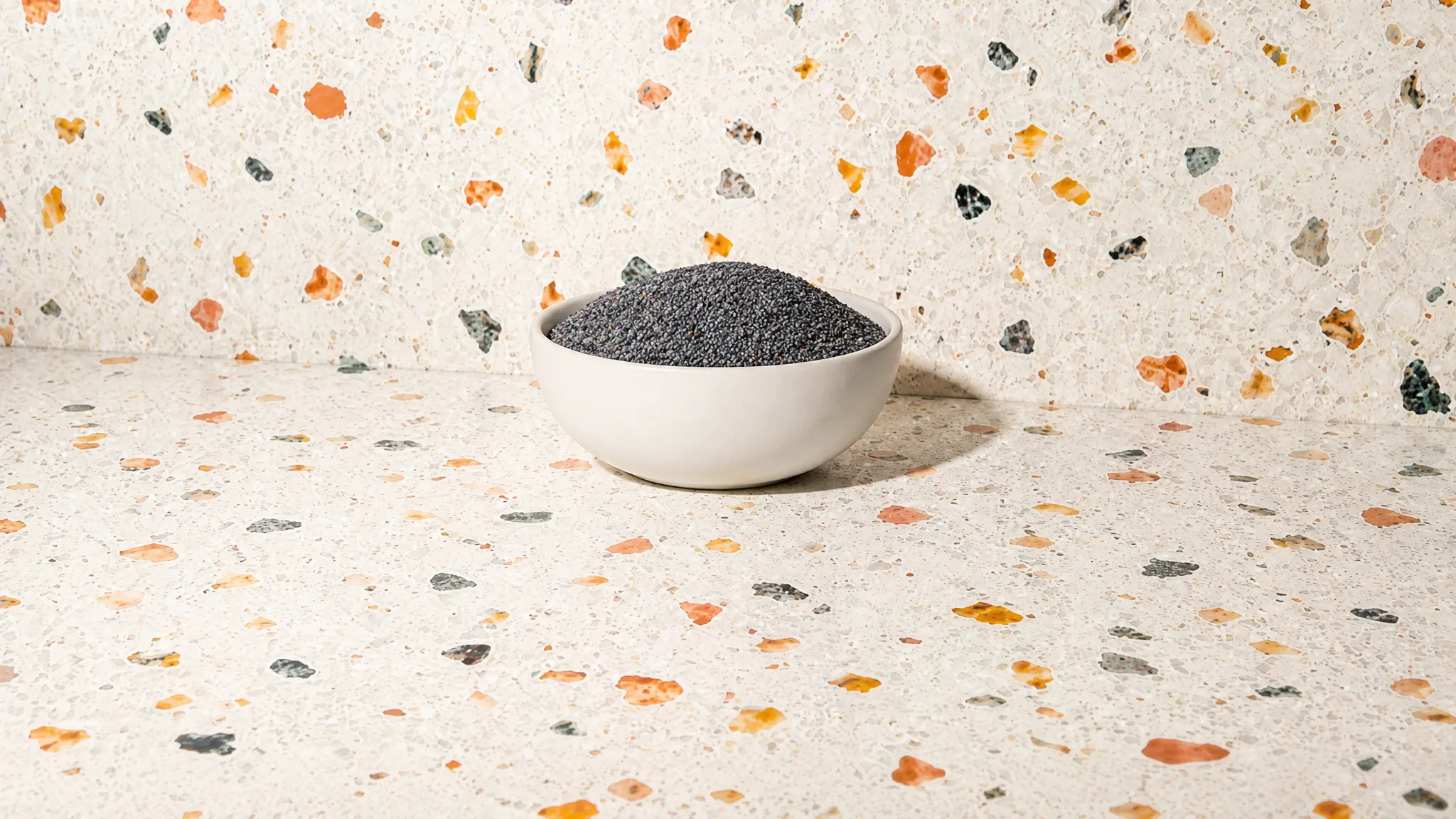
Poppy Seed
Seed
Last updated July 5, 2026. The Tummi Food Team maintains this Can I Feed This safety guide guide. Supporting links appear in Sources when available.



Clinically reviewed by Andria Procopio and Arefa Mohamed
Direct answer
Can babies eat Poppy Seed?
Poppy seeds may be offered in food from around 6 months, once the baby shows the developmental signs of readiness for solid foods. Use poppy seeds sold for culinary use, and never prepare poppy seed tea.
- Serve Age6+months
Most babies start solids around 6 months once they show readiness signs. Match the texture and serving size to your baby's skills.
- No Allergens
Poppy Seed is not flagged as one of the major allergens tracked in this database. Still watch your baby closely when serving any new food.
- Choking Risk123451
Lower choking risk when served in the right texture. Always supervise meals and adjust the shape for your baby.
This guide is for everyday food prep questions. Ask your pediatrician about medical concerns, feeding delays, allergy plans, or serious reactions.
How Do You Serve Poppy Seed?
How to serve Poppy Seed to babies 6 months and older
- 1Start small—sprinkle a light amount of food‑grade poppy seeds into mashed fruits, cooked vegetables, cottage cheese, or other soft, age-appropriate foods to add mild flavor and texture.
- 2Use whole seeds for a gentle crunch or lightly grind them to release more flavor and help them blend smoothly into purees and sauces.
- 3Stir ground seeds into thickened sauces, stews, yogurt, or porridges as a natural thickener and subtle flavor enhancer; add gradually and taste as you go.
- 4Avoid sweet pastries and concentrated poppy‑seed pastes at this stage; instead prefer savory seeded breads or mixes that blend seeds into vegetables or grains.
How to serve Poppy Seed to babies 9 months and older
- 1Lightly sprinkle a few whole poppy seeds onto soft fruits, cooked vegetables, or scoopable foods to give baby small, reachable pieces that support developing pincer grasp.
- 2Offer tiny, easy-to-handle pieces of seeded baked goods (for example, thin strips or small cubes) so baby can practice picking up and chewing safely.
- 3Always supervise closely during feeding and remove any large chunks; keep seeds sparsely distributed to lower aspiration risk.
- 4If you're concerned about texture or safety, mix a small amount of seeds into soft purees or spreads, or try finely ground seeds as an alternative.
How to serve Poppy Seed to babies 24 months and older
- 1Mix poppy seeds into batters, porridge, yogurt, or casseroles—start with a small amount so flavor and texture are mild.
- 2Offer them as a topping on toast, fruit, or salads, and let your child practice sprinkling with a small, easy-to-hold shaker to build fine motor skills; supervise closely while they do this.
- 3Keep sweet baked items with poppy seeds occasional—serve modest portions and balance with savory choices to avoid too much sugar.
- 4When introducing poppy seeds for the first time, give a small portion and watch for any unusual reactions; consult your pediatrician if you have concerns.
Is Poppy Seed a Common Allergen?
Poppy seeds can cause true allergic reactions in some people and have been reported to provoke moderate-to-severe responses; there is evidence of cross-reactivity with other seeds (including sesame). Because poppy seeds are commonly used in baked goods, cross-contact with nuts, gluten, or sesame is possible — check ingredient labels. Whole seeds may pose an aspiration/choking risk for infants and young toddlers, so avoid giving loose whole seeds to very young children. If your child has a known seed allergy or has had reactions, avoid poppy seeds and consult your pediatrician or an allergy specialist for testing and an action plan.
Is Poppy Seed a Choking Hazard?
Very Low Choking Risk
Poppy seeds themselves are tiny and are not a common choking hazard for babies. However, a spoonful or handful of loose seeds could be aspirated, so avoid offering them loose and keep an eye on texture and portion. Always supervise closely—stay within an arm’s reach—while baby is eating.
Have More Questions?
Poppy seeds may be introduced in food from around 6 months, once your baby shows the developmental signs of readiness for solid foods. Use seeds sold for culinary use, mix a small amount into soft food, and never use them to make poppy seed tea.
Organic poppy seeds are not established as safer or better for babies than conventional poppy seeds. Opiate-alkaloid levels can vary with cultivation, harvesting, and post-harvest processing, so use seeds sold for culinary use and never make poppy seed tea.
Yes, poppy seeds can be kept in the freezer to help preserve quality. Keep them in a tightly closed, moisture-resistant container, follow any storage directions on the package, and discard them if they show signs of spoilage.
Mix a small amount of poppy seeds into a soft, age-appropriate food such as porridge, yogurt, or mashed vegetables. Offer them only after your baby is developmentally ready for solids, stay with your baby while they eat, and never use the seeds to make poppy seed tea.
Start with a small amount of poppy seeds mixed into an age-appropriate food, then follow your baby's appetite rather than aiming for a fixed portion. Do not use large quantities to make poppy seed tea or another drink.
Save Poppy Seed to your food log
Track foods, reactions, and prep notes in Tummi when you want to keep your baby's feeding history in one place.
Sources
- Powers, D., Erickson, S., Swortwood, M.J. (2017) Quantification of morphine, codeine, and thebaine in home-brewed poppy seed tea by LC-MS/MS. Journal of Forensic Sciences. doi.org
- Carlin, M.G., Dean, J.R., Ames, J.M. (2020) Opium alkaloids in harvested and thermally processed poppy seeds. Frontiers in Chemistry. doi.org
- Kowalczyk, A., Kuczynska, R., Zbikowska-Gotz, M., Bartuzi, Z., Krogulska, A. (2020) Anaphylaxis in an 8-year-old boy following the consumption of poppy seed. Journal of Investigational Allergology and Clinical Immunology. doi.org
- Vocks, E., Borga, A., Szliska, C., et al. (1993) Common allergenic structures in hazelnut, rye grain, sesame seeds, kiwi, and poppy seeds. Allergy. doi.org
What Other Seed Can Babies Eat?
See all →
Source-Linked Guidance
See the evidence behind the guide.
Food guides show direct links to public-health guidance and research when supporting references are available. Source inclusion does not imply endorsement.
 Centers for Disease Control and Prevention
Developmental milestones, nutrition guidelines, and allergen introduction timelines.
 American Academy of Pediatrics
Evidence-based feeding recommendations from the leading pediatric authority.
 National Institutes of Health
Peer-reviewed research on infant nutrition, allergies, and food safety.