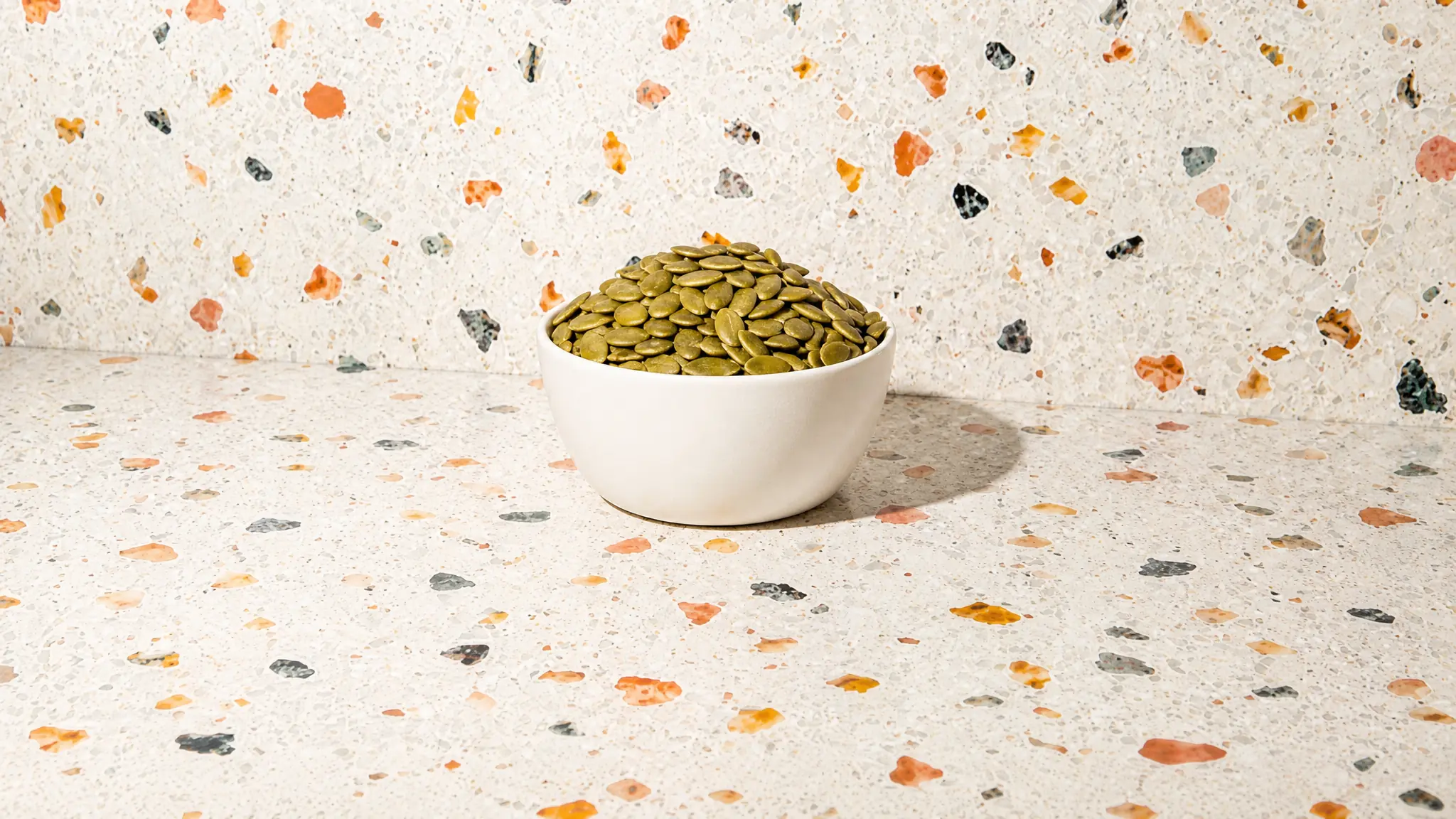
Pumpkin Seed
Seed
Last updated July 5, 2026. The Tummi Food Team maintains this Can I Feed This safety guide guide. Supporting links appear in Sources when available.



Clinically reviewed by Andria Procopio and Arefa Mohamed
Direct answer
Can babies eat Pumpkin Seed?
Yes, pumpkin seeds can be introduced when your baby is around 6 months old, provided they are finely ground or blended into pumpkin seed butter to prevent choking.
- Serve Age6+months
Most babies start solids around 6 months once they show readiness signs. Match the texture and serving size to your baby's skills.
- No Allergens
Pumpkin Seed is not flagged as one of the major allergens tracked in this database. Still watch your baby closely when serving any new food.
- Choking Risk123451
Lower choking risk when served in the right texture. Always supervise meals and adjust the shape for your baby.
This guide is for everyday food prep questions. Ask your pediatrician about medical concerns, feeding delays, allergy plans, or serious reactions.
How Do You Serve Pumpkin Seed?
How to serve Pumpkin Seed to babies 6 months and older
- 1Grind shelled pumpkin seeds (pepitas) very finely into a powder and sprinkle over yogurt, warm cereal, rice, quinoa, or soft cooked squash to add a mild, nutty flavor and gentle texture.
- 2Roll slippery finger foods in the ground seeds to give them more grip and make self-feeding easier.
- 3Blend seeds into a smooth, honey-free pumpkin seed butter; thin with breast milk, formula, water, or purees to reach the consistency you need. Spread it thinly on toast strips or stir into scoopable foods so it isn’t too sticky.
- 4Keep the child seated and supervised while eating, and offer small sips from an open cup to help wash down any sticky pieces and reduce choking risk.
How to serve Pumpkin Seed: varies
- 1Use finely ground pumpkin seeds as a light topping — sprinkle onto porridge, mashed vegetables, or yogurt so the texture is smooth and easy to swallow.
- 2Serve smooth pumpkin seed butter without thinning if it is well spread or thoroughly mixed into other foods; avoid giving thick spoonfuls that could be hard to swallow.
- 3Offer whole, shell-less pepitas only when the child has clear chewing ability and molars; introduce one seed at a time and observe how they chew.
- 4Demonstrate chewing, seat the child upright, and supervise closely for every bite when introducing whole seeds to reduce choking risk.
- 5Do not give seeds with hulls until the child consistently manages firm textures while seated and focused; discard or remove hulls to lower choking and digestion concerns.
Is Pumpkin Seed a Common Allergen?
Pumpkin seeds are not one of the common 'major' allergens but can cause IgE‑mediated reactions in some people, from mild oral symptoms to severe anaphylaxis. Seed allergies are uncommon but possible, and pumpkin seeds may cross‑react with other seeds or tree‑nut/peanut allergens; manufactured products may also be contaminated in facilities that handle nuts—always check labels. If your child has a known seed, peanut, or tree‑nut allergy, introduce pumpkin seeds only with medical advice and watch carefully for symptoms; follow your emergency plan if a severe reaction occurs.
Is Pumpkin Seed a Choking Hazard?
Very Low Choking Risk
Pumpkin seeds are small, firm, and smooth and can pose a significant choking hazard for babies; pumpkin seed butter can also be very sticky and hard for young mouths to manage. Keep your child seated and within arm’s reach during meals, watch closely for gagging or signs of choking, and be prepared to respond. Whole seeds are especially risky until a child has mature chewing skills (for example, molars) and experience with challenging textures.
Have More Questions?
Yes, pumpkin seeds can be stored in an airtight container in a cool, dry place for up to a year, while pumpkin seed butter should be refrigerated and consumed within a few weeks.
Yes, you can freeze pureed pumpkin seed preparations for up to 3 months, making it easier to prepare ahead for your baby's meals.
Yes, choosing organic pumpkin seeds over conventional ones can reduce exposure to pesticides, beneficial during your baby's early eating stages.
Yes, you can combine pumpkin seeds with other baby-friendly foods like pureed fruits or vegetables to enhance flavor and nutritional variety.
Yes, portion sizes for babies typically start small, about 1 to 2 teaspoons of ground pumpkin seeds or seed butter, adjusting as tolerated and depending on your baby's age and intake clarity.
Save Pumpkin Seed to your food log
Track foods, reactions, and prep notes in Tummi when you want to keep your baby's feeding history in one place.
Sources
- HealthyChildren.org — Preventing Choking healthychildren.org
- NHS — Foods to avoid for babies (choking hazards) nhs.uk
- Healthline — 9 evidence-based health benefits of pumpkin seeds healthline.com
- American Red Cross — Choking first aid for infants and children (guide) redcross.org
What Other Seed Can Babies Eat?
See all →
Source-Linked Guidance
See the evidence behind the guide.
Food guides show direct links to public-health guidance and research when supporting references are available. Source inclusion does not imply endorsement.
 Centers for Disease Control and Prevention
Developmental milestones, nutrition guidelines, and allergen introduction timelines.
 American Academy of Pediatrics
Evidence-based feeding recommendations from the leading pediatric authority.
 National Institutes of Health
Peer-reviewed research on infant nutrition, allergies, and food safety.