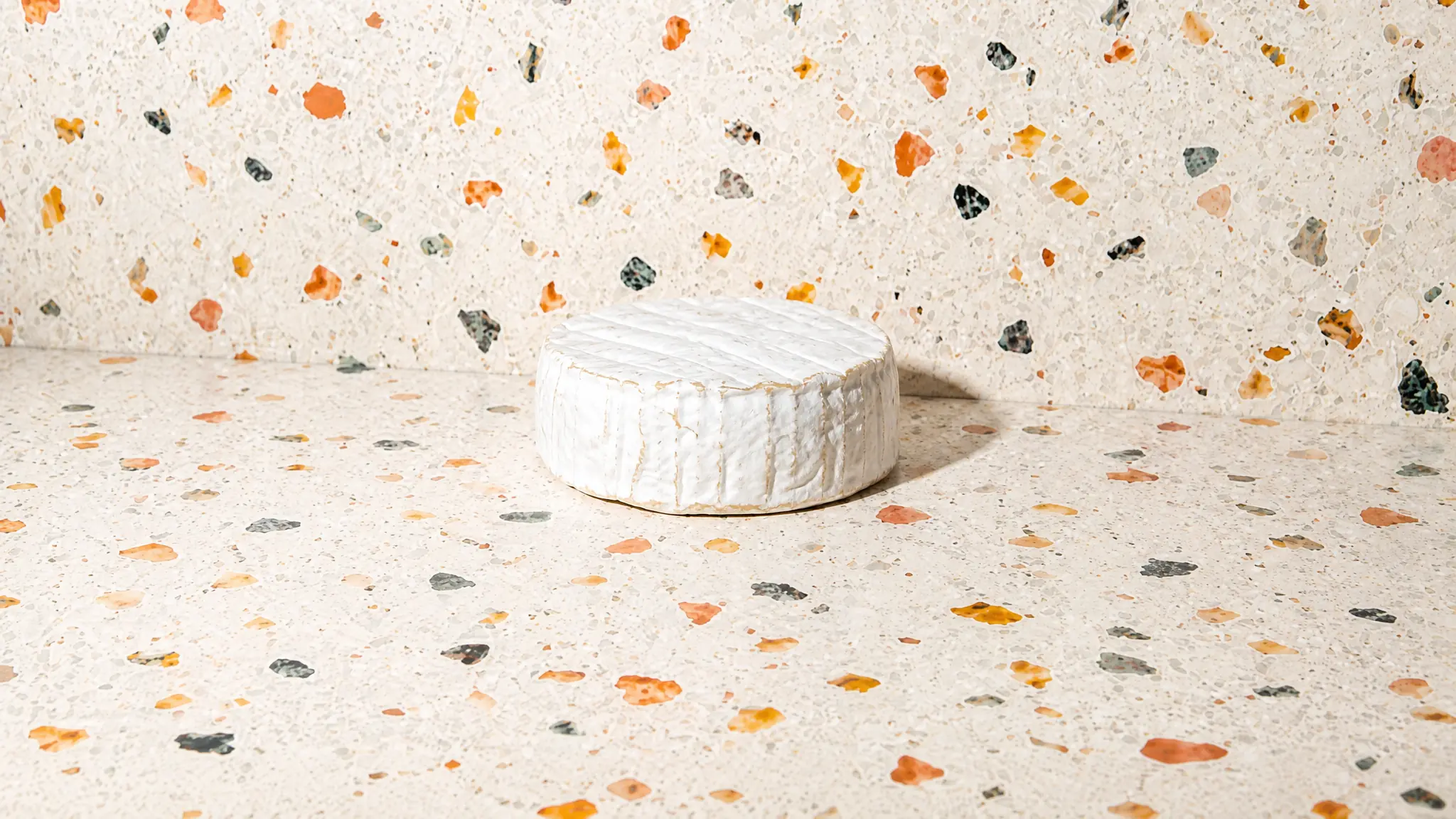
Brie Cheese
Dairy
Last updated July 5, 2026. The Tummi Food Team maintains this Can I Feed This safety guide guide. Supporting links appear in Sources when available.



Clinically reviewed by Andria Procopio and Arefa Mohamed
Direct answer
Can babies eat Brie Cheese?
No, babies should not eat raw unpasteurized brie cheese due to high foodborne illness risk; pasteurized brie can be introduced around 12 months if served safely.
- Serve Age12+months
Brie Cheese may need to wait. Read the answer and prep notes before offering it.
- Allergens
Brie Cheese is flagged for milk. Introduce common allergens in a baby-safe form and follow your clinician's advice if your baby is higher risk.
- Choking Risk123451
Lower choking risk when served in the right texture. Always supervise meals and adjust the shape for your baby.
This guide is for everyday food prep questions. Ask your pediatrician about medical concerns, feeding delays, allergy plans, or serious reactions.
How Do You Serve Brie Cheese?
How to serve Brie Cheese to babies 6 months and older
- 1Delay offering brie because soft, mold-ripened cheeses carry a higher risk of foodborne bacteria such as Listeria.
- 2If you choose to share a small taste, use pasteurized brie and heat it to at least 165°F (74°C) to reduce the chance of illness.
- 3Allow the heated cheese to cool to warm (not hot) before serving. Spread a thin layer of the soft interior on well-toasted bread or a firm cracker to limit stickiness and lower choking risk.
- 4Offer only a very small taste and remove or avoid the rind if the texture is tough or you're unsure about its safety.
How to serve Brie Cheese to babies 12 months and older
- 1Check for food allergies by offering a tiny taste first and watching briefly for any reaction.
- 2Choose pasteurized brie and avoid unpasteurized varieties to reduce risk of foodborne illness.
- 3Serve very small, manageable pieces: thin strips or narrow wedges no larger than a thumbnail for biting practice, or small bite-sized cubes for self‑feeding.
- 4If you prefer to heat the cheese to reduce bacterial risk, warm until the internal temperature reaches 165°F (74°C). Let it cool before serving and test a tiny bit to ensure it’s not hot.
- 5Always supervise closely while the child eats, ensure they sit upright, and avoid whole rounds or large chunks that could be choking hazards.
Is Brie Cheese a Common Allergen?
Contains dairy (milk) — do not give to anyone with a cow’s‑milk allergy. Brie is a soft‑ripened cheese and may be made from unpasteurized (raw) milk; unpasteurized soft cheeses can carry Listeria, so pregnant people, infants, older adults, and immunocompromised individuals should avoid unpasteurized Brie and choose pasteurized products. Note that cow’s‑milk protein allergy is common in infancy (affecting ~2–3% of babies), so check labels and consult your pediatrician if you suspect or know of a milk allergy.
Is Brie Cheese a Choking Hazard?
Very Low Choking Risk
Brie can be sticky and tends to form a glob in the mouth, which increases the risk of choking for babies and young toddlers. Because of this, stay within arm’s reach and closely supervise any baby while they eat brie so you can react quickly. Make sure caregivers know the signs of choking and basic infant/child choking first aid before offering this food.
Save Brie Cheese to your food log
Track foods, reactions, and prep notes in Tummi when you want to keep your baby's feeding history in one place.
Sources
- American Academy of Pediatrics — Consumption of raw or unpasteurized milk and milk products (2014) doi.org
- Schvartzman et al. — Modeling the growth of Listeria monocytogenes on smear- or mold-ripened cheese (2014) frontiersin.org
- KidsHealth — Listeria infections (2017) kidshealth.org
- National Health Service — Foods to avoid giving babies and young children (2018) nhs.uk
- Choi et al. — Cheese Microbial Risk Assessments: A Review (2016) doi.org
- Centers for Disease Control and Prevention — Listeria prevention (2019) cdc.gov
- European Food Safety Authority — Listeria (2019) efsa.europa.eu
- Warren et al. — The epidemiology of milk allergy in US children (2013) doi.org
- El-Agamy — The challenge of cow milk protein allergy (2007) doi.org
- GIKids — Cow's milk protein allergy gikids.org
- Nowak-Węgrzyn — Food protein-induced enterocolitis syndrome and allergic proctocolitis (2015) doi.org
- InformedHealth (IQWiG) — Living with lactose intolerance (2010) informedhealth.org
- U.S. Food & Drug Administration — Dangers of raw milk fda.gov
- Centers for Disease Control and Prevention — Raw Milk cdc.gov
What Other Dairy Can Babies Eat?
See all →
Source-Linked Guidance
See the evidence behind the guide.
Food guides show direct links to public-health guidance and research when supporting references are available. Source inclusion does not imply endorsement.
 Centers for Disease Control and Prevention
Developmental milestones, nutrition guidelines, and allergen introduction timelines.
 American Academy of Pediatrics
Evidence-based feeding recommendations from the leading pediatric authority.
 National Institutes of Health
Peer-reviewed research on infant nutrition, allergies, and food safety.