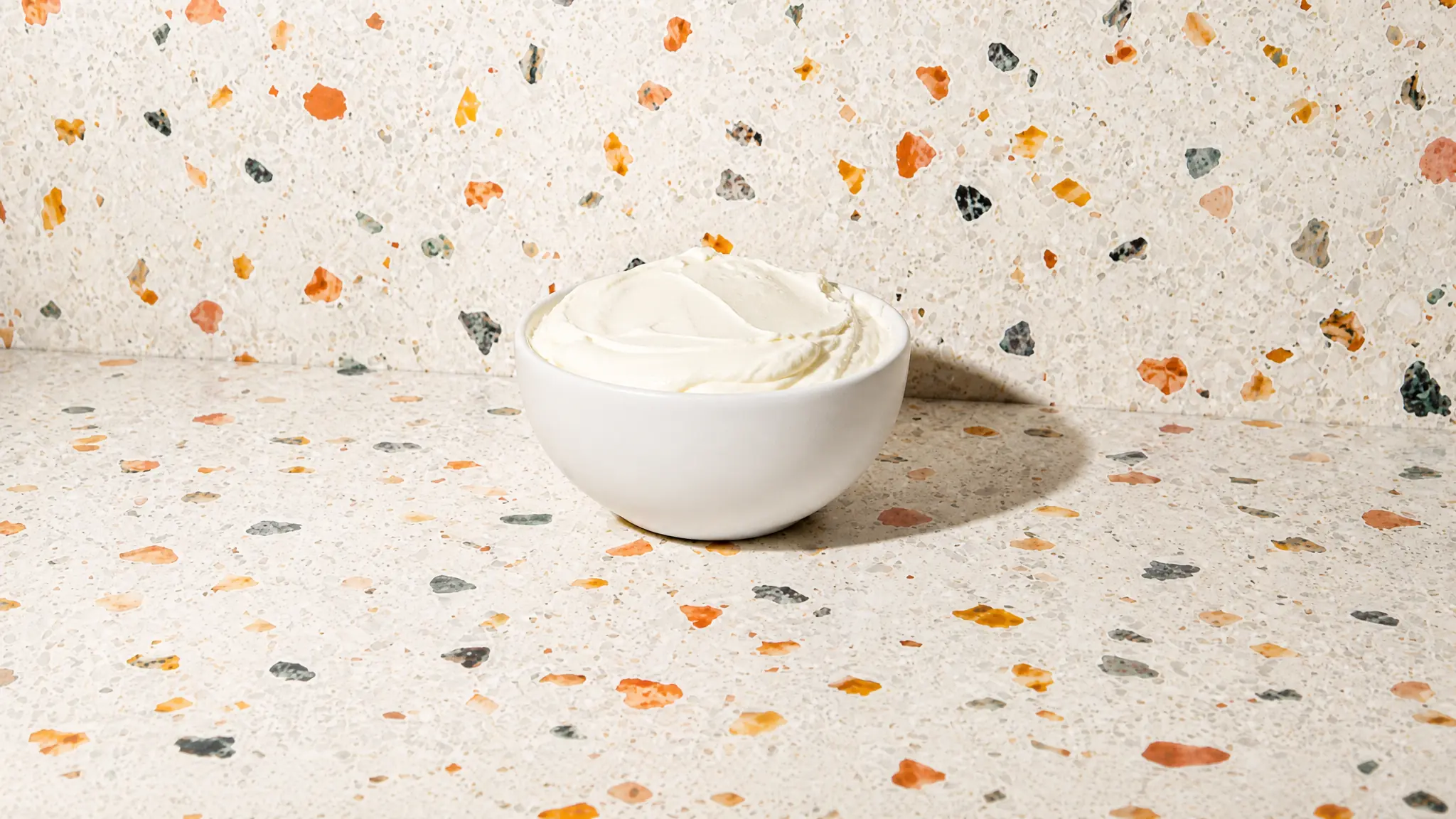

Cream Cheese
Dairy
Last updated July 5, 2026. The Tummi Food Team maintains this Can I Feed This safety guide guide. Supporting links appear in Sources when available.



Clinically reviewed by Andria Procopio and Arefa Mohamed
Direct answer
Can babies eat Cream Cheese?
Yes, cream cheese can be introduced around 6 months of age, once your baby is ready to start solids, and should be served in an age-appropriate manner.
- Serve Age6+months
Most babies start solids around 6 months once they show readiness signs. Match the texture and serving size to your baby's skills.
- Allergens
Cream Cheese is flagged for milk. Introduce common allergens in a baby-safe form and follow your clinician's advice if your baby is higher risk.
- Choking Risk123451
Lower choking risk when served in the right texture. Always supervise meals and adjust the shape for your baby.
This guide is for everyday food prep questions. Ask your pediatrician about medical concerns, feeding delays, allergy plans, or serious reactions.
How Do You Serve Cream Cheese?
How to serve Cream Cheese to babies 6 months and older
- 1Spread a very thin layer of full-fat cream cheese on soft toast, bread strips, or small bagel pieces so baby can hold and gum.
- 2Cut bread into finger-sized strips and offer only what the baby can grasp to encourage self-feeding and oral motor development.
- 3Keep the spread thin and smooth — avoid globs that can break off and pose a choking hazard; supervise closely while they mouth or eat.
- 4Do not add sweeteners or mix-ins that increase choking or allergy risk, and have wipes handy to clean hands and surfaces.
How to serve Cream Cheese to babies 9 months and older
- 1Whip or thin cream cheese with a small splash of water, breastmilk, or formula until spreadable or pourable; aim for a dip-like consistency so it’s easy for little fingers to scoop.
- 2Serve in a shallow, stable dish and offer soft fruit or vegetable sticks (cooked carrot, ripe pear, banana) cut into easy-to-hold strips; avoid hard, slippery, or round pieces.
- 3Mix small amounts into egg strips, frittatas, mashed vegetables, or grains to add creaminess and flavor — start with 1–2 teaspoons per serving.
- 4Offer modest portions and always supervise while eating; watch for any immediate signs of an allergic reaction after introducing dairy on its own.
- 5Check the temperature before serving and avoid adding salt, honey, or other added sugars.
How to serve Cream Cheese to babies 12 months and older
- 1Spread a thin layer on soft breads, crackers, or warm pancakes to reduce choking risk.
- 2Stir into batters, mashed vegetables, or sauces to add creaminess—start with small amounts and taste as you cook.
- 3Use as a dip for soft, cooked vegetable sticks or ripe fruit; offer small, easy-to-pick pieces and supervise each bite.
- 4Introduce different dairy varieties one at a time and watch for any reactions for several days; seek medical help if you see hives, repeated vomiting, swelling, or breathing changes.
- 5Keep cream cheese refrigerated, follow the package use-by guidance, and discard if left out for more than two hours.
Is Cream Cheese a Common Allergen?
Cream cheese is made from milk and cream and contains milk proteins (casein/whey), so it must be avoided by children with a cow’s milk allergy. People with lactose intolerance may tolerate small amounts, but an allergy requires strict avoidance. Commercial products routinely list “Contains: Milk,” and some flavored varieties or production lines may introduce other allergens or cross-contact—always check the package label before serving.
Is Cream Cheese a Choking Hazard?
Very Low Choking Risk
Cream cheese can be a choking hazard when offered in thick clumps or globs that are hard for a baby to manage. Always supervise your baby closely and stay within arm’s reach so you can respond quickly if gagging or choking occurs. Pay attention to your baby’s ability to handle textures and avoid presenting large, slippery masses.
Have More Questions?
Yes. Cream cheese can be introduced to babies around 6 months once they are ready for solids, but ensure it is served in safe, manageable amounts.
Yes. Cream cheese provides energy and vitamin A beneficial for your baby's growth, but it should be part of a balanced diet with other foods.
Yes. Since cream cheese is made from cow’s milk, it can cause allergies in children allergic to dairy, so introduce with caution and monitor for reactions.
It depends. Cream cheese could be a choking hazard if served in thick spreads or globs; serve in small, manageable amounts and textures suitable for your child's age.
It depends. While cream cheese is similar to neufchâtel cheese in texture and taste, their fat content differs; both can be used in baby foods, but check the label for fat levels.
Save Cream Cheese to your food log
Track foods, reactions, and prep notes in Tummi when you want to keep your baby's feeding history in one place.
Sources
- Breast Milk Lipids and Fatty Acids in Regulating Neonatal Intestinal Development and Protecting against Intestinal Injury doi.org
- Saturated fat and cardiometabolic risk factors, coronary heart disease, stroke, and diabetes: a fresh look at the evidence doi.org
- Is Butter Back? A Systematic Review and Meta-Analysis of Butter Consumption and Risk of Cardiovascular Disease, Diabetes, and Total Mortality doi.org
- The epidemiology of milk allergy in US children doi.org
- The challenge of cow milk protein allergy doi.org
- Food protein-induced enterocolitis syndrome and allergic proctocolitis doi.org
What Other Dairy Can Babies Eat?
See all →



Source-Linked Guidance
See the evidence behind the guide.
Food guides show direct links to public-health guidance and research when supporting references are available. Source inclusion does not imply endorsement.
 Centers for Disease Control and Prevention
Developmental milestones, nutrition guidelines, and allergen introduction timelines.
 American Academy of Pediatrics
Evidence-based feeding recommendations from the leading pediatric authority.
 National Institutes of Health
Peer-reviewed research on infant nutrition, allergies, and food safety.