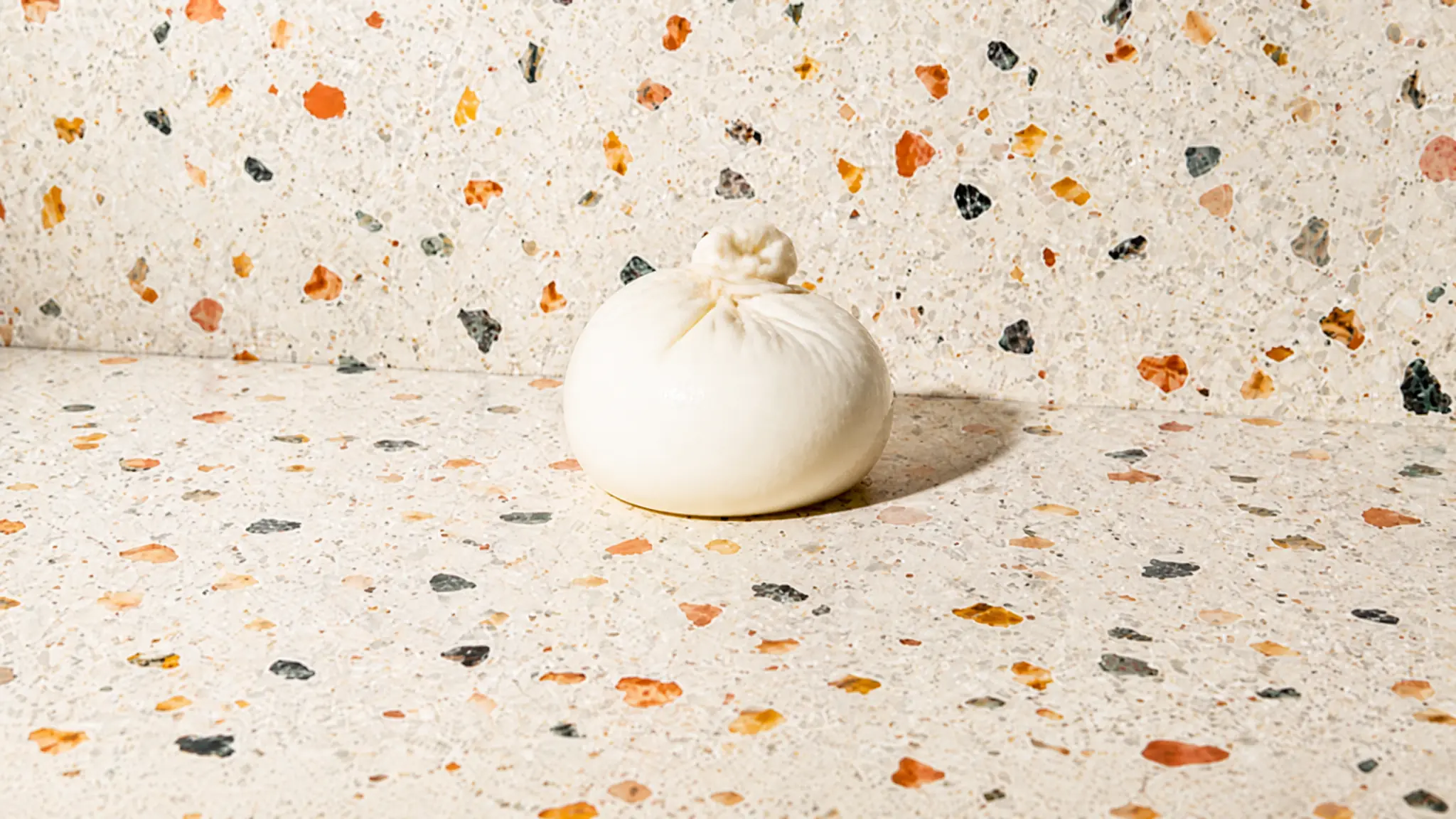
Burrata
Dairy
Last updated July 5, 2026. The Tummi Food Team maintains this Can I Feed This safety guide guide. Supporting links appear in Sources when available.



Clinically reviewed by Andria Procopio and Arefa Mohamed
Direct answer
Can babies eat Burrata?
Yes, babies can eat pasteurized burrata starting at around 6 months, when they are ready for solids, ensuring it is served safely and in appropriate amounts.
- Serve Age6+months
Most babies start solids around 6 months once they show readiness signs. Match the texture and serving size to your baby's skills.
- Allergens
Burrata is flagged for milk. Introduce common allergens in a baby-safe form and follow your clinician's advice if your baby is higher risk.
- Choking Risk123451
Lower choking risk when served in the right texture. Always supervise meals and adjust the shape for your baby.
This guide is for everyday food prep questions. Ask your pediatrician about medical concerns, feeding delays, allergy plans, or serious reactions.
How Do You Serve Burrata?
How to serve Burrata to babies 6 months and older
- 1Use pasteurized burrata and cut the outer casing into long strips about the width of two adult fingers pressed together so your baby can grasp them easily.
- 2Or offer the soft, creamy interior alone or gently mash it and mix with mashed avocado, cooked sweet potato, or soft pasta to make scooping with hands or a pre-loaded spoon easier.
- 3Serve at room temperature—remove from the fridge 15–30 minutes before serving and check the temperature before giving to your baby.
- 4Keep pieces small and manageable (avoid whole balls or large slippery chunks) and supervise closely to reduce choking risk.
How to serve Burrata to babies 9 months and older
- 1Cut the pasteurized burrata outer casing into bite-sized strips or slightly longer strips that a child can hold for self-feeding.
- 2Spoon the soft interior into a small dish so it can be used for dipping or gently mixed into mashed foods for easier scooping.
- 3If the child tends to over-stuff, give fewer pieces at a time and place them spaced apart on the tray. Model taking small bites and chewing slowly to encourage safer habits.
- 4Always supervise during meals and pair burrata with soft, easy-to-manage foods (ripe avocado, well-cooked vegetables) to reduce choking risk.
How to serve Burrata to babies 12 months and older
- 1Cut the burrata into small, bite-sized pieces or longer strips to match your child's utensil skills; both the firm outer casing and the soft inside are good for practicing forks or spoons.
- 2Offer outer and inner portions separately when helpful so your child can explore different textures.
- 3Keep pieces small and easy to chew—trim or mash any stringy parts to reduce choking risk.
- 4Serve on a low, stable plate with a child-safe utensil to encourage independent feeding.
- 5Always supervise meals and adjust piece size based on your child's chewing and self-feeding progress.
Is Burrata a Common Allergen?
Contains milk (fresh cheese made from mozzarella and cream), so not safe for children with a milk allergy or strict dairy-free diets and may cause issues for those with lactose intolerance. Often served with bread or crackers—ask if those contain gluten or if cross-contact is possible. Toppings or dressings (e.g., pesto, cured meats) can introduce nuts, eggs, or other allergens—confirm with the kitchen. When in doubt, ask for a full ingredient list and preparation details before serving.
Is Burrata a Choking Hazard?
Very Low Choking Risk
Burrata can pose a choking risk because its outer casing may be firm and springy, and the soft, creamy interior can clump or stick in ways that might block a baby’s airway. Keep your baby within arm’s reach and watch closely while they eat, and make sure you know infant choking first aid. If you notice persistent coughing, gagging, or any breathing difficulty, act quickly and seek emergency help.
Have More Questions?
Yes. Burrata cheese can be introduced to babies around 6 months of age once they are ready for solids, preferably choosing pasteurized options to reduce illness risk.
Yes. Burrata provides essential nutrients that support growth and development in babies, including protein, calcium, and vitamins A and B12, making it a healthy addition when appropriate.
Yes. Since burrata is made from cow's milk, it can be a common allergen for young children. Watch for allergic reactions, especially if introducing dairy for the first time.
Yes. The firmness and springy nature of burrata’s outer shell can pose a choking risk for babies, so it should be served in an age-appropriate, safe manner.
There isn't a strict limit on how much cheese a baby can eat. Serve burrata as part of a varied diet, focusing on appropriate portion sizes and variety.
Save Burrata to your food log
Track foods, reactions, and prep notes in Tummi when you want to keep your baby's feeding history in one place.
Sources
- Consumption of Raw or Unpasteurized Milk and Milk Products by Pregnant Women and Children (AAP, 2014) publications.aap.org
- Raw Milk Misconceptions and the Danger of Raw Milk Consumption (U.S. Food & Drug Administration) fda.gov
- Risk assessment of food allergens: Part 1 — Review and validation of Codex Alimentarius priority allergen list (FAO/WHO, 2022) who.int
- The epidemiology of milk allergy in US children (Warren et al., 2013) pubmed.ncbi.nlm.nih.gov
- The challenge of cow milk protein allergy (El‑Agamy, 2007) sciencedirect.com
- Cow's Milk Protein Allergy (GI Kids, Mukkada, 2019) gikids.org
- Food protein-induced enterocolitis syndrome and allergic proctocolitis (Nowak‑Węgrzyn, 2015) pmc.ncbi.nlm.nih.gov
- Lactose intolerance — InformedHealth.org (IQWiG) informedhealth.org
What Other Dairy Can Babies Eat?
See all →
Source-Linked Guidance
See the evidence behind the guide.
Food guides show direct links to public-health guidance and research when supporting references are available. Source inclusion does not imply endorsement.
 Centers for Disease Control and Prevention
Developmental milestones, nutrition guidelines, and allergen introduction timelines.
 American Academy of Pediatrics
Evidence-based feeding recommendations from the leading pediatric authority.
 National Institutes of Health
Peer-reviewed research on infant nutrition, allergies, and food safety.