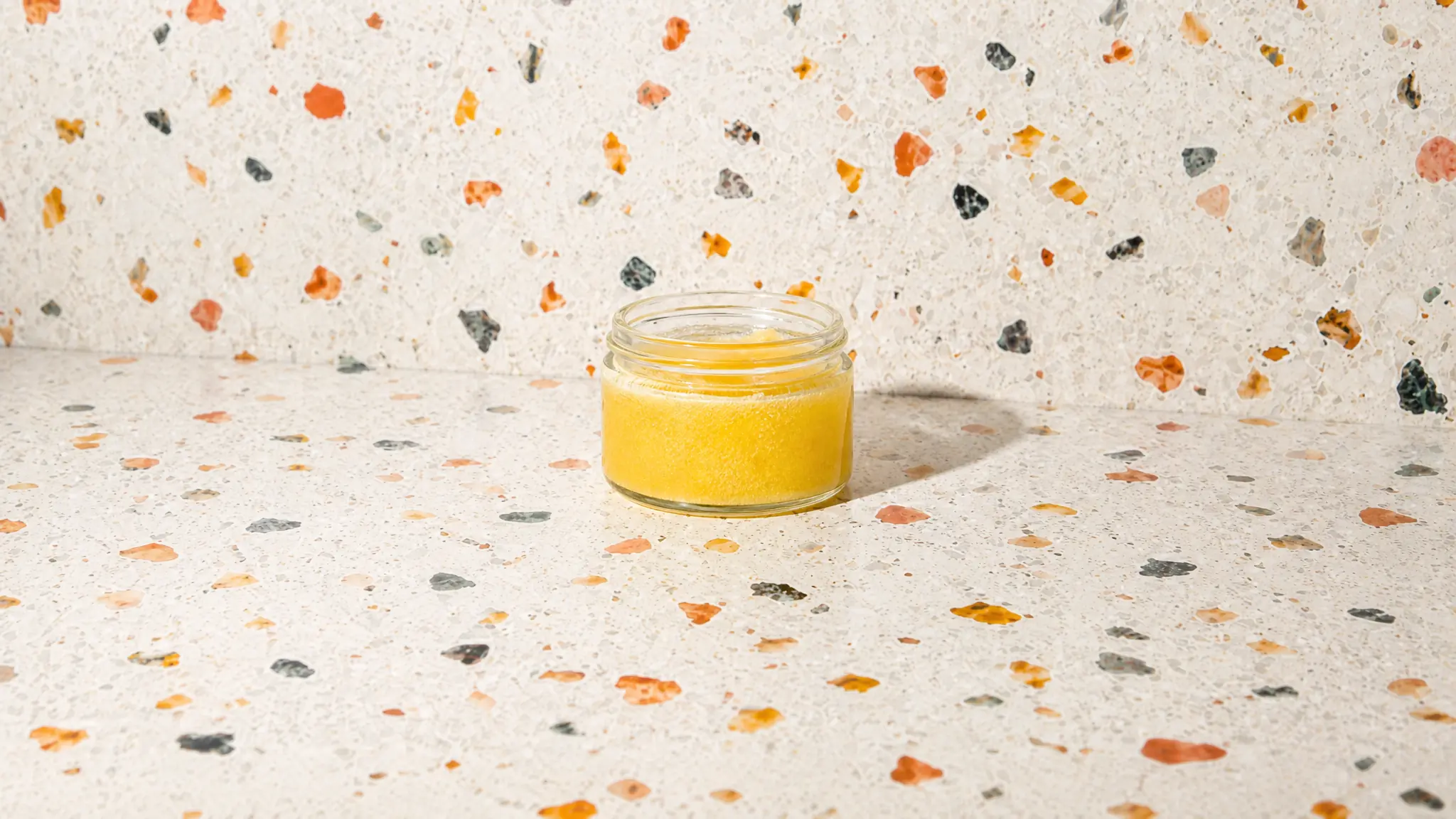
Ghee
Dairy
Last updated July 5, 2026. The Tummi Food Team maintains this Can I Feed This safety guide guide. Supporting links appear in Sources when available.



Clinically reviewed by Andria Procopio and Arefa Mohamed
Direct answer
Can babies eat Ghee?
Yes, ghee can be introduced around 6 months of age when starting solids, if the baby tolerates dairy.
- Serve Age6+months
Most babies start solids around 6 months once they show readiness signs. Match the texture and serving size to your baby's skills.
- Allergens
Ghee is flagged for milk. Introduce common allergens in a baby-safe form and follow your clinician's advice if your baby is higher risk.
- Choking Risk123451
Lower choking risk when served in the right texture. Always supervise meals and adjust the shape for your baby.
This guide is for everyday food prep questions. Ask your pediatrician about medical concerns, feeding delays, allergy plans, or serious reactions.
How Do You Serve Ghee?
How to serve Ghee to babies 6 months and older
- 1Start with a very small amount—about 1/4 teaspoon mixed into a tablespoon of mashed vegetables, porridge, or pureed fruit to add calories and flavor.
- 2If using solid ghee, warm briefly until liquid or stir into warm food so it blends evenly. Test the temperature before serving to avoid burns.
- 3Spread a very thin layer on a strip of toast or mix into thicker purees; ensure the final texture is smooth and not sticky so your baby can chew and swallow safely.
- 4Begin with small amounts and increase gradually while watching for any adverse reactions, and always supervise during meals and cut foods into safe, bite-sized pieces.
How to serve Ghee to babies 9 months and older
- 1Mix a small amount of ghee into cooked grains, lentils, or vegetables—about ½–1 teaspoon per serving—to add flavor and calories without changing texture.
- 2Spread a thin layer on soft, bite-sized finger foods like toast strips or steamed vegetable pieces; start with a small amount and increase slowly as tolerated.
- 3Add ghee after cooking and stir until melted so it blends evenly; let food cool to a safe temperature before offering.
- 4Offer moderate portions, watch for any signs of allergic reaction (rash, vomiting, difficulty breathing), and supervise closely while the child is eating.
How to serve Ghee to babies 12 months and older
- 1Serve ghee in family dishes to boost flavor and calories—melt it over cooked vegetables, stir into rice or lentils, or spread a thin layer on bread.
- 2Offer small amounts at first (about 1 teaspoon mixed into food) to check tolerance and appetite.
- 3Use only smooth, melted ghee or blend it into foods so textures stay safe; avoid lumps that could be a choking hazard.
- 4Supervise meals closely and sit within arm’s reach while serving; serve family-style so portions can be controlled.
- 5If anyone in the family has food allergies or you notice a reaction, stop and consult your pediatrician.
Is Ghee a Common Allergen?
Ghee is made from butterfat and contains only trace amounts of lactose and milk proteins (casein), but it is still derived from milk. People with a milk allergy—especially severe cases—can react to these traces, so treat ghee as a dairy allergen and avoid it for allergic children unless a clinician advises otherwise. Those with lactose intolerance often tolerate ghee, but parents should proceed with caution and watch for symptoms.
Is Ghee a Choking Hazard?
Very Low Choking Risk
Ghee itself presents a low choking risk, but any food can theoretically cause choking depending on a baby’s developmental stage. Keep baby seated upright and stay within arm’s reach during meals so you can respond quickly, and be familiar with the signs of choking and basic infant first aid. If you have concerns about your child’s feeding skills, consult your pediatrician.
Have More Questions?
Yes. Ghee can be introduced to babies around 6 months old when they start solids, as it is a nutrient-rich fat source suitable for their developing needs.
Yes. Ghee provides essential fats and fat-soluble vitamins that can support a baby's growth and brain development as part of a balanced diet.
Yes. Ghee is derived from milk but typically contains minimal milk solids, making it less allergenic; however, consult an allergist if your baby has a dairy allergy.
No. When prepared properly and served in appropriate textures, ghee is not a choking hazard for babies, but always supervise feeding and ensure safe serving methods.
Feel free to use ghee generously in your baby's diet; it’s a great source of energy and fat needed for growth, so there's no need to restrict its intake.
Save Ghee to your food log
Track foods, reactions, and prep notes in Tummi when you want to keep your baby's feeding history in one place.
Sources
- Breast Milk Lipids and Fatty Acids in Regulating Neonatal Intestinal Development and Protecting against Intestinal Injury doi.org
- Saturated fat and cardiometabolic risk factors, coronary heart disease, stroke, and diabetes: a fresh look at the evidence doi.org
- Is Butter Back? A Systematic Review and Meta-Analysis of Butter Consumption and Risk of Cardiovascular Disease, Diabetes, and Total Mortality doi.org
- The epidemiology of milk allergy in US children doi.org
- The challenge of cow milk protein allergy doi.org
- Food protein-induced enterocolitis syndrome and allergic proctocolitis doi.org
- The lactose and galactose content of milk fats and suitability for galactosaemia doi.org
- Fat and fatty acid requirements and recommendations for infants of 0-2 years and children of 2-18 years doi.org
What Other Dairy Can Babies Eat?
See all →


Source-Linked Guidance
See the evidence behind the guide.
Food guides show direct links to public-health guidance and research when supporting references are available. Source inclusion does not imply endorsement.
 Centers for Disease Control and Prevention
Developmental milestones, nutrition guidelines, and allergen introduction timelines.
 American Academy of Pediatrics
Evidence-based feeding recommendations from the leading pediatric authority.
 National Institutes of Health
Peer-reviewed research on infant nutrition, allergies, and food safety.