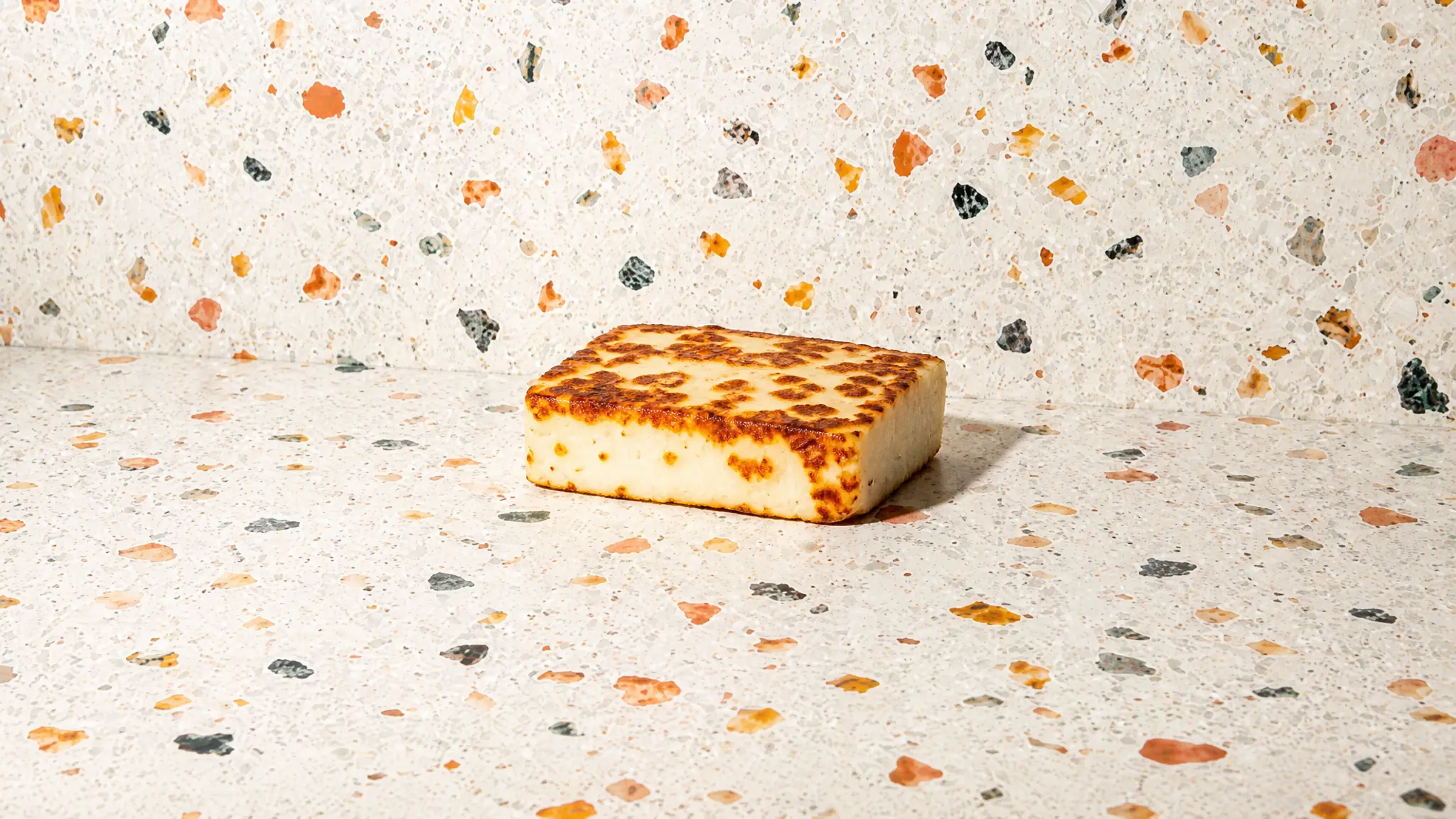
Halloumi
Dairy
Last updated July 5, 2026. The Tummi Food Team maintains this Can I Feed This safety guide guide. Supporting links appear in Sources when available.



Clinically reviewed by Andria Procopio and Arefa Mohamed
Direct answer
Can babies eat Halloumi?
Yes, babies can eat halloumi from around 6 months, ensuring it's pasteurized and served in small, manageable pieces.
- Serve Age6+months
Most babies start solids around 6 months once they show readiness signs. Match the texture and serving size to your baby's skills.
- Allergens
Halloumi is flagged for milk. Introduce common allergens in a baby-safe form and follow your clinician's advice if your baby is higher risk.
- Choking Risk123453
Some choking risk. Use the prep section to change the size, shape, or texture before serving.
This guide is for everyday food prep questions. Ask your pediatrician about medical concerns, feeding delays, allergy plans, or serious reactions.
How Do You Serve Halloumi?
How to serve Halloumi to babies 6 months and older
- 1Serve very small tastes using a long, thin flat slice so the child can gum the cheese rather than bite off a chunk.
- 2Grate or finely crumble halloumi and mix into spoonable foods (mashed vegetables, yogurt) so it can be scooped safely.
- 3Briefly warm or pan-sear to soften the interior and make chewing easier, but avoid overcooking so it doesn’t become rubbery.
- 4Avoid small cubes and choose pasteurized, lower-salt halloumi to reduce choking and foodborne risk; always supervise while eating.
How to serve Halloumi to babies 9 months and older
- 1Cut halloumi into long, thin strips or flat, bite-sized pieces so your child can grasp them easily and practice the pincer grasp—avoid small cubes that can be a choking hazard.
- 2Grill or pan-fry briefly to warm and slightly soften, or serve uncooked if the texture is naturally soft and easy to bite.
- 3Grate or finely crumble halloumi into mashed vegetables, porridge, or soft salads to make it easier to manage and blend with milder textures.
- 4Choose pasteurized halloumi and offer in small portions because it can be high in salt; serve with low-salt foods like avocado or steamed vegetables and always supervise while eating.
How to serve Halloumi to babies 12 months and older
- 1Slice into long, flat strips or wide, thin bite-sized pieces so baby can easily grasp and gum the cheese.
- 2Grill or lightly pan-fry until edges are golden to soften texture and make chewing easier, or serve uncooked if soft enough.
- 3Grate into porridge, mashed vegetables, or mixed cold dishes to create scoopable, soft bites that are easier to eat.
- 4Do not serve small cubes or hard chunks because they can be a choking hazard. Choose pasteurized halloumi to reduce the risk of foodborne illness.
Is Halloumi a Common Allergen?
Halloumi is a cheese made from milk (traditionally sheep and goat, often cow’s milk) and therefore contains milk proteins—do not give to children with milk allergy and be cautious if they are lactose intolerant. Check product labels for the specific milk source and any added ingredients or potential cross‑contamination; some commercial varieties may list multiple milks or additives. It generally does not contain peanuts, tree nuts, fish, shellfish, sesame, or gluten unless stated on the package, but always read the label if your child has other allergies. For severe dairy allergy, treat as a dairy-containing food and follow your clinician’s emergency plan.
Is Halloumi a Choking Hazard?
Moderate Choking Risk
Halloumi’s firm, springy texture makes it a higher choking risk for young babies who are still learning to chew. Keep baby seated upright and alert during meals, stay within arm’s reach, and be ready to respond quickly if they show signs of choking. Consider getting trained in infant choking first aid so you can act confidently in an emergency.
Have More Questions?
Yes. While halloumi is high in sodium, small amounts as part of a varied diet are generally fine for babies over 6 months. Always choose pasteurized halloumi for safety.
Sharing halloumi provides fats, protein, calcium, and vitamin A, which support bone health and immunity. Keep sodium in moderation to suit the baby’s dietary needs and preferences.
Yes. Halloumi is made from cow’s milk, a common allergen in young children. Consult with a pediatrician before introducing dairy if there’s a family history of milk allergy.
Yes. Because halloumi is firm and springy, it can pose a choking risk if not prepared properly. Serve in age-appropriate sizes and textures, and always supervise eating.
It depends on how it’s prepared. Serve halloumi in small, soft pieces suitable for the baby’s chewing ability, and ensure the eating environment is safe and supervised.
Save Halloumi to your food log
Track foods, reactions, and prep notes in Tummi when you want to keep your baby's feeding history in one place.
Sources
- Infants' and Children's Salt Taste Perception and Liking: A Review (Liem DG, 2017) doi.org
- Does salt intake in the first two years of life affect the development of cardiovascular disorders in adulthood? (Strazzullo P et al., 2012) doi.org
- The epidemiology of milk allergy in US children (Warren CM et al., 2013) doi.org
- The challenge of cow milk protein allergy (El-Agamy E., 2007) doi.org
- Food protein-induced enterocolitis syndrome and allergic proctocolitis (Nowak-Węgrzyn A., 2015) doi.org
- Dangers of raw milk (U.S. Food & Drug Administration) fda.gov
What Other Dairy Can Babies Eat?
See all →

Source-Linked Guidance
See the evidence behind the guide.
Food guides show direct links to public-health guidance and research when supporting references are available. Source inclusion does not imply endorsement.
 Centers for Disease Control and Prevention
Developmental milestones, nutrition guidelines, and allergen introduction timelines.
 American Academy of Pediatrics
Evidence-based feeding recommendations from the leading pediatric authority.
 National Institutes of Health
Peer-reviewed research on infant nutrition, allergies, and food safety.