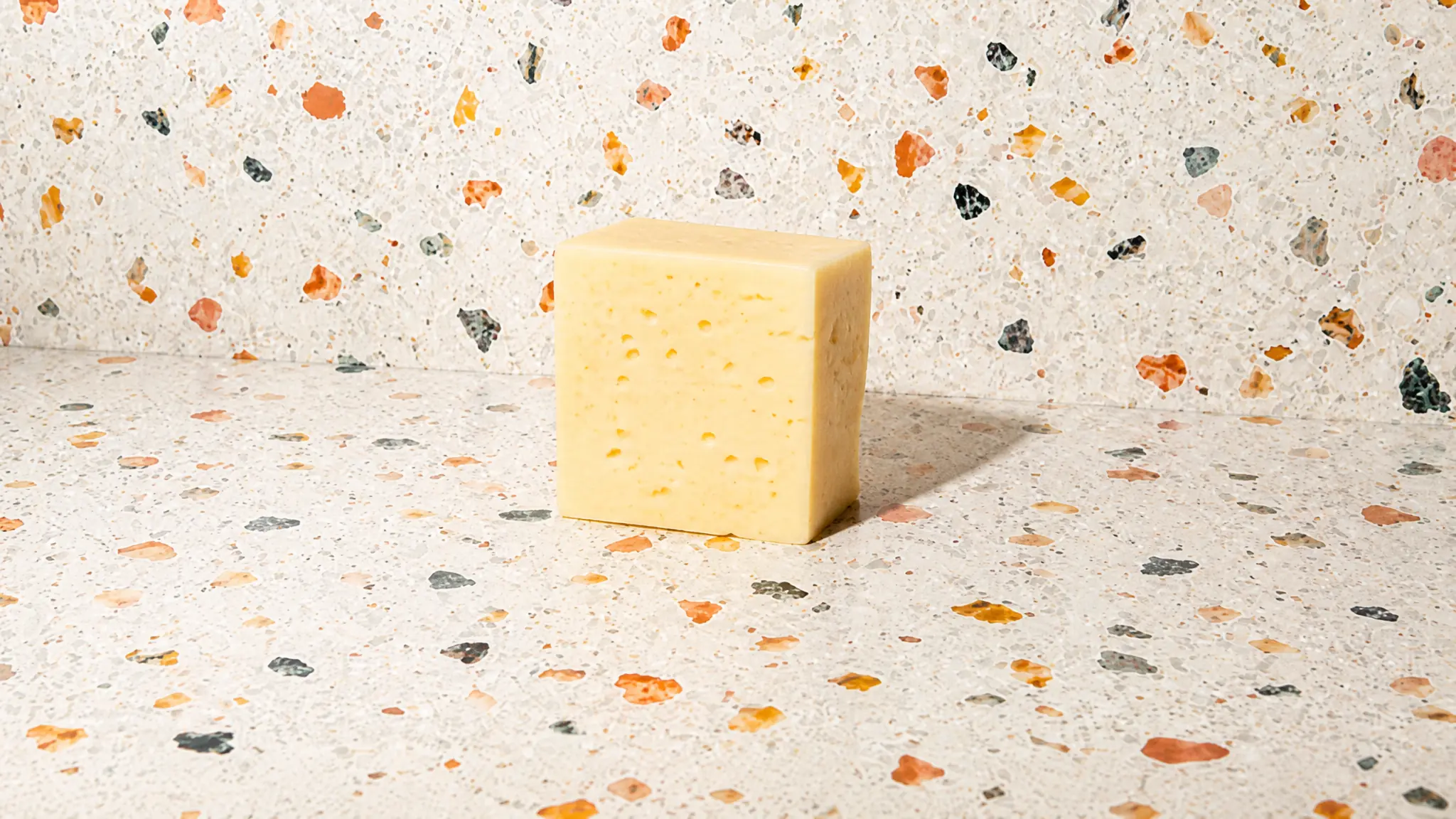
Havarti Cheese
Dairy
Last updated July 5, 2026. The Tummi Food Team maintains this Can I Feed This safety guide guide. Supporting links appear in Sources when available.



Clinically reviewed by Andria Procopio and Arefa Mohamed
Direct answer
Can babies eat Havarti Cheese?
Pasteurized full-fat Havarti cheese can be offered from around 6 months once a baby shows the developmental signs of readiness for solid foods. Choose a lower-sodium product when possible, offer a small amount in a developmentally appropriate form, and do not offer it to a child with a diagnosed cow’s-milk allergy.
- Serve Age6+months
Most babies start solids around 6 months once they show readiness signs. Match the texture and serving size to your baby's skills.
- Allergens
Havarti Cheese is flagged for milk. Introduce common allergens in a baby-safe form and follow your clinician's advice if your baby is higher risk.
- Choking Risk123451
Lower choking risk when served in the right texture. Always supervise meals and adjust the shape for your baby.
This guide is for everyday food prep questions. Ask your pediatrician about medical concerns, feeding delays, allergy plans, or serious reactions.
How Do You Serve Havarti Cheese?
How to serve Havarti Cheese to a 12-month-old baby
- 1Limit Havarti because it’s higher in sodium — avoid serving it regularly and offer it only occasionally.
- 2Choose naturally low‑sodium cheeses for regular meals, such as goat, mascarpone, mozzarella, ricotta, or Swiss.
- 3If using Havarti in a shared cooked dish (for example, an omelet), finely grate it or cut it into very thin slices so pieces are small, soft, and easy to handle and swallow.
- 4Always check texture and temperature, offer small manageable pieces, and supervise every feeding.
How to serve Havarti Cheese to a 24-month-old baby
- 1Cut Havarti into very thin rectangular strips, small bite-sized pieces, or pea-sized crumbles to support safe self-feeding and reduce choking risk.
- 2For less confident chewers, grate and melt Havarti over warm vegetables to soften it and make it easier to eat.
- 3Always seat the child upright at a table or in a high chair and supervise every bite. Never feed in a stroller, car seat, or while moving.
- 4Offer small amounts at a time and watch closely for difficulty chewing or swallowing; if concerned, cut pieces smaller or avoid until feeding skills improve.
Is Havarti Cheese a Common Allergen?
Havarti cheese is made from cow’s milk and therefore contains milk — a major allergen; avoid if your child has a milk (cow’s milk) allergy. Havarti does not naturally contain peanuts, tree nuts, eggs, soy, fish, shellfish, sesame, or gluten, but ingredients or cross-contact during processing can introduce other allergens, so always check the package label. If your child is lactose intolerant rather than milk-allergic, tolerance varies—ask your pediatrician or allergist before offering.
Is Havarti Cheese a Choking Hazard?
Very Low Choking Risk
Havarti can be a choking hazard for young children because its texture may form large, sticky, or slippery pieces that are hard to clear. Keep your baby upright and within arm’s reach and watch closely while they eat, as cheese can prompt sudden gagging or airway blockage. Familiarize yourself with infant choking first aid so you can act quickly if needed.
Have More Questions?
Yes. Store Havarti cheese in the refrigerator in a clean, sealed container, follow the package’s storage instructions, and discard it once its use-by date has passed.
Yes, Havarti cheese can be frozen if the package indicates that it is suitable for freezing. Freeze it before its use-by date, keep it sealed, and thaw it in the refrigerator before serving.
Yes. Choose Havarti cheese made from pasteurized milk for a baby, and check the package label to confirm this before serving it.
Yes. Havarti cheese can be served alongside other foods, provided the cheese and accompanying foods are prepared in shapes, sizes, and textures appropriate to the baby’s developmental abilities.
Offer a small amount of Havarti cheese at first and let your baby decide whether to eat more. Choose a lower-salt product when possible, and avoid serving large chunks of cheese.
Save Havarti Cheese to your food log
Track foods, reactions, and prep notes in Tummi when you want to keep your baby's feeding history in one place.
Sources
- Early Exposure to Dietary Sugar and Salt - Baker S.S. & Baker R.D. (Pediatrics, 2015) doi.org
- Dietary Reference Intakes for Sodium and Potassium - National Academies of Sciences, Engineering, and Medicine (2019) nap.edu
- The 'Grass-Fed' Milk Story: Understanding the Impact of Pasture Feeding on the Composition and Quality of Bovine Milk - Alothman et al. (Foods, 2019) doi.org
- Long-term effects of environmental endocrine disruptors on reproductive physiology and behavior - Patisaul H.B. & Adewale H.B. (Frontiers in Behavioral Neuroscience, 2009) doi.org
- Elucidating Adverse Nutritional Implications of Exposure to Endocrine-Disrupting Chemicals and Mycotoxins through Stable Isotope Techniques - Owino V.O. et al. (Nutrients, 2018) doi.org
- The epidemiology of milk allergy in US children - Warren C.M. et al. (Ann Allergy Asthma Immunology, 2013) doi.org
- Lactose-Free Dairy Products: Market Developments, Production, Nutrition and Health Benefits - Dekker P. et al. (Nutrients, 2019) doi.org
- Effect of Different Cooking Methods on Histamine Levels in Selected Foods - Chung B.Y. et al. (Annals of Dermatology, 2017) doi.org
What Other Dairy Can Babies Eat?
See all →
Source-Linked Guidance
See the evidence behind the guide.
Food guides show direct links to public-health guidance and research when supporting references are available. Source inclusion does not imply endorsement.
 Centers for Disease Control and Prevention
Developmental milestones, nutrition guidelines, and allergen introduction timelines.
 American Academy of Pediatrics
Evidence-based feeding recommendations from the leading pediatric authority.
 National Institutes of Health
Peer-reviewed research on infant nutrition, allergies, and food safety.