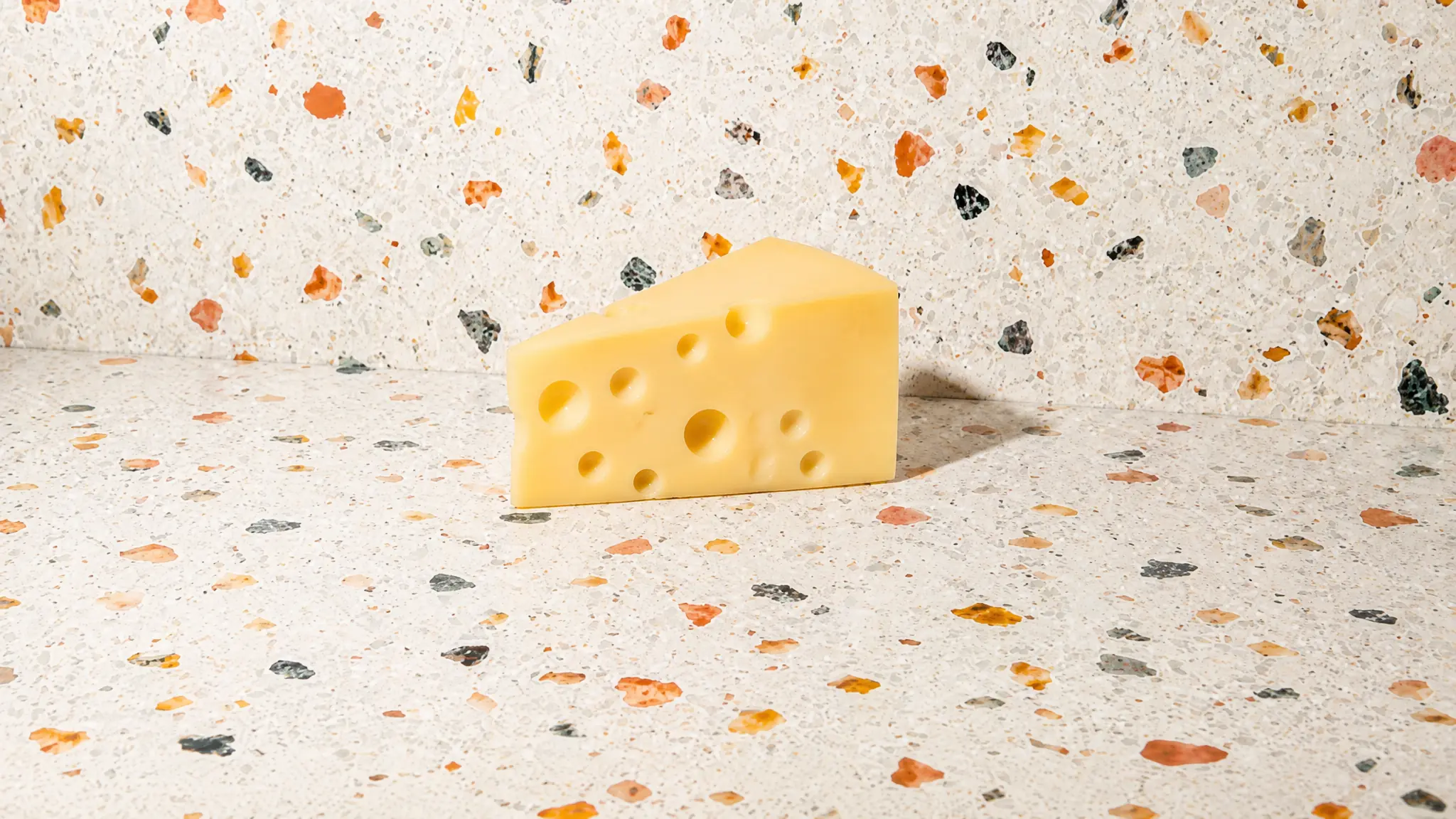
Jarlsberg Cheese
Dairy
Last updated July 5, 2026. The Tummi Food Team maintains this Can I Feed This safety guide guide. Supporting links appear in Sources when available.



Clinically reviewed by Andria Procopio and Arefa Mohamed
Direct answer
Can babies eat Jarlsberg Cheese?
Babies can have pasteurised Jarlsberg cheese from around 6 months, once they show the developmental signs of readiness for solid food. Offer only a small amount, choose a lower-salt product when possible, avoid large chunks, and do not offer Jarlsberg to a child with cow’s milk allergy.
- Serve Age6+months
Most babies start solids around 6 months once they show readiness signs. Match the texture and serving size to your baby's skills.
- Allergens
Jarlsberg Cheese is flagged for milk. Introduce common allergens in a baby-safe form and follow your clinician's advice if your baby is higher risk.
- Choking Risk123453
Some choking risk. Use the prep section to change the size, shape, or texture before serving.
This guide is for everyday food prep questions. Ask your pediatrician about medical concerns, feeding delays, allergy plans, or serious reactions.
How Do You Serve Jarlsberg Cheese?
How to serve Jarlsberg Cheese to a 11-month-old baby
- 1Delay regular servings of Jarlsberg because it contains moderate sodium; choose lower-sodium fresh cheeses as the usual option.
- 2If offering a tiny taste, give only a very small amount — a smear or pinch about the size of a pea.
- 3Prepare to reduce choking risk by slicing extremely thin, finely grating, or shredding and sprinkling onto soft foods; avoid cubes or chunks.
- 4Use pasteurized Jarlsberg and introduce it once as a single tiny taste, then wait 48–72 hours before offering again. Watch for allergic signs such as rash, vomiting, diarrhea, or breathing changes and seek care if they occur.
How to serve Jarlsberg Cheese to a 24-month-old baby
- 1Serve Jarlsberg in thin forms—thin slices, bite-sized pieces cut from a thin slice, thin lengthwise strips, grated cheese, or a very thin melted layer over other foods.
- 2Avoid cubes, thick chunks, or large globs that increase choking risk.
- 3If melting the cheese, spread it thinly and let it cool slightly to prevent sticky, stretchy strands and burns.
- 4Always supervise meals within an arm's‑length, keep the child seated upright, offer small portions, and remove uneaten pieces promptly.
Is Jarlsberg Cheese a Common Allergen?
Contains milk — made from pasteurized cow's milk and labeled as containing milk proteins. Not safe for children with a cow's milk allergy; people with lactose intolerance may tolerate some Jarlsberg varieties (some are labeled lactose-free), but check the package and consult a healthcare provider. Also inspect ingredient lists for mixed products (e.g., spreads) and look for any cross-contact or facility warnings if other allergies are a concern.
Is Jarlsberg Cheese a Choking Hazard?
Moderate Choking Risk
Jarlsberg poses a choking risk—cubes, dense pieces, and sticky melted cheese can block a baby’s airway. Parents should stay within arm’s reach and closely supervise all feeds. Be especially cautious with forms of the cheese that could form a plug in the throat.
Have More Questions?
Opened Jarlsberg cheese should be kept refrigerated and stored according to the package instructions. Follow any “eat within” instruction and use-by date on the product rather than relying on a universal one-week limit.
Jarlsberg cheese may be frozen before any use-by date if its package instructions permit freezing. Follow the label’s freezing and defrosting directions, then prepare the thawed cheese in a developmentally appropriate form without large chunks.
Organic Jarlsberg is not automatically a better option for a baby; the organic label describes how its ingredients were produced and handled. For infant feeding, check that the cheese is pasteurised, compare sodium on the label, and choose a lower-salt option when possible.
Jarlsberg cheese can be combined with fruit or vegetables once the baby is developmentally ready for solid food. Use pasteurised cheese in a small amount, choose a lower-salt product when possible, and avoid serving large chunks.
There is no single appropriate portion of Jarlsberg cheese for every baby. Start with a small amount, follow the baby’s hunger and fullness cues, and prepare the cheese without large chunks.
Save Jarlsberg Cheese to your food log
Track foods, reactions, and prep notes in Tummi when you want to keep your baby's feeding history in one place.
Sources
- Lundberg HE et al. (2021) - Determination of maintenance Jarlsberg cheese dose doi.org
- HealthyChildren.org (2019) - Choking Prevention healthychildren.org
- Warren CM et al. (2013) - The epidemiology of milk allergy in US children doi.org
- El-Agamy E. (2007) - The challenge of cow milk protein allergy doi.org
- Comas-Basté O. et al. (2020) - Histamine Intolerance: The Current State of the Art doi.org
- Nazar W. et al. (2021) - Histamine Intolerance in Children: A Narrative Review doi.org
- Nowak-Węgrzyn A. (2015) - Food protein-induced enterocolitis syndrome and allergic proctocolitis doi.org
- National Organization for Rare Disorders (2019) - Food Protein-Induced Enterocolitis Syndrome rarediseases.org
- IQWiG / InformedHealth.org (2010) - Living with lactose intolerance informedhealth.org
What Other Dairy Can Babies Eat?
See all →
Source-Linked Guidance
See the evidence behind the guide.
Food guides show direct links to public-health guidance and research when supporting references are available. Source inclusion does not imply endorsement.
 Centers for Disease Control and Prevention
Developmental milestones, nutrition guidelines, and allergen introduction timelines.
 American Academy of Pediatrics
Evidence-based feeding recommendations from the leading pediatric authority.
 National Institutes of Health
Peer-reviewed research on infant nutrition, allergies, and food safety.