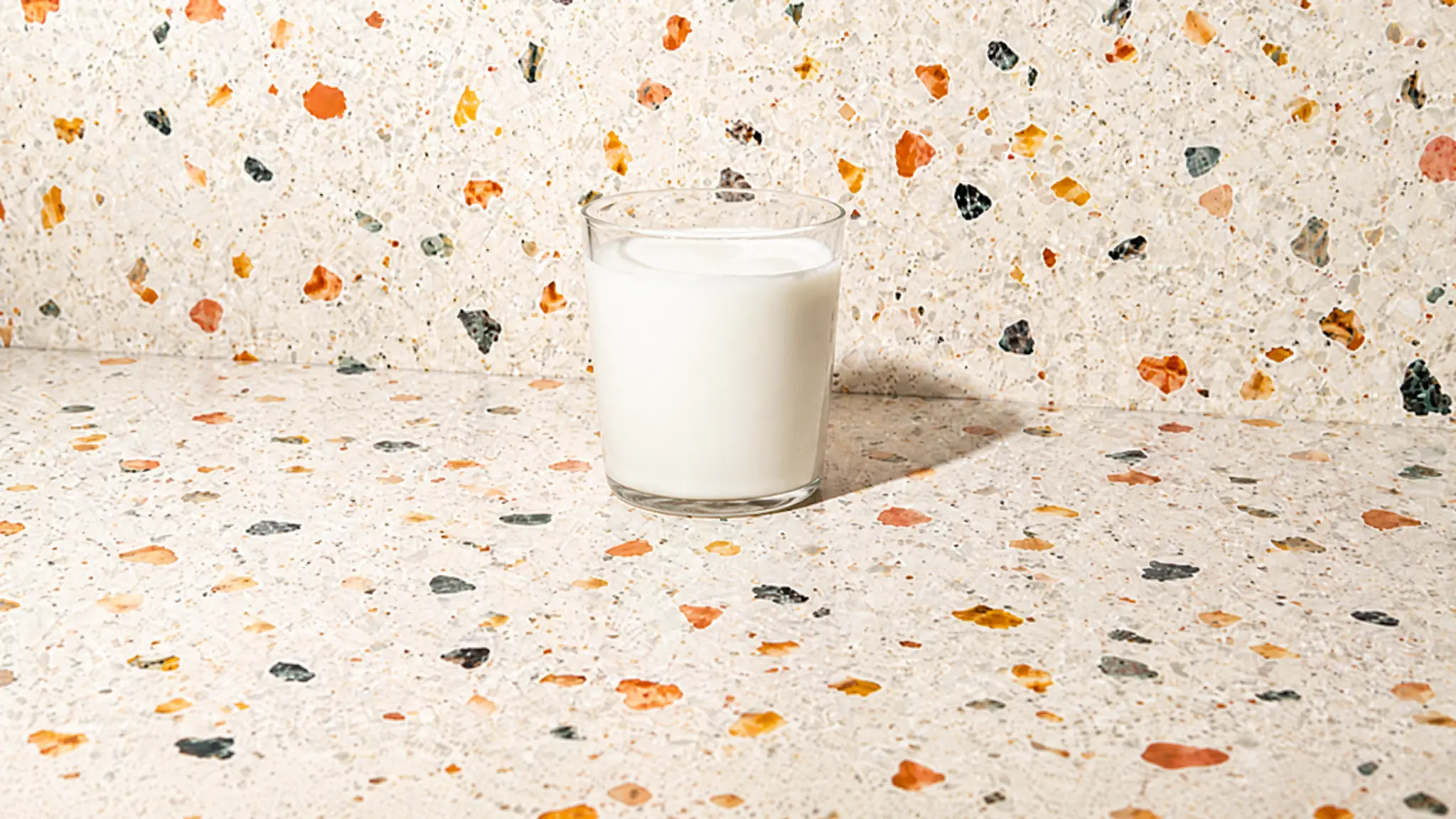
Kefir
Dairy
Last updated July 5, 2026. The Tummi Food Team maintains this Can I Feed This safety guide guide. Supporting links appear in Sources when available.



Clinically reviewed by Andria Procopio and Arefa Mohamed
Direct answer
Can babies eat Kefir?
Yes, babies can generally have kefir starting at around 6 months, once they are ready to begin solids, ensuring it contains no honey.
- Serve Age6+months
Most babies start solids around 6 months once they show readiness signs. Match the texture and serving size to your baby's skills.
- Allergens
Kefir is flagged for milk. Introduce common allergens in a baby-safe form and follow your clinician's advice if your baby is higher risk.
- Choking Risk123451
Lower choking risk when served in the right texture. Always supervise meals and adjust the shape for your baby.
This guide is for everyday food prep questions. Ask your pediatrician about medical concerns, feeding delays, allergy plans, or serious reactions.
How Do You Serve Kefir?
How to serve Kefir to babies 6 months and older
- 1Serve only pasteurized, full‑fat plain kefir mixed into thicker foods — stir into porridge, mash into cooked vegetables, or use as a spoonable topping; do not give it as a drink.
- 2To make a thicker kefir cheese: line a fine‑mesh sieve or cheesecloth over a bowl, pour in kefir and chill 1–2 hours until thickened, then scoop the thicker curd and mix into other foods.
- 3Start with very small amounts (about 1 teaspoon) and gradually increase to 1–2 tablespoons as tolerated, mixing it into other foods to create a spoonable texture rather than a thin liquid.
- 4Mix in a small amount of smooth nut or seed butter, mashed avocado, or finely chopped herbs for extra calories and flavor. Avoid whole nuts and watch closely for any allergic reaction when first offering.
How to serve Kefir to babies 12 months and older
- 1Choose plain, full-fat, pasteurized kefir with no added sugars or honey for best nutrition and safety.
- 2Use kefir as a drink or ingredient — blend with fruit and freeze into popsicles, or mix with soft herbs and a little olive oil for a savory drink.
- 3Stir kefir into porridge, mashed vegetables, or smoothies to add creaminess and introduce new textures.
- 4Limit total dairy to about 2–2.5 servings per day to protect iron absorption; balance kefir with iron-rich foods like pureed meats, lentils, or fortified cereals.
- 5Introduce kefir slowly and watch for any allergic reactions; stop and seek medical advice if you see hives, repeated vomiting, swelling, or difficulty breathing.
Is Kefir a Common Allergen?
Kefir is a dairy product that contains milk proteins and lactose. Fermentation often reduces lactose so some people with lactose intolerance tolerate kefir, but it can still trigger a true milk allergy—avoid if your child has a milk allergy. Check labels for added ingredients (fruit, nuts) or “shared equipment” warnings, and consult your child’s allergist if unsure.
Is Kefir a Choking Hazard?
Very Low Choking Risk
Kefir is not a common choking hazard, though any food or liquid can pose a risk. Always stay within arm’s reach and keep a calm, upright eating environment so you can quickly respond if your baby gags or chokes. Familiarize yourself with basic infant choking first-aid and keep mealtimes focused and distraction-free.
Have More Questions?
Kefir should not replace breast milk or infant formula as a main drink before 12 months. From around 6 months, once your baby is developmentally ready for complementary foods, plain pasteurized kefir can instead be mixed into food or offered as a spoonable dip.
No, milk kefir should not be used as a baby's main drink before 12 months. Before then, breast milk or infant formula should remain the main drink, although plain pasteurized kefir may be mixed into complementary foods from around 6 months once the baby is developmentally ready.
No, a baby with a diagnosed cow's-milk allergy should not drink cow's-milk kefir unless their allergy team has specifically advised a supervised reintroduction plan. Fermentation does not make milk kefir free of the milk proteins that cause cow's-milk allergy.
No, babies and young children should not be given kefir made from raw or unpasteurized milk because raw milk products can carry harmful germs. Choose pasteurized kefir, and check that it is otherwise appropriate for the child, including with respect to milk allergy.
For a baby who tolerates milk, choose plain, unsweetened, pasteurized, full-fat milk kefir and mix it into food from around 6 months once the baby is developmentally ready. Do not use it as the main drink before 12 months, avoid products containing honey before 12 months, and check plant-based kefir labels because their nutrient content varies.
Save Kefir to your food log
Track foods, reactions, and prep notes in Tummi when you want to keep your baby's feeding history in one place.
Sources
- Review of Infant Feeding: Key Features of Breast Milk and Infant Formula doi.org
- Whole cow’s milk in infancy doi.org
- Lipid Quality in Infant Nutrition: Current Knowledge and Future Opportunities doi.org
- Compositional Dynamics of the Milk Fat Globule and Its Role in Infant Development doi.org
- The Comparison of Nutritional Value of Human Milk with Other Mammals' Milk doi.org
- Whole-Fat or Reduced-Fat Dairy Product Intake, Adiposity, and Cardiometabolic Health in Children: A Systematic Review doi.org
- The impact of diet and lifestyle on gut microbiota and human health doi.org
- Microbiota regulation of the Mammalian gut-brain axis doi.org
- The Microbiota and Health Promoting Characteristics of the Fermented Beverage Kefir doi.org
- The epidemiology of milk allergy in US children doi.org
- The challenge of cow milk protein allergy doi.org
- The natural history of milk allergy in an observational cohort doi.org
- The Many Faces of Kefir Fermented Dairy Products: Quality Characteristics, Flavour Chemistry, Nutritional Value, Health Benefits, and Safety doi.org
- CDC: Raw Milk Questions and Answers cdc.gov
- Microbiological, technological and therapeutic properties of kefir: a natural probiotic beverage doi.org
What Other Dairy Can Babies Eat?
See all →


Source-Linked Guidance
See the evidence behind the guide.
Food guides show direct links to public-health guidance and research when supporting references are available. Source inclusion does not imply endorsement.
 Centers for Disease Control and Prevention
Developmental milestones, nutrition guidelines, and allergen introduction timelines.
 American Academy of Pediatrics
Evidence-based feeding recommendations from the leading pediatric authority.
 National Institutes of Health
Peer-reviewed research on infant nutrition, allergies, and food safety.