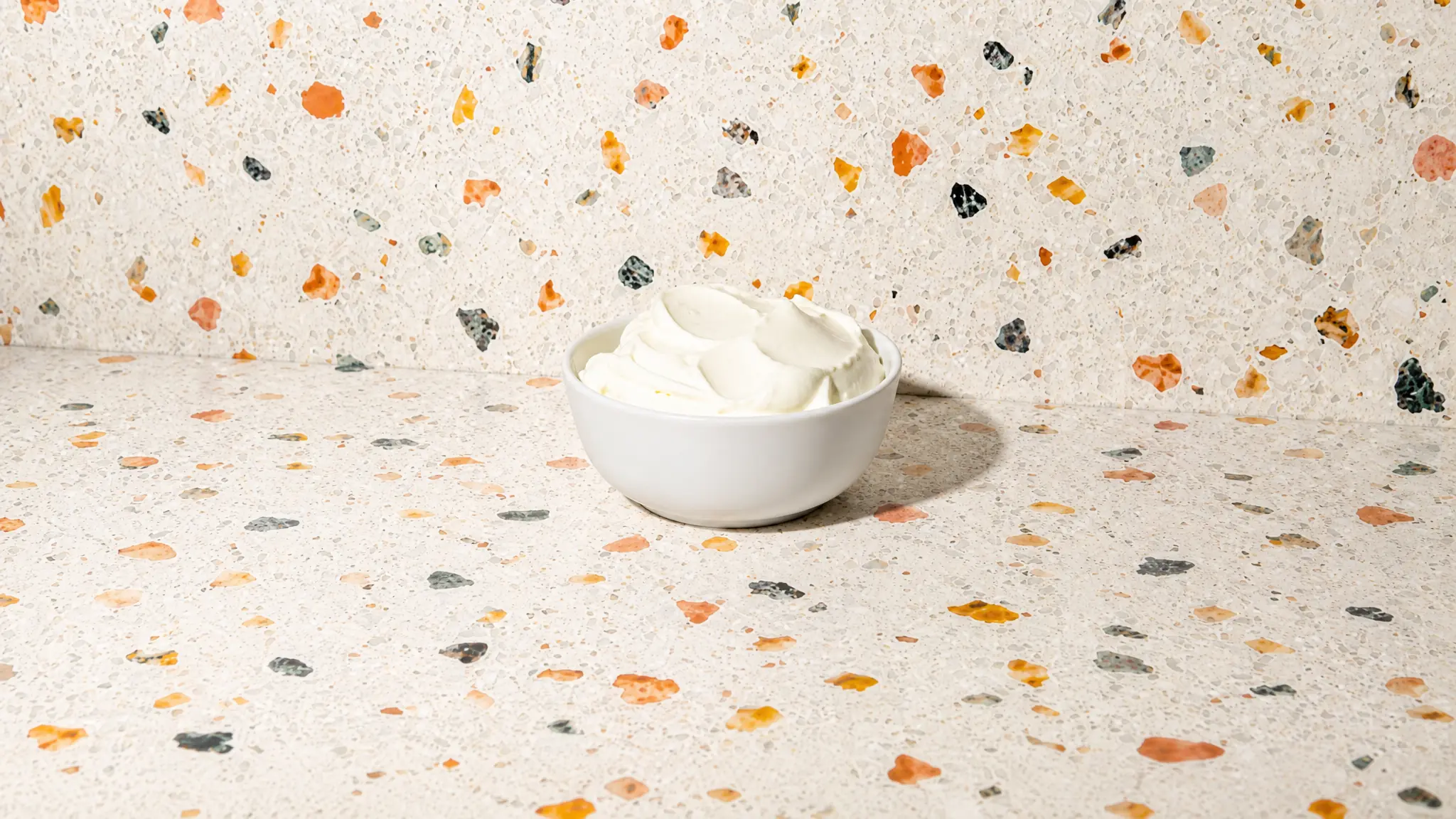
Mascarpone Cheese
Dairy
Last updated July 5, 2026. The Tummi Food Team maintains this Can I Feed This safety guide guide. Supporting links appear in Sources when available.



Clinically reviewed by Andria Procopio and Arefa Mohamed
Direct answer
Can babies eat Mascarpone Cheese?
Yes, you can introduce mascarpone cheese to babies as early as 6 months, using pasteurized varieties to reduce food safety risks.
- Serve Age6+months
Most babies start solids around 6 months once they show readiness signs. Match the texture and serving size to your baby's skills.
- Allergens
Mascarpone Cheese is flagged for milk. Introduce common allergens in a baby-safe form and follow your clinician's advice if your baby is higher risk.
- Choking Risk123451
Lower choking risk when served in the right texture. Always supervise meals and adjust the shape for your baby.
This guide is for everyday food prep questions. Ask your pediatrician about medical concerns, feeding delays, allergy plans, or serious reactions.
How Do You Serve Mascarpone Cheese?
How to serve Mascarpone Cheese to babies 6 months and older
- 1Choose pasteurized mascarpone for safety. Offer only a pea-sized smear on toast or a small spoonful stirred into mashed vegetables, cooked grains, or soft scrambled egg.
- 2Start with a very small amount at the first few feedings and repeat across separate days to watch for any reaction.
- 3Keep the texture smooth — spread thinly or fully mix into food so it won’t form lumps that could cause gagging.
- 4Do not add honey or other sweeteners; serve the cheese plain or gently mixed into baby foods.
- 5Always offer under close supervision and introduce other new foods on different days so any reactions are easier to spot.
How to serve Mascarpone Cheese to babies 9 months and older
- 1Offer mascarpone in a shallow, nonbreakable dish for dipping. Use pasteurized only and place soft, bite-sized pieces of fruit or cooked vegetables nearby to reduce choking risk.
- 2Put a small amount on a spoon or shallow bowl and demonstrate dipping to encourage self-feeding and fine-motor practice.
- 3Use mascarpone as a spread—thinly coat cooked egg strips or folded frittata, or stir a tablespoon into warm mashed vegetables or grains to add creaminess and calories.
- 4Serve in small portions and always supervise while eating; check labels for added salt or sugar.
How to serve Mascarpone Cheese to babies 12 months and older
- 1Serve pasteurized mascarpone plain or spread thinly on soft toast, crackers, or fruit for an easy, nutrient-rich snack.
- 2Stir a small spoonful into warm mashed vegetables, purees, or sauces to add creaminess and calories without a strong taste.
- 3Mix into batters for pancakes, muffins, or quick breads—fold gently so the batter stays light and use modest amounts to avoid heaviness.
- 4Offer a tiny side dish of mild herbs or grated mild cheese so your toddler can explore flavors; let them taste and sprinkle rather than forcing seasoning.
Is Mascarpone Cheese a Common Allergen?
Mascarpone is a cream cheese made from milk/cream and contains milk proteins and lactose — avoid for children with a milk allergy and use caution with lactose intolerance. It typically does not contain eggs, nuts, peanuts, soy, sesame, gluten, fish, or shellfish, but manufacturing cross-contact is possible, so always check the product label for allergen statements. For milk-allergic children, choose dairy-free alternatives.
Is Mascarpone Cheese a Choking Hazard?
Very Low Choking Risk
Mascarpone's soft, spreadable texture makes it a low choking risk compared with firmer foods. That said, any food can pose a choking hazard—keep baby seated upright, stay within arm’s reach, and watch for signs of gagging or choking.
Have More Questions?
Yes. Mascarpone cheese can be stored in an airtight container in the refrigerator for up to 2-3 days after opening. For longer storage, it can be frozen for up to 1 month, but may change in texture.
Yes. You can freeze mascarpone purees for your baby in small, portioned containers for up to 1 month. Thaw in the refrigerator overnight and stir well before serving.
It depends. Organic mascarpone cheese is produced without synthetic pesticides or fertilizers, but both organic and conventional mascarpone should be pasteurized to ensure safety for babies.
It depends. Combining mascarpone with fruits or grains can introduce your baby to new flavors and textures, but always consider the textures and potential allergens to ensure safety.
It depends. Suggested portion sizes for babies vary based on age and development, but generally, start with a teaspoon to a tablespoon of mascarpone as part of balanced meals.
Save Mascarpone Cheese to your food log
Track foods, reactions, and prep notes in Tummi when you want to keep your baby's feeding history in one place.
Sources
- Dangers of raw milk — U.S. Food & Drug Administration fda.gov
- Consumption of raw or unpasteurized milk and milk products by pregnant women and children — American Academy of Pediatrics (Pediatrics, 2014) pediatrics.aappublications.org
- The epidemiology of milk allergy in US children — Warren CM et al. (Annals of Allergy, Asthma & Immunology, 2013) doi.org
- Food protein-induced enterocolitis syndrome and allergic proctocolitis — Nowak-Węgrzyn A. (Allergy Asthma Proc., 2015) doi.org
- The challenge of cow milk protein allergy — El-Agamy, E. (Small Ruminant Research, 2007) doi.org
What Other Dairy Can Babies Eat?
See all →
Source-Linked Guidance
See the evidence behind the guide.
Food guides show direct links to public-health guidance and research when supporting references are available. Source inclusion does not imply endorsement.
 Centers for Disease Control and Prevention
Developmental milestones, nutrition guidelines, and allergen introduction timelines.
 American Academy of Pediatrics
Evidence-based feeding recommendations from the leading pediatric authority.
 National Institutes of Health
Peer-reviewed research on infant nutrition, allergies, and food safety.