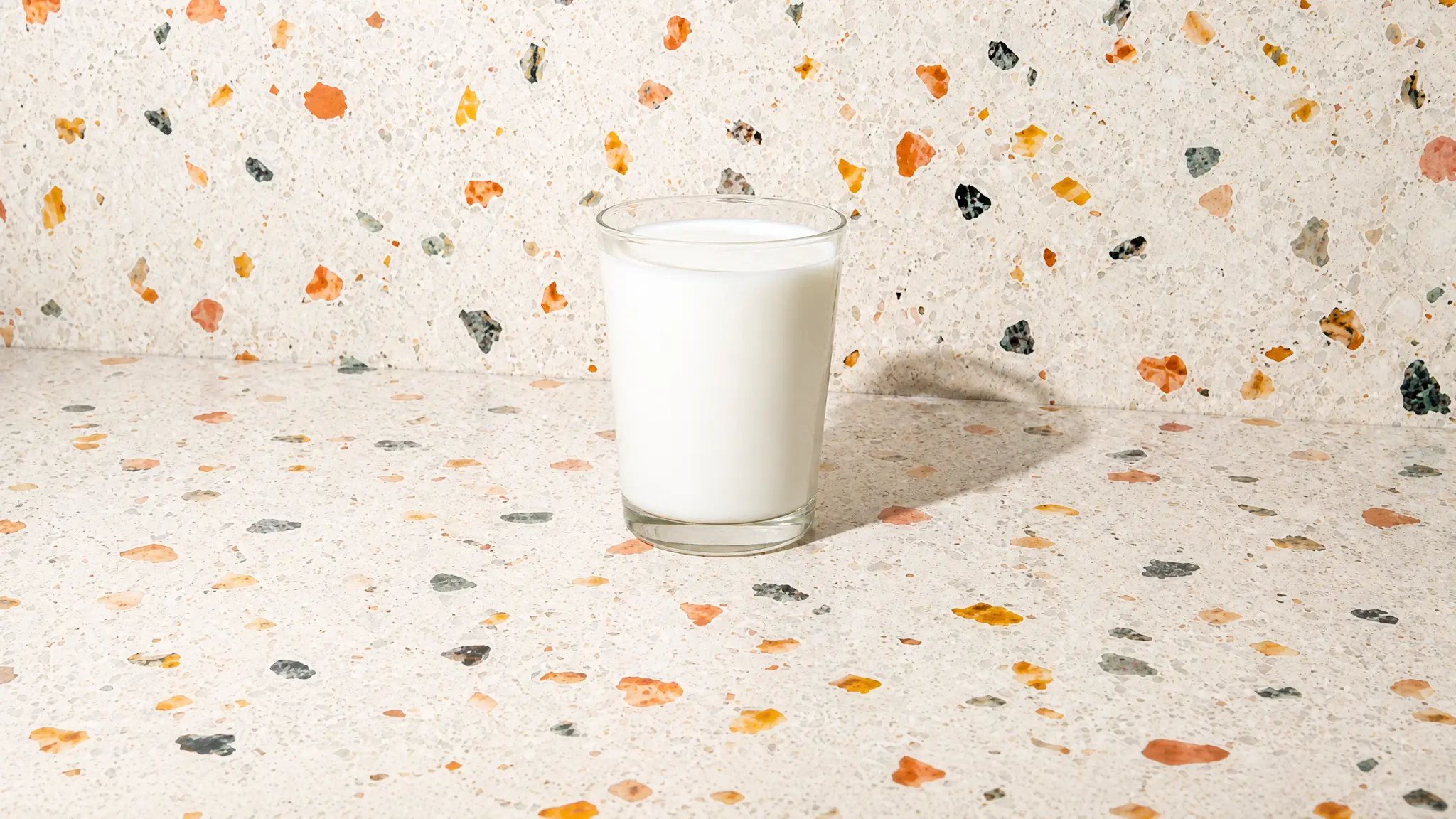
Milk (Cow)
Dairy
Last updated July 5, 2026. The Tummi Food Team maintains this Can I Feed This safety guide guide. Supporting links appear in Sources when available.



Clinically reviewed by Andria Procopio and Arefa Mohamed
Direct answer
Can babies eat Milk (Cow)?
Pasteurized cow's milk can be used in cooked or mixed foods from around 6 months once a baby is developmentally ready for solids, but it should not be offered as a main drink until 12 months; breast milk or infant formula should remain the main milk during the first year.
- Serve Age6+months
Most babies start solids around 6 months once they show readiness signs. Match the texture and serving size to your baby's skills.
- Allergens
Milk (Cow) is flagged for milk. Introduce common allergens in a baby-safe form and follow your clinician's advice if your baby is higher risk.
- Choking Risk123451
Lower choking risk when served in the right texture. Always supervise meals and adjust the shape for your baby.
This guide is for everyday food prep questions. Ask your pediatrician about medical concerns, feeding delays, allergy plans, or serious reactions.
How Do You Serve Milk (Cow)?
How to serve Milk (Cow) to a 11-month-old baby
- 1Keep breast milk or formula as the primary drink; do not use cow’s milk as a replacement.
- 2Use very small amounts of cow’s milk only in cooked or mixed foods (for example, stirred into cereal or oatmeal); start with a teaspoon or two and increase slowly as tolerated.
- 3Offer easy-to-digest dairy first, such as plain yogurt or small pieces of mild cheese, and introduce one dairy food at a time.
- 4Watch closely for allergy or intolerance—stop the food if you see hives, vomiting, diarrhea, or swelling, and contact your pediatrician. Introduce new foods one at a time and wait 2–3 days between additions so you can spot reactions.
How to serve Milk (Cow) to a 12-month-old baby
- 1Offer just a few sips (about 1–2 ounces total) from an open cup to practice drinking—start with one or two small sips and stop when they lose interest.
- 2Continue breast milk or formula as the main source of nutrition; use cow’s milk only briefly for practice so it doesn’t replace nutrient-rich feeds.
- 3Introduce milk at home when a caregiver can closely watch, try only small amounts and wait a few days before increasing; watch for signs of a reaction such as rash, repeated vomiting, diarrhea, swelling, or difficulty breathing.
- 4If you have concerns or a family history of allergies, delay introducing cow’s milk and contact your pediatrician for personalized advice.
How to serve Milk (Cow) to babies 12 months and older
- 1Offer whole cow’s milk as the main milk after the first birthday, but limit total milk to about 16 ounces per day (roughly two 8‑oz cups) so it doesn’t replace iron-rich foods.
- 2Choose full‑fat dairy to support growth unless advised otherwise by your clinician; do not exceed recommended amounts because too much milk can contribute to low iron levels.
- 3Keep serving iron-containing solids at every meal and snack — include options like meat, poultry, fish, beans, lentils, and iron‑fortified cereals to protect iron status.
- 4If you continue breastfeeding, reduce cow’s milk servings so total dairy stays balanced, and talk with your clinician if you’re concerned about weight, poor appetite, or anemia.
How to serve Milk (Cow) to babies 24 months and older
- 1Offer about 2–2.5 servings of dairy daily (a serving ≈ 1 cup of milk or equivalent); confirm exact amounts with your child’s healthcare provider.
- 2Keep milk intake balanced with solid foods to protect iron absorption and ensure a variety of nutrients; limit milk at meals if it reduces appetite for solids.
- 3Use safe serving practices: serve milk in a cup, avoid propping bottles, and check temperature before offering.
- 4Watch for signs of intolerance or allergy—persistent diarrhea, vomiting, hives, or difficulty breathing needs prompt medical attention.
Is Milk (Cow) a Common Allergen?
Cow’s milk is a common childhood allergen — symptoms range from hives, vomiting, stomach upset and bloody stools in infants to, rarely, life-threatening anaphylaxis. It is an immune (protein) allergy to casein/whey and is different from lactose intolerance, which causes only digestive symptoms. Most people with cow’s milk allergy also react to goat and sheep milk, and heating doesn't reliably remove the allergen (some tolerate baked milk only under specialist guidance). Check labels for hidden milk in foods and seek urgent care for any breathing difficulty, swelling, or severe vomiting.
Is Milk (Cow) a Choking Hazard?
Very Low Choking Risk
Milk itself is a low choking risk when offered in a way that matches a child’s developmental abilities, but any food or drink can pose a hazard. Always stay within arm’s reach and maintain a calm, safe eating environment while your baby is eating or drinking, and learn the signs of choking and basic first-aid responses. If you’re ever worried about your child’s swallowing skills, consult your pediatric provider.
Have More Questions?
No, cow's milk should not be offered as a main drink before 12 months because it does not provide the nutrient balance an infant needs. Pasteurized whole cow's milk may be used in cooked food from around 6 months once your baby is developmentally ready for solids.
Yes, pasteurized cow's milk can be used in cooked food from around 6 months once your baby is developmentally ready for solids. It should not replace breast milk or infant formula as a main drink before 12 months.
Yes, pasteurized whole cow's milk can be part of a toddler's varied diet from 12 months. Avoid letting milk displace a variety of foods, including iron-rich foods, and choose unflavored, unsweetened milk.
A family history of allergic disease means cow's milk introduction needs extra care, not a blanket safety guarantee. Cow's milk is a common allergen; speak with your baby's doctor or health visitor before introduction if your baby has an existing allergy or eczema, or your family has a history of food allergy, eczema, asthma, or hay fever.
Cow's milk is not a typical solid-food choking hazard, but the way any drink is offered still matters. Have your child sit upright and supervise them while drinking; never prop a bottle or leave it in a baby's mouth.
Save Milk (Cow) to your food log
Track foods, reactions, and prep notes in Tummi when you want to keep your baby's feeding history in one place.
Sources
- Martin CR, Ling PR, Blackburn GL (2016) Review of Infant Feeding: Key Features of Breast Milk and Infant Formula. Nutrients doi.org
- Leung AK, Sauve RS (2003) Whole cow’s milk in infancy. Paediatrics Child Health doi.org
- Ziegler EE (2011) Consumption of cow's milk as a cause of iron deficiency in infants and toddlers. Nutrition reviews doi.org
- U.S. Department of Agriculture (2020) Milk, whole. FoodData Central fdc.nal.usda.gov
- NIH — Vitamin D (2021) ods.od.nih.gov
- NIH — Vitamin A (2021) ods.od.nih.gov
- NIH — Choline (2021) ods.od.nih.gov
- NIH — Vitamin B6 (2021) ods.od.nih.gov
- NIH — Vitamin B12 (2021) ods.od.nih.gov
- NIH — Iodine (2021) ods.od.nih.gov
- Berhe T, Seifu E, Kurtu MY (2013) Physicochemical properties of butter made from camel milk. International Dairy Journal doi.org
- Konuspayeva G, Lemarie É, Faye B, et al. (2008) Fatty acid and cholesterol composition of camel’s milk. Dairy Science & Technology doi.org
- Warren CM, Jhaveri S, Warrier MR, Smith B, Gupta RS (2013) The epidemiology of milk allergy in US children. Annals of Allergy, Asthma & Immunology doi.org
- El-Agamy E (2007) The challenge of cow milk protein allergy. Small Ruminant Research doi.org
- Wood RA, Sicherer SH, Vickery BP, et al. (2013) The natural history of milk allergy. Journal of Allergy and Clinical Immunology doi.org
- Nowak-Węgrzyn A (2015) Food protein-induced enterocolitis syndrome and allergic proctocolitis. Allergy Asthma Proc. doi.org
- Heine RG, et al. (2017) Lactose intolerance and gastrointestinal cow's milk allergy in infants and children. World Allergy Organization Journal doi.org
- Centers for Disease Control and Prevention — Raw Milk cdc.gov
- FDA (2018) The dangers of raw milk: Unpasteurized milk can pose a serious health risk fda.gov
What Other Dairy Can Babies Eat?
See all →

Source-Linked Guidance
See the evidence behind the guide.
Food guides show direct links to public-health guidance and research when supporting references are available. Source inclusion does not imply endorsement.
 Centers for Disease Control and Prevention
Developmental milestones, nutrition guidelines, and allergen introduction timelines.
 American Academy of Pediatrics
Evidence-based feeding recommendations from the leading pediatric authority.
 National Institutes of Health
Peer-reviewed research on infant nutrition, allergies, and food safety.