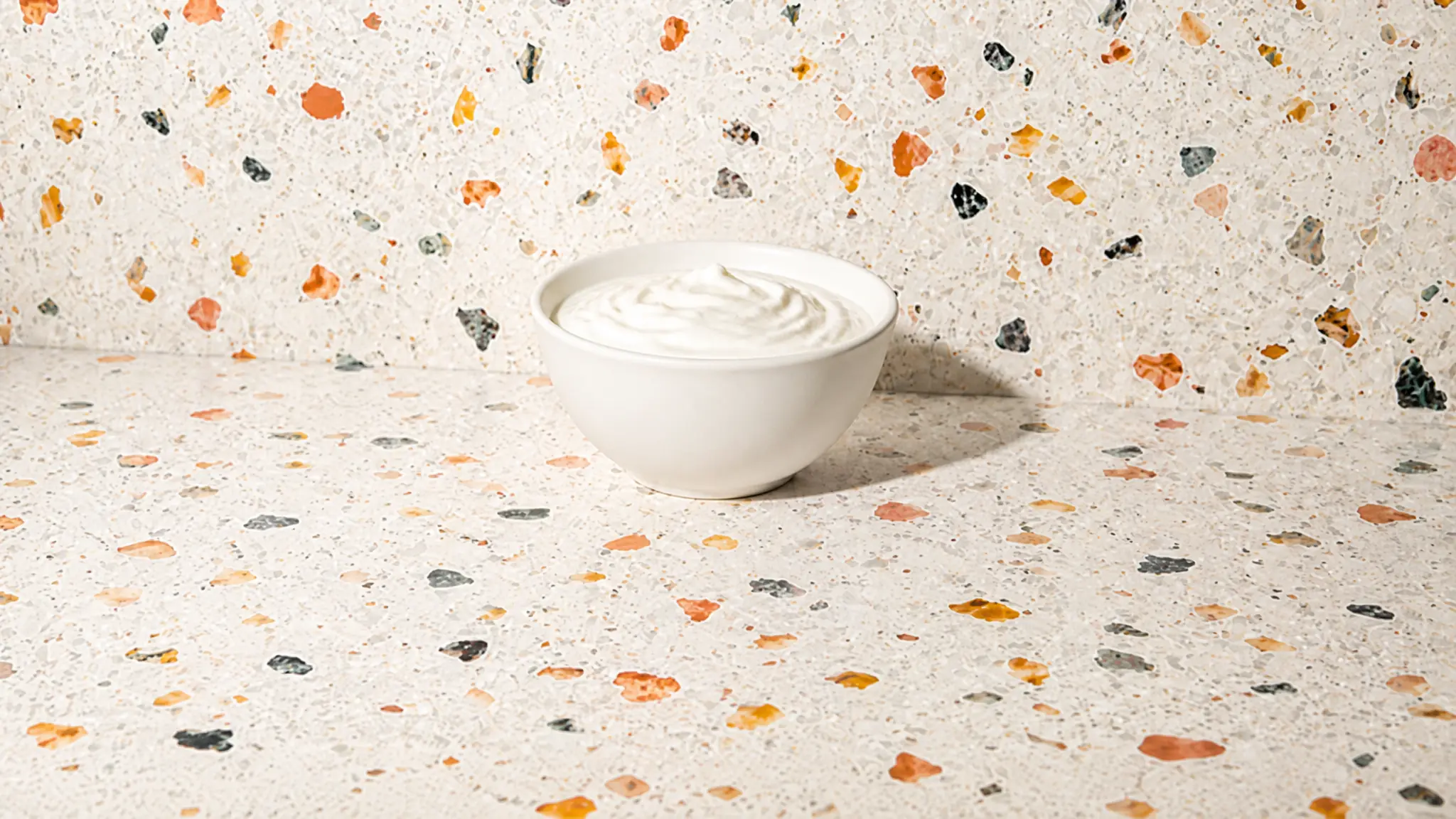
Quark
Dairy
Last updated July 5, 2026. The Tummi Food Team maintains this Can I Feed This safety guide guide. Supporting links appear in Sources when available.



Clinically reviewed by Andria Procopio and Arefa Mohamed
Direct answer
Can babies eat Quark?
Yes, pasteurized quark can be introduced around 6 months as a low-sodium, creamy dairy option for babies starting solids.
- Serve Age6+months
Most babies start solids around 6 months once they show readiness signs. Match the texture and serving size to your baby's skills.
- Allergens
Quark is flagged for milk. Introduce common allergens in a baby-safe form and follow your clinician's advice if your baby is higher risk.
- Choking Risk123451
Lower choking risk when served in the right texture. Always supervise meals and adjust the shape for your baby.
This guide is for everyday food prep questions. Ask your pediatrician about medical concerns, feeding delays, allergy plans, or serious reactions.
How Do You Serve Quark?
How to serve Quark to babies 6 months and older
- 1Spread a thin layer of pasteurized quark on soft, bite-sized toast pieces or on sturdy vegetable strips so baby can hold and lick.
- 2Stir a small spoonful into mashed vegetables or soft scrambled egg to add creaminess and help introduce new flavours.
- 3Start with very small amounts (about a pea-sized smear) and increase gradually as your baby shows readiness; watch for gagging or allergic reactions.
- 4Use only pasteurized quark, avoid added sugars and honey, and remain within arm’s reach while your baby eats.
How to serve Quark to babies 9 months and older
- 1Serve pasteurized quark as a thick dip with soft, well-cooked fruit or vegetable strips cut into thin, easy-to-hold pieces to reduce choking risk.
- 2Stir or fold quark into warm cooked grains, mashed vegetables, or scrambled eggs to add creaminess and a mild tang while varying texture and flavor.
- 3Thin quark with a little breastmilk, formula, or water for a smoother spoonable texture; start with very small tastes (about a teaspoon) and increase to modest portions as your child accepts it.
- 4Use only pasteurized quark and avoid added sugar; skip sweetened preparations and refrigerate leftovers promptly, using within 24–48 hours.
How to serve Quark to babies 12 months and older
- 1Offer pasteurized whole‑milk quark plain or stirred into other foods—try 1–2 tablespoons mixed into warm porridge, mashed vegetables, or fruit purée to add creaminess and calories.
- 2Use quark in sauces, batters, or stuffings as a substitute for yogurt or cream to soften textures and boost nutrients; start with small amounts and adjust to taste.
- 3Serve small spoonfuls and invite the child to season a tiny portion with mild herbs or a squeeze of lemon to practice choice and independence.
- 4Always supervise mealtimes, check for a smooth, age‑appropriate texture, refrigerate leftovers promptly, and use within 48 hours.
Is Quark a Common Allergen?
Quark is a fresh dairy (curd) cheese made from milk and therefore contains milk proteins. It is not suitable for anyone with a milk allergy or with severe lactose intolerance—avoid for infants and children with dairy allergies. Check product labels for added ingredients (e.g., fruits, nuts) and any cross-contamination warnings. When in doubt, consult your pediatrician or allergist.
Is Quark a Choking Hazard?
Very Low Choking Risk
Quark is a spreadable, soft cheese and generally does not pose a high choking risk. However, very thin or sticky coatings can stick to a baby’s tongue and be hard to clear, so watch for textures that could be difficult to expel. Remember that any food can cause choking, so stay attentive and within reach during feeds.
Have More Questions?
Yes, parents can store quark in the refrigerator for up to 1-2 weeks if unopened, and for about 3-5 days once opened, maintaining proper cold storage.
Yes, you can freeze quark to extend its shelf life, typically for up to 2-3 months, but note that this may slightly alter the texture, making it less smooth.
Yes, many parents choose organic quark for their babies to avoid potential pesticides and additives found in conventional dairy products, although both are safe if pasteurized.
Yes, combining quark with fruits or vegetables can help introduce a variety of flavors and nutrients to your baby, supporting a balanced diet and taste development.
Portion sizes for babies vary, but generally, start with about 1-2 teaspoons of quark, gradually increasing as your baby shows readiness and interest, up to 2-3 tablespoons per feeding.
Save Quark to your food log
Track foods, reactions, and prep notes in Tummi when you want to keep your baby's feeding history in one place.
Sources
- Raw milk questions and answers - Centers for Disease Control and Prevention cdc.gov
- The dangers of raw milk - U.S. Food and Drug Administration fda.gov
- Evolution of phospholipid contents during the production of quark cheese from buttermilk - Journal of Dairy Science (Ferreiro et al., 2016) doi.org
- Health Benefits of Lactic Acid Bacteria (LAB) Fermentates - Nutrients (Mathur et al., 2020) doi.org
- The epidemiology of milk allergy in US children - Ann Allergy Asthma Immunol (Warren et al., 2013) doi.org
- The challenge of cow milk protein allergy - Small Ruminant Research (El-Agamy, 2007) doi.org
- Food protein-induced enterocolitis syndrome and allergic proctocolitis - Allergy Asthma Proc (Nowak-Węgrzyn, 2015) doi.org
- The effects of probiotics in lactose intolerance: A systematic review - Critical Reviews in Food Science and Nutrition (Oak & Jha, 2019) doi.org
- Quark-Type Cheese: Effect of Fat Content, Homogenization, and Heat Treatment of Cheese Milk - Foods (Lepesioti et al., 2021) doi.org
What Other Dairy Can Babies Eat?
See all →
Source-Linked Guidance
See the evidence behind the guide.
Food guides show direct links to public-health guidance and research when supporting references are available. Source inclusion does not imply endorsement.
 Centers for Disease Control and Prevention
Developmental milestones, nutrition guidelines, and allergen introduction timelines.
 American Academy of Pediatrics
Evidence-based feeding recommendations from the leading pediatric authority.
 National Institutes of Health
Peer-reviewed research on infant nutrition, allergies, and food safety.