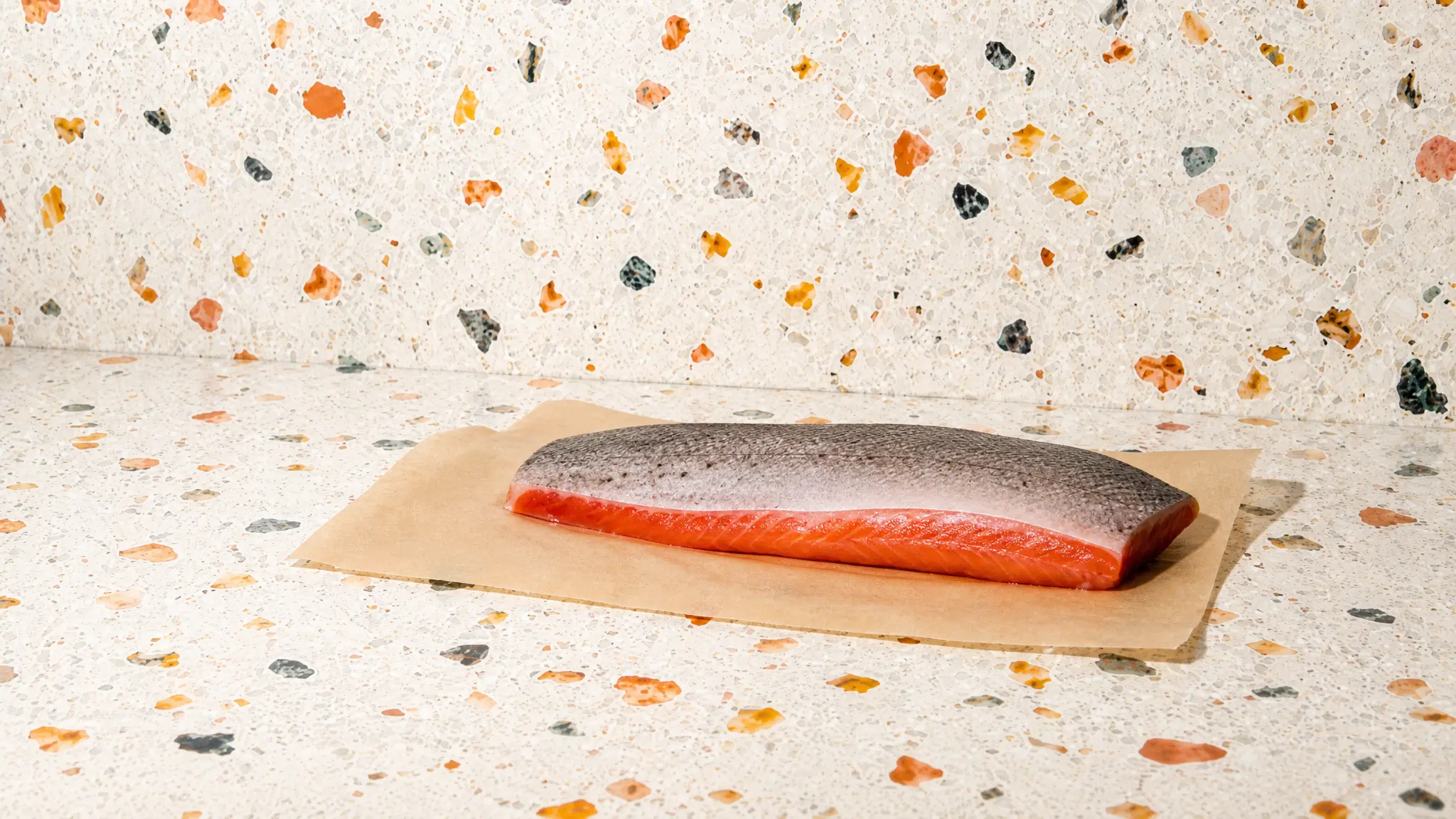
Arctic Char
Fish
Last updated July 5, 2026. The Tummi Food Team maintains this Can I Feed This safety guide guide. Supporting links appear in Sources when available.



Clinically reviewed by Andria Procopio and Arefa Mohamed
Direct answer
Can babies eat Arctic Char?
Yes, fully cooked arctic char can be introduced around 6 months of age, as it is low in mercury and rich in essential nutrients for babies.
- Serve Age6+months
Most babies start solids around 6 months once they show readiness signs. Match the texture and serving size to your baby's skills.
- Allergens
Arctic Char is flagged for fish. Introduce common allergens in a baby-safe form and follow your clinician's advice if your baby is higher risk.
- Choking Risk123451
Lower choking risk when served in the right texture. Always supervise meals and adjust the shape for your baby.
This guide is for everyday food prep questions. Ask your pediatrician about medical concerns, feeding delays, allergy plans, or serious reactions.
How Do You Serve Arctic Char?
How to serve Arctic Char to babies 6 months and older
- 1Cook the arctic char until it is fully done and flakes easily; remove any bones and the skin before serving.
- 2Cut into long strips about the length and width of two adult fingers pressed together so they are easy to grasp.
- 3If the fish is very soft, gently flake it and mix into mashed vegetables or form small, soft fish cakes to make self-feeding easier and increase intake.
- 4Serve cooled to warm (not hot) and always supervise during feeding to watch for any remaining bones or choking risk.
How to serve Arctic Char to babies 9 months and older
- 1Cook arctic char until opaque and flaking, remove all bones and skin, then let it cool to lukewarm before serving.
- 2Cut into small, bite-sized pieces or gently flake the fish so pieces are easy to pick up; avoid large, slippery chunks to reduce choking risk.
- 3You can also offer longer strips if your child manages self-feeding well, but always supervise and let them eat at their own pace.
- 4For variety, make soft fish cakes or patties, or mix flaked char with mashed avocado, yogurt, a little olive oil, or a small amount of mayo for a creamy fish salad. Serve chilled.
How to serve Arctic Char to babies 12 months and older
- 1Cook the arctic char thoroughly until opaque and flakes easily; remove all bones by hand or with tweezers and double-check the fillet before serving.
- 2Serve as long strips, small bite-sized pieces, or flaked into other foods so pieces are easy to pick up and swallow; well-cooked cakes or patties are also suitable.
- 3Offer manageable pieces that match your child’s eating skills to encourage utensil use and safe self-feeding.
- 4Offer fully cooked smoked arctic char only occasionally because of higher salt and processing; keep portions small and ensure it’s deboned and soft.
- 5Introduce fish gradually and watch for any allergic reaction; consult your pediatrician if there is a family history of fish allergy or if you have concerns.
Is Arctic Char a Common Allergen?
Arctic char is a finned fish and should be treated as a fish allergen — avoid giving it to children with known fish allergies and be aware of cross-reactivity with other fish such as salmon or trout. It does not contain shellfish, dairy, eggs, peanuts, tree nuts, soy, gluten, or sesame, but watch for small bones and possible cross-contamination during processing or at restaurants. If your child has any food allergies or you’re unsure, consult your pediatrician or an allergist before serving.
Is Arctic Char a Choking Hazard?
Very Low Choking Risk
Cooked arctic char is generally low risk for choking when bones and skin are removed, but small fish bones can still become lodged in a baby’s mouth, throat, or esophagus. Stay within arm’s reach and watch closely for any signs of choking or gagging while baby eats, and be prepared to administer basic choking first aid if needed. If you’re concerned about bone fragments or your child’s swallowing skills, consult your pediatrician.
Have More Questions?
Yes. Arctic char can be stored in the refrigerator for 1-2 days or frozen for longer storage to maintain freshness, making it convenient for meal planning for your baby.
Yes. You can freeze pureed arctic char in individual portions for up to 3 months, and thaw it safely in the refrigerator before serving to your baby.
Yes. Organic arctic char is often farmed with stricter regulations on pesticides and chemicals, but both organic and conventional fish are nutritious options for babies.
Yes. You can combine arctic char with vegetables or grains to introduce new flavors and textures, as long as the foods are age-appropriate and prepared safely for your baby.
Yes. Portion sizes for babies depend on their age, but generally, a small finger-sized piece or about 1-2 tablespoons of cooked fish is appropriate for a 6-12 month-old baby.
Save Arctic Char to your food log
Track foods, reactions, and prep notes in Tummi when you want to keep your baby's feeding history in one place.
Sources
- Advice about Eating Fish (Center for Food Safety and Applied Nutrition, FDA) fda.gov
- The Relationship of Docosahexaenoic Acid (DHA) with Learning and Behavior in Healthy Children: A Review doi.org
- Environmental mercury and its toxic effects doi.org
- Fish and shellfish allergy in children: Review of a persistent food allergy doi.org
- Prevalence of fish and shellfish allergy: A systematic review doi.org
- Allergic reactions to foods by inhalation doi.org
- Sensitization to inhalant allergens in children diagnosed with food hypersensitivity doi.org
- Scombrotoxin poisoning and decomposition (U.S. FDA) fda.gov
What Other Fish Can Babies Eat?
See all →
Source-Linked Guidance
See the evidence behind the guide.
Food guides show direct links to public-health guidance and research when supporting references are available. Source inclusion does not imply endorsement.
 Centers for Disease Control and Prevention
Developmental milestones, nutrition guidelines, and allergen introduction timelines.
 American Academy of Pediatrics
Evidence-based feeding recommendations from the leading pediatric authority.
 National Institutes of Health
Peer-reviewed research on infant nutrition, allergies, and food safety.