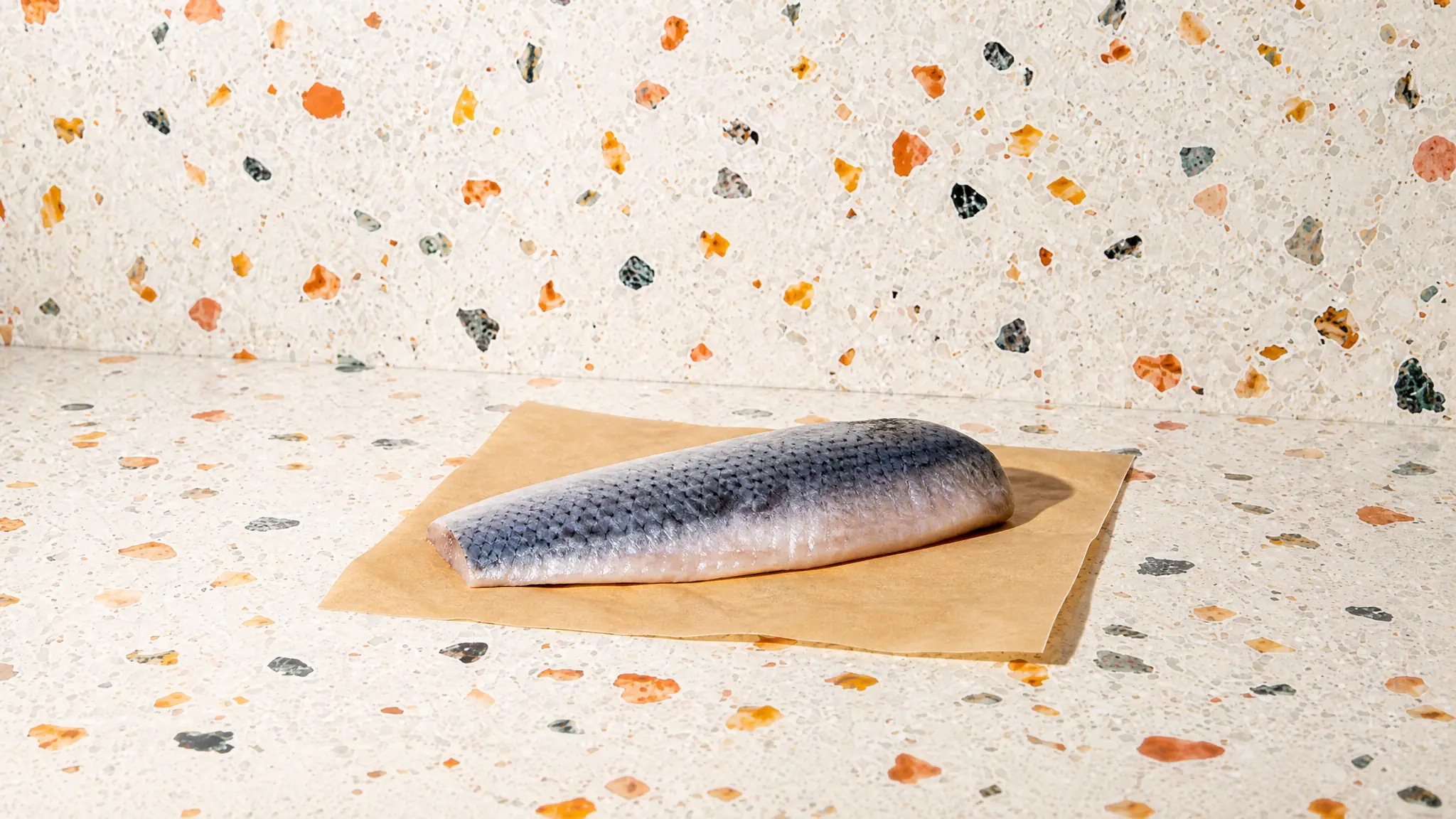

Herring
Fish
Last updated July 5, 2026. The Tummi Food Team maintains this Can I Feed This safety guide guide. Supporting links appear in Sources when available.



Clinically reviewed by Andria Procopio and Arefa Mohamed
Direct answer
Can babies eat Herring?
Yes, babies can eat herring from around 6 months, preferably prepared plain and rinsed to reduce sodium, once they are ready to start solids.
- Serve Age6+months
Most babies start solids around 6 months once they show readiness signs. Match the texture and serving size to your baby's skills.
- Allergens
Herring is flagged for fish. Introduce common allergens in a baby-safe form and follow your clinician's advice if your baby is higher risk.
- Choking Risk123451
Lower choking risk when served in the right texture. Always supervise meals and adjust the shape for your baby.
This guide is for everyday food prep questions. Ask your pediatrician about medical concerns, feeding delays, allergy plans, or serious reactions.
How Do You Serve Herring?
How to serve Herring to a 12-month-old baby
- 1Cook herring until fully done and remove any visible bones; for canned herring, rinse under cold water to reduce salt.
- 2If using canned herring, mash thoroughly—the softened bones and skin can be left in once mashed to a smooth, even texture.
- 3Offer a small, well-flaked fillet as a finger food or spread thinly on soft toast or cooked vegetables so the child can pick up or self-feed.
- 4For spoon-feeding, mash herring and mix with cooked vegetables, grains, or plain yogurt to create a thicker, scoopable mixture. Check texture to ensure there are no large pieces before serving.
How to serve Herring to a 24-month-old baby
- 1Flake cooked herring into small, soft pieces and carefully check for and remove any bones to prevent choking.
- 2Form small patties or mix flakes with mashed potato, cooked grains, or beaten egg to make easy-to-grasp portions.
- 3Stir flakes into warm pasta, rice, or soft-cooked vegetables, or use a light sprinkle on toast or bagels for variety.
- 4If using preserved herring, rinse briefly and choose lower-sodium varieties; serve a small portion first to check tolerance and refrigerate leftovers to use within 24–48 hours.
Is Herring a Common Allergen?
Herring is a fish and a known fish allergen—avoid if your child has a fish allergy, as reactions can be severe. Processed or canned herring may include sauces or marinades that introduce other allergens (e.g., soy, wheat, mustard), so always check ingredient labels. Cross-contact in kitchens or factories can occur, so highly sensitive children may react to trace amounts. Whole herring can also contain small bones—use boneless preparations or remove bones to reduce choking risk.
Is Herring a Choking Hazard?
Very Low Choking Risk
Herring itself isn’t a common choking hazard, but small fish bones can pose a risk—many bones in small fish are tiny and often impossible to remove from fresh or frozen fillets. Canning softens bones and can make them more edible, but watch closely for any stray bones and stay nearby during meals so you can respond quickly if gagging or choking occurs.
Have More Questions?
Yes. Herring can be stored in the refrigerator for up to 2 days if kept in an airtight container, or frozen for longer storage, typically up to 3 months, to preserve freshness and safety.
Yes. Freezing pureed herring is a good way to store batches for convenience, but ensure it is stored in airtight containers and used within 1-3 months for optimal quality.
It depends. Choosing organic herring can reduce exposure to pesticides and other chemicals, but both organic and conventional options are safe for babies if properly prepared and sourced from reputable suppliers.
Yes. Combining herring with vegetables or grains can provide a balanced meal, introducing your baby to new flavors and textures while ensuring nutritional diversity.
It depends. Typical portion sizes for babies start around 1-2 teaspoons of cooked fish, gradually increasing as your baby gets older and shows readiness for new textures.
Save Herring to your food log
Track foods, reactions, and prep notes in Tummi when you want to keep your baby's feeding history in one place.
Sources
- Mercury levels in commercial fish and shellfish (1990-2012) — U.S. Food & Drug Administration fda.gov
- Environmental mercury and its toxic effects — Rice et al., Journal of Preventive Medicine and Public Health (2014) doi.org
- Mercury exposure from domestic and imported estuarine and marine fish in the U.S. seafood market — Sunderland (2007), Environmental Health Perspectives doi.org
- EFSA Provides Advice on the Safety and Nutritional Contribution of Wild and Farmed Fish — European Food Safety Authority (2005) doi.org
- The Effects of Thyroid Hormone Level and Action in Developing Brain — Sher et al., Toxicology and Industrial Health (1998) doi.org
- Fish and shellfish allergy in children: Review — Tsabouri et al., Pediatric Allergy and Immunology (2012) doi.org
- Sensitization to inhalant allergens in children diagnosed with food hypersensitivity — Crespo et al., Allergy Proc (1995) doi.org
- Allergic reactions to foods by inhalation — James & Crespo (2007), Curr. Allergy Asthma Rep doi.org
- Scombrotoxin poisoning and decomposition — U.S. Food & Drug Administration (2017) fda.gov
What Other Fish Can Babies Eat?
See all →








Source-Linked Guidance
See the evidence behind the guide.
Food guides show direct links to public-health guidance and research when supporting references are available. Source inclusion does not imply endorsement.
 Centers for Disease Control and Prevention
Developmental milestones, nutrition guidelines, and allergen introduction timelines.
 American Academy of Pediatrics
Evidence-based feeding recommendations from the leading pediatric authority.
 National Institutes of Health
Peer-reviewed research on infant nutrition, allergies, and food safety.