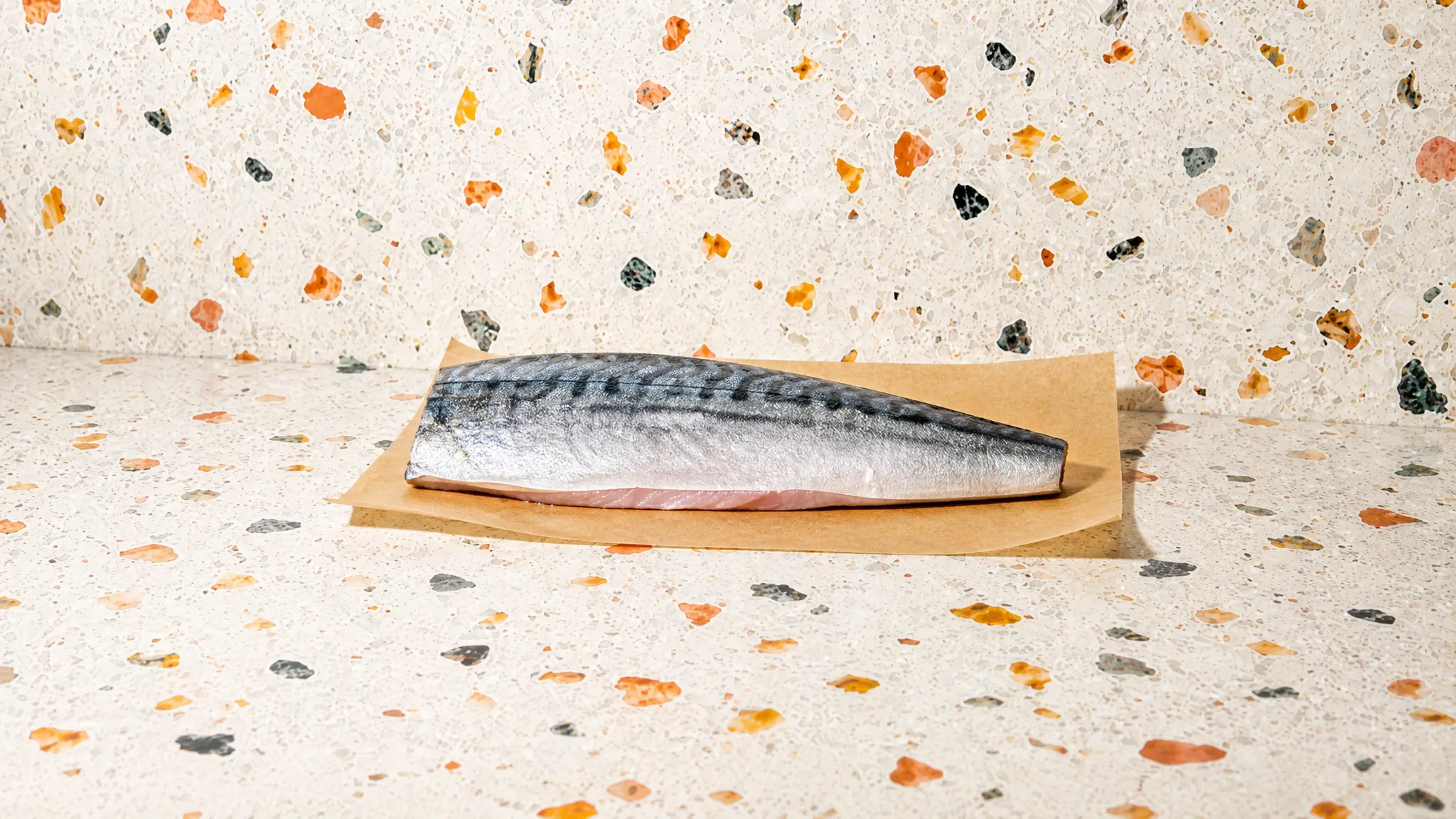
Mackerel (North Atlantic)
Fish
Last updated July 5, 2026. The Tummi Food Team maintains this Can I Feed This safety guide guide. Supporting links appear in Sources when available.



Clinically reviewed by Andria Procopio and Arefa Mohamed
Direct answer
Can babies eat Mackerel (North Atlantic)?
Yes, North Atlantic mackerel can be introduced around 6 months when a baby is developmentally ready for solid foods. Cook it thoroughly, remove all bones, and serve it in a soft texture suited to the baby's eating skills; mackerel is also a fish allergen.
- Serve Age6+months
Most babies start solids around 6 months once they show readiness signs. Match the texture and serving size to your baby's skills.
- Allergens
Mackerel (North Atlantic) is flagged for fish. Introduce common allergens in a baby-safe form and follow your clinician's advice if your baby is higher risk.
- Choking Risk123452
Lower choking risk when served in the right texture. Always supervise meals and adjust the shape for your baby.
This guide is for everyday food prep questions. Ask your pediatrician about medical concerns, feeding delays, allergy plans, or serious reactions.
How Do You Serve Mackerel (North Atlantic)?
How to serve Mackerel (North Atlantic) to babies 6 months and older
- 1Offer soft strips of canned mackerel or flaked, well-cooked and thoroughly deboned fresh mackerel mixed into mashed avocado, plain yogurt, a little mayonnaise, or a drizzle of olive oil; serve on a pre-loaded spoon or spread thinly on toast.
- 2When using canned mackerel, bones are usually softened by the canning process but always double-check and remove any hard bits before offering.
- 3Start with small amounts and watch for gagging or allergy signs; mash or flake to a texture that's easy to swallow and warm to room temperature if needed.
- 4Refrigerate leftovers promptly and use within 24 hours; discard if the smell or texture seems off.
How to serve Mackerel (North Atlantic) to babies 9 months and older
- 1Remove all skin and bones, then flake or chop into pea-sized pieces so the baby can practice the pincer grasp.
- 2For self-feeding, cut slightly larger strips about the combined width and length of two adult pinky fingers pressed together so the baby can bite and tear.
- 3Use deboned canned (rinse to reduce salt) or freshly cooked mackerel and check carefully for stray bones before serving.
- 4Serve lukewarm and supervise closely. Introduce gradually and watch for reactions.
How to serve Mackerel (North Atlantic) to babies 12 months and older
- 1Cut cooked mackerel into long strips or bite-sized pieces that are easy for little hands to pick up and for toddlers to chew.
- 2Flake or mash fish and mix into mashed potatoes, rice, or soft vegetables to create familiar textures and reduce choking risk.
- 3Make small pan-fried or baked fish patties that hold together; check for and remove bones before serving.
- 4Smoked mackerel can be offered regularly if desired—limit added salt, supervise meals closely, and watch for any signs of allergic reaction or difficulty swallowing while encouraging utensil use.
Is Mackerel (North Atlantic) a Common Allergen?
Mackerel is a common fish allergen—anyone with a diagnosed fish allergy should avoid it and be aware that people allergic to one fish may react to others. Fish and shellfish allergies are different (you can be allergic to one but not the other). Mackerel (a scombroid species) can also cause histamine (scombroid) poisoning if not stored correctly, which mimics allergic symptoms but is food poisoning. Take care with small bones when serving to children and store/handle fish properly; seek medical advice if any allergic symptoms occur.
Is Mackerel (North Atlantic) a Choking Hazard?
Low Choking Risk
Prepared appropriately, mackerel presents a low choking risk, but as with any food a child could choke on pieces that are too large or firm. Remove all bones from freshly cooked fish (canned mackerel bones are usually softened by the canning process) and supervise meals closely, staying within arm’s reach. Watch your baby’s chewing and gagging cues and offer small, manageable pieces that match their developmental stage.
Have More Questions?
Yes, cooked mackerel can be stored for later use. Refrigerate it within 2 hours in a shallow covered container, use it within 4 days, and discard it sooner if it was left at room temperature for more than 2 hours.
Yes, cooked mackerel puree can be frozen for later use. Cool and freeze it promptly in a shallow, covered freezer-safe container rather than leaving it at room temperature.
Yes, Atlantic mackerel is listed by FDA and EPA among the lower-mercury Best Choices for children. Check the species name because king mackerel is a Choice to Avoid, and prepare Atlantic mackerel in a developmentally appropriate form with all bones removed.
Yes, mackerel can be combined with other foods your baby already eats. Keep the fish thoroughly cooked and boneless, and make the overall texture appropriate for your baby's developmental skills.
There is no single mackerel portion that is appropriate for every baby. Offer a small amount in a developmentally appropriate texture and let your baby decide how much to eat by following their hunger and fullness cues.
Save Mackerel (North Atlantic) to your food log
Track foods, reactions, and prep notes in Tummi when you want to keep your baby's feeding history in one place.
Sources
- U.S. Food & Drug Administration. Mercury Levels in Commercial Fish and Shellfish (1990-2012).
- Tong WS, Yuen AW, Wai CY, Leung NY, Chu KH, Leung PS. (2018). Diagnosis of fish and shellfish allergies. J Asthma Allergy, 11, 247-60.
- Tsabouri S., Triga M., Makris M., Kalogeromitros D., Church MK., Priftis KN. (2012). Fish and shellfish allergy in children: Review of a persistent food allergy. Pediatric Allergy and Immunology, 23(7), 608–615.
- Moonesinghe H, Mackenzie H, Venter C, et al. (2016). Prevalence of fish and shellfish allergy: A systematic review. Ann Allergy Asthma Immunol, 117(3):264-272.e4.
- Food Allergy Research & Education. Fish Allergy.
- Food Allergy and Anaphylaxis Connection Team. Food Allergy & Anaphylaxis – Fish.
- Crespo J.F., Pascual C., Vallecillo A., Esteban M.M. (1995). Sensitization to inhalant allergens in children diagnosed with food hypersensitivity. Allergy Proc, 16:89–92.
- James J.M., Crespo J.F. (2007). Allergic reactions to foods by inhalation. Curr. Allergy Asthma Rep, 7:167–174.
- U.S. Food & Drug Administration. (2017). Scombrotoxin poisoning and decomposition.
- United States Environmental Protection Agency. Basic Information about Mercury.
- Harvard T.H. Chan School of Public Health. Fish: Friend or Foe?
- Rice K., Walker E., Wu M., Gillette C., Blough E. (2014). Environmental mercury and its toxic effects. Journal of Preventative Medicine and Public Health, 47(2): 74-83.
What Other Fish Can Babies Eat?
See all →
Source-Linked Guidance
See the evidence behind the guide.
Food guides show direct links to public-health guidance and research when supporting references are available. Source inclusion does not imply endorsement.
 Centers for Disease Control and Prevention
Developmental milestones, nutrition guidelines, and allergen introduction timelines.
 American Academy of Pediatrics
Evidence-based feeding recommendations from the leading pediatric authority.
 National Institutes of Health
Peer-reviewed research on infant nutrition, allergies, and food safety.