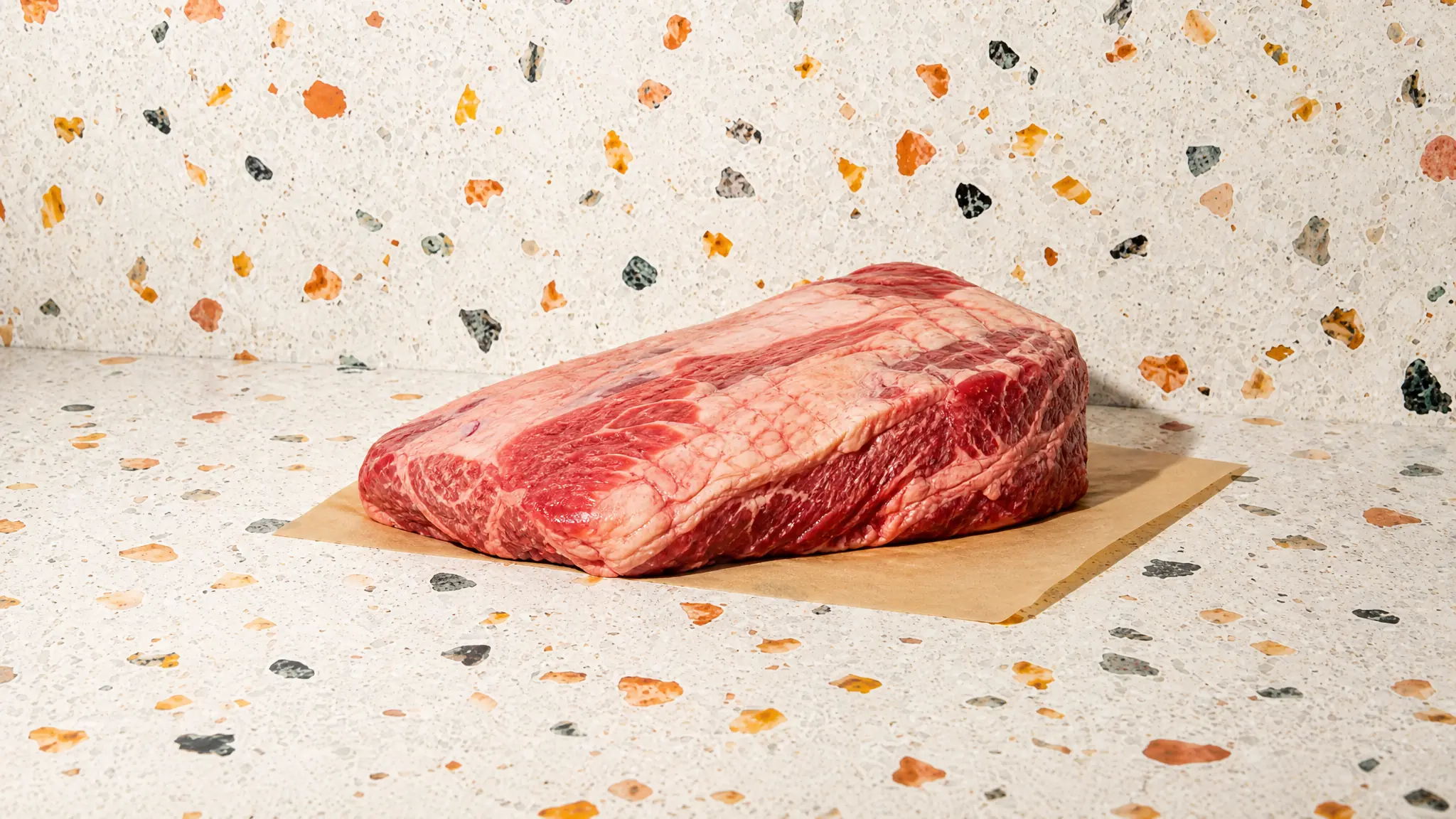
Beef Brisket
Meat
Last updated July 5, 2026. The Tummi Food Team maintains this Can I Feed This safety guide guide. Supporting links appear in Sources when available.



Clinically reviewed by Andria Procopio and Arefa Mohamed
Direct answer
Can babies eat Beef Brisket?
Yes, well-cooked brisket can be introduced around 6 months, ensuring it is shredded into small, manageable pieces to prevent choking.
- Serve Age6+months
Most babies start solids around 6 months once they show readiness signs. Match the texture and serving size to your baby's skills.
- No Allergens
Beef Brisket is not flagged as one of the major allergens tracked in this database. Still watch your baby closely when serving any new food.
- Choking Risk123453
Some choking risk. Use the prep section to change the size, shape, or texture before serving.
This guide is for everyday food prep questions. Ask your pediatrician about medical concerns, feeding delays, allergy plans, or serious reactions.
How Do You Serve Beef Brisket?
How to serve Beef Brisket to babies 6 months and older
- 1Cut a long strip about the combined width and length of two adult fingers pressed together so the baby can suck and munch instead of biting.
- 2Cook brisket until very tender and slice along the grain so the meat naturally separates into soft fibers that are easy to manage.
- 3Keep the strip moist—lightly brush with a thin sauce, warm broth, or fat so it doesn't dry and is easier to move in the mouth.
- 4Sit within arm’s reach and watch continuously for gagging; never force food or put your fingers into the baby’s mouth.
How to serve Beef Brisket to babies 9 months and older
- 1Finely chop or shred brisket into very small, soft pieces to encourage pincer-grasp practice and safe chewing.
- 2Mix shredded brisket into soft bases like mashed plantains, potatoes, congee, or polenta so it’s easier to pick up and swallow.
- 3Trim visible fat and remove any tough, stringy bits; cook until the meat easily flakes apart and is very tender.
- 4Offer a pre-loaded spoon or small finger-food portions and let the baby self-feed while supervised. Always supervise and check temperature before serving, and do not add salt.
How to serve Beef Brisket to babies 12 months and older
- 1Serve brisket shredded or finely chopped, and also introduce larger bite-sized pieces about 1–1.5 cm so the child can practice chewing and using utensils.
- 2Trim away large fat chunks and tough connective tissue, and cook until very tender so pieces easily break apart in the mouth.
- 3Offer pieces at a lukewarm temperature and present familiar textures first to increase acceptance; expect some gagging or spitting as they learn — supervise at all times.
- 4Repeat offering regularly and pair brisket with soft sides (mashed vegetables or soft rice) to support safe self-feeding and chewing skills.
Is Beef Brisket a Common Allergen?
Beef brisket itself is not one of the major food allergens and is generally safe for children without a known meat allergy. Still, watch for cross-contamination and for allergenic ingredients in marinades, rubs, glazes, or sauces (for example soy, wheat/gluten, dairy, or nuts). When eating commercially prepared or restaurant brisket, ask about ingredients and preparation, and introduce small amounts and monitor if your child has a history of food sensitivities.
Is Beef Brisket a Choking Hazard?
Moderate Choking Risk
Brisket can be firm and stringy and may be difficult for babies to chew, which raises the risk of choking. Stay within arm’s reach and closely supervise every bite so you can act quickly if gagging or choking occurs, and make sure you’re familiar with infant choking first aid. Be extra cautious while your baby is still developing chewing skills, since tougher meat can break into pieces that are hard to manage.
Have More Questions?
Yes, parents can freeze cooked brisket in airtight containers for up to 3 months to preserve freshness and reduce waste.
Yes, pureed brisket can be frozen in ice cube trays, then transferred to a sealed bag, making convenient individual portions for baby.
It depends; organic beef may have fewer antibiotics and hormones, but both organic and conventional brisket can be nutritious choices for babies when well-cooked.
Yes, combining brisket with vegetables or grains creates balanced meals, providing a variety of nutrients suitable for a growing baby.
Portion sizes for babies vary, but small, tender, and well-cooked pieces, starting around 1-2 teaspoons, are generally appropriate for 6-12 months old.
Save Beef Brisket to your food log
Track foods, reactions, and prep notes in Tummi when you want to keep your baby's feeding history in one place.
Sources
- American Academy of Allergy, Asthma, & Immunology — Alpha-gal defined aaaai.org
- American College of Allergy, Asthma, & Immunology — Meat Allergy acaai.org
- Johns Hopkins Medicine — Milk allergy hopkinsmedicine.org
- Wilson JM, Platts-Mills T. (2018). Meat allergy and allergens. Molecular Immunology doi.org
- Restani P, Ballabio C, Tripodi S, Fiocchi A. (2009). Meat allergy. Curr Opin Allergy Clin Immunol
What Other Meat Can Babies Eat?
See all →

Source-Linked Guidance
See the evidence behind the guide.
Food guides show direct links to public-health guidance and research when supporting references are available. Source inclusion does not imply endorsement.
 Centers for Disease Control and Prevention
Developmental milestones, nutrition guidelines, and allergen introduction timelines.
 American Academy of Pediatrics
Evidence-based feeding recommendations from the leading pediatric authority.
 National Institutes of Health
Peer-reviewed research on infant nutrition, allergies, and food safety.