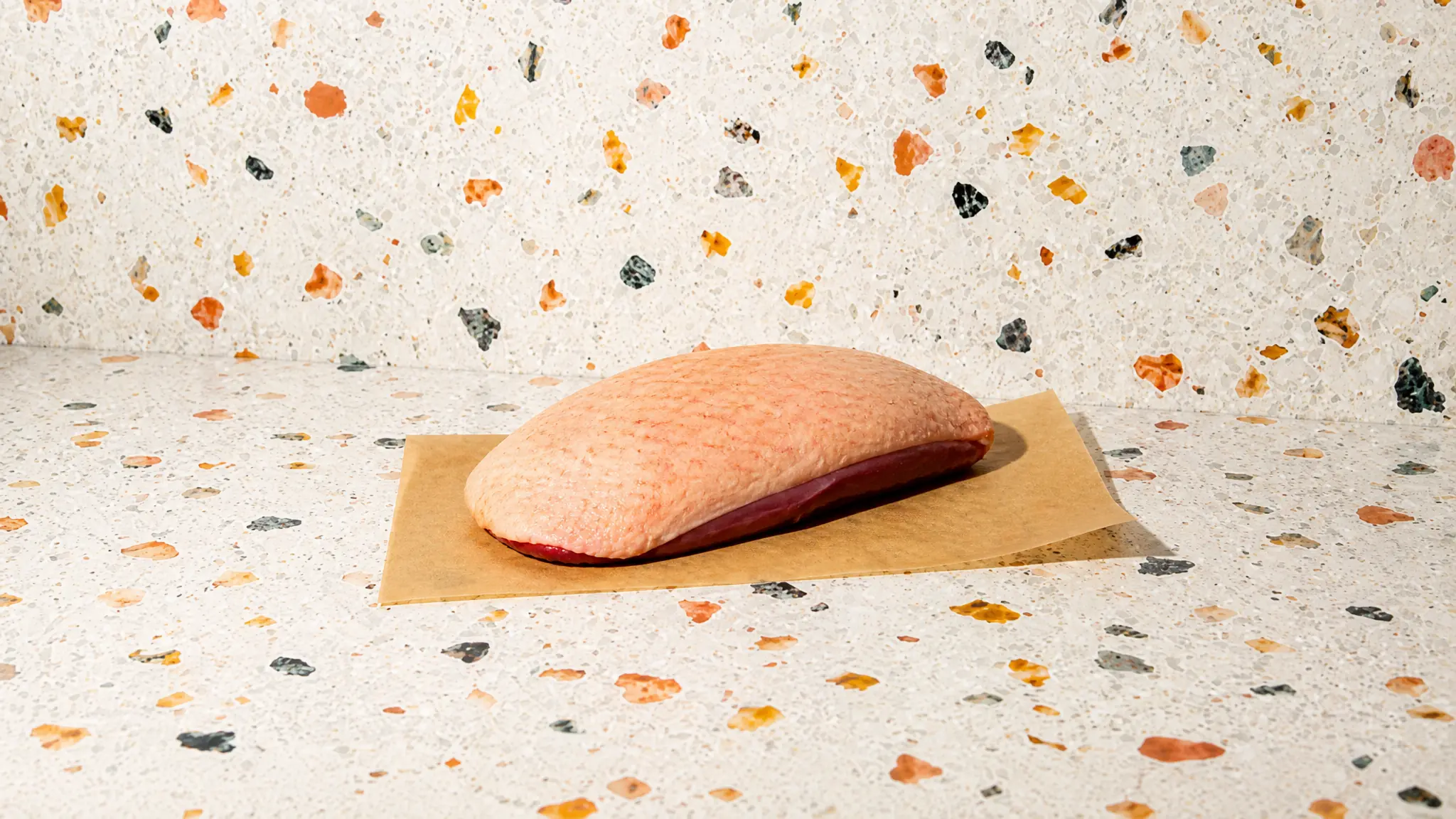
Goose
Meat
Last updated July 5, 2026. The Tummi Food Team maintains this Can I Feed This safety guide guide. Supporting links appear in Sources when available.



Clinically reviewed by Andria Procopio and Arefa Mohamed
Direct answer
Can babies eat Goose?
Yes, babies can be offered goose from around 6 months once they show the developmental signs of readiness for solids. Cook goose to an internal temperature of 165°F (74°C), remove all bones, skin, and tough pieces, and serve it in a soft texture suited to the baby's eating skills.
- Serve Age6+months
Most babies start solids around 6 months once they show readiness signs. Match the texture and serving size to your baby's skills.
- No Allergens
Goose is not flagged as one of the major allergens tracked in this database. Still watch your baby closely when serving any new food.
- Choking Risk123451
Lower choking risk when served in the right texture. Always supervise meals and adjust the shape for your baby.
This guide is for everyday food prep questions. Ask your pediatrician about medical concerns, feeding delays, allergy plans, or serious reactions.
How Do You Serve Goose?
How to serve Goose to babies 6 months and older
- 1Cut the goose into large, flat strips about the width of two adult fingers pressed together, removing all bones, loose cartilage, and skin before serving.
- 2Cook thoroughly until no pink remains — internal temperature 165°F (74°C) and juices run clear to ensure safety.
- 3Offer one strip at a time for oral‑motor exploration and let the child handle it; supervise closely and allow them to push food out if they bite off too much.
- 4Double-check each strip for any small bones or hard cartilage and adjust size or shred the meat further if your child needs a softer texture.
How to serve Goose to babies 9 months and older
- 1Shred or finely chop cooked goose so pieces are very soft and easy to chew and swallow.
- 2Avoid cubes or large chunks that can cause choking; offer small, flat pieces or thin strips that are easy to pick up.
- 3Cook goose through (no pink) and cool to lukewarm before serving; avoid honey or honey-glazed sauces and skip added salt.
- 4Stay within arm’s reach and supervise every bite, watching for signs of coughing or difficulty.
- 5Pair with soft sides (e.g., mashed vegetables) and a small cup of water to help with swallowing.
How to serve Goose to babies 12 months and older
- 1Cut cooked goose into small, soft pieces about 1–2 cm wide so a toddler can grasp and chew them easily.
- 2Remove all bones, loose cartilage, and excess fat; separate meat from the drumstick bone to eliminate choking hazards.
- 3Serve pieces as finger food or with child-safe utensils; if offering a drumstick, strip the skin and any loose cartilage first and supervise closely.
- 4Avoid honey-glazed or honey-coated preparations; always check the temperature before serving and remain within arm’s reach while the child eats.
Is Goose a Common Allergen?
Goose meat itself is not a common food allergen and the sheet indicates no major allergens present. However, rare poultry allergies can occur, so avoid if your child has a known allergy to poultry. Be mindful of allergens introduced during preparation (for example, wheat in breading, dairy in sauces, or soy-based marinades) and possible cross-contact in shared cookware. When offering goose for the first time, give a small amount and watch closely for any reactions.
Is Goose a Choking Hazard?
Low Choking Risk
Goose can be quite firm and challenging to chew, which raises the risk of choking for infants learning to eat solids. Closely supervise meals and stay within arm’s reach so you can respond quickly, and make sure you and caregivers know the signs of gagging versus true choking and basic infant choking first aid. Also avoid making the meat overly dry, since dry, tough meat is harder to swallow.
Have More Questions?
Yes, cooked goose can be stored for a baby. Refrigerate it promptly in a covered container; when prepared as homemade baby food, use it within 1 to 2 days, or within 1 day if it is strained meat, and check that it is lukewarm before serving.
Yes, puréed goose can be frozen for a baby. Freeze it promptly in covered portions and use it within 1 to 2 months; after thawing, stir well and check that it is lukewarm before serving.
No, organic goose is not required for babies. The organic label describes certified production and handling standards, so choose according to your preferences and availability, then apply the same cooking and age-appropriate preparation precautions to either option.
Yes. Combining goose with vegetables or grains can introduce diverse flavors and nutrients, but ensure the textures are suitable and that new combinations are introduced gradually.
There is no single appropriate portion of goose for every baby. Start with a small amount and let the baby's hunger, fullness, and developing eating skills guide how much more to offer without pressuring them to finish.
Save Goose to your food log
Track foods, reactions, and prep notes in Tummi when you want to keep your baby's feeding history in one place.
Sources
- Washing Food: Does it Promote Food Safety? (U.S. Department of Agriculture) fsis.usda.gov
- Food allergy with monovalent sensitivity to poultry meat (Cahen et al., 1998) onlinelibrary.wiley.com
- Common allergens in avian meats (Kelso et al., 1999) pubmed.ncbi.nlm.nih.gov
- Update on the bird-egg syndrome and genuine poultry meat allergy (Hemmer et al., 2016) link.springer.com
- What is FPIES (International FPIES Association) fpies.org
- Introducing food to the infant with FPIES (Children's Hospital Los Angeles) chla.org
What Other Meat Can Babies Eat?
See all →
Source-Linked Guidance
See the evidence behind the guide.
Food guides show direct links to public-health guidance and research when supporting references are available. Source inclusion does not imply endorsement.
 Centers for Disease Control and Prevention
Developmental milestones, nutrition guidelines, and allergen introduction timelines.
 American Academy of Pediatrics
Evidence-based feeding recommendations from the leading pediatric authority.
 National Institutes of Health
Peer-reviewed research on infant nutrition, allergies, and food safety.