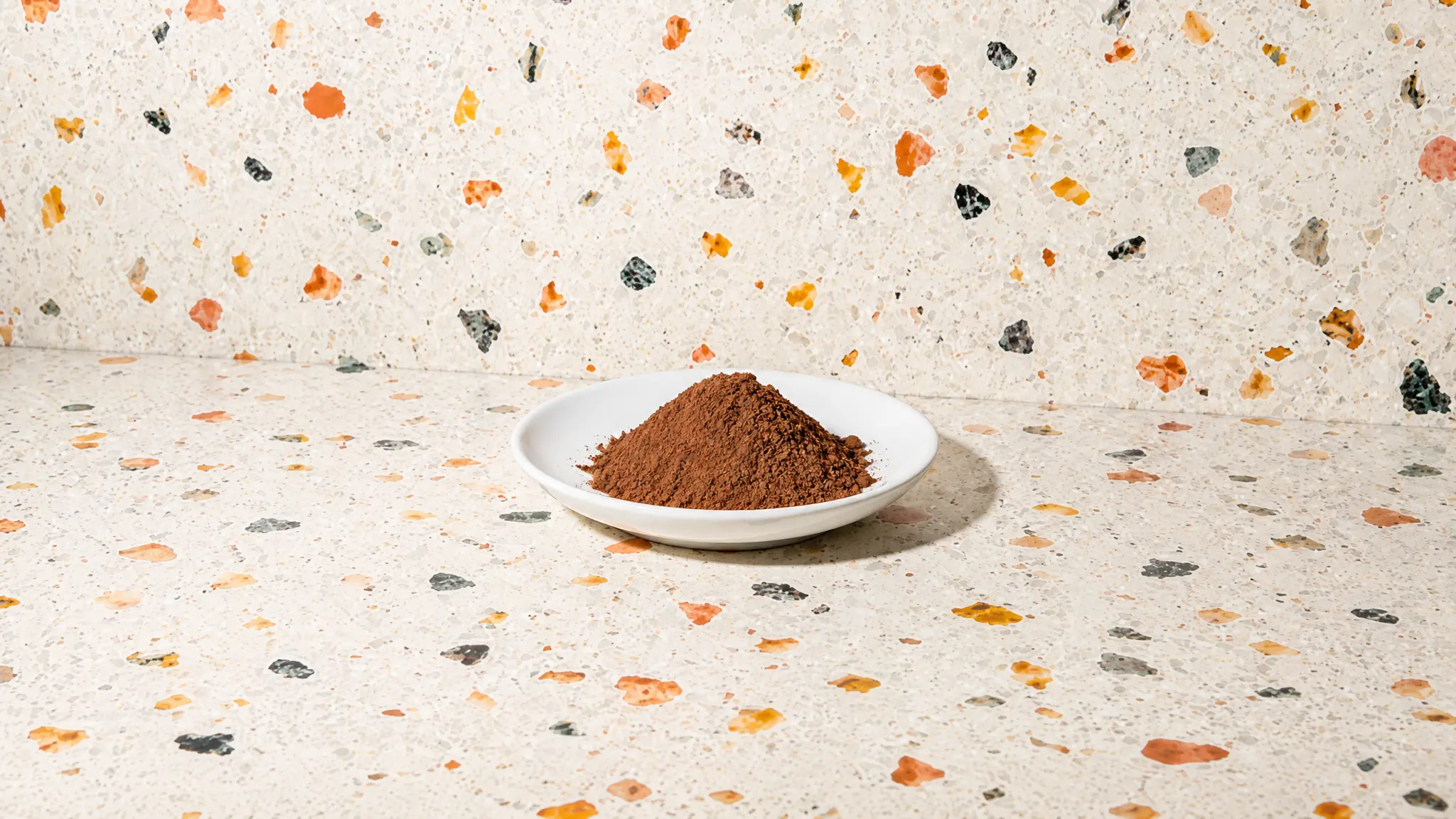

Cocoa / Chocolate
Prepared
Last updated July 5, 2026. The Tummi Food Team maintains this Can I Feed This safety guide guide. Supporting links appear in Sources when available.



Clinically reviewed by Andria Procopio and Arefa Mohamed
Direct answer
Can babies eat Cocoa / Chocolate?
Chocolate is not recommended as a routine food for babies because many products contain added sugar and cocoa naturally contains caffeine. If offered, wait until the baby is around 6 months and developmentally ready for complementary foods, use only a small amount mixed into a soft food, and avoid chocolate drinks and hard, round, sticky, or chewy chocolate or candy.
- Serve Age6+months
Most babies start solids around 6 months once they show readiness signs. Match the texture and serving size to your baby's skills.
- No Allergens
Cocoa / Chocolate is not flagged as one of the major allergens tracked in this database. Still watch your baby closely when serving any new food.
- Choking Risk123451
Lower choking risk when served in the right texture. Always supervise meals and adjust the shape for your baby.
This guide is for everyday food prep questions. Ask your pediatrician about medical concerns, feeding delays, allergy plans, or serious reactions.
How Do You Serve Cocoa / Chocolate?
How to serve Cocoa / Chocolate: 3 years +
- 1Offer chocolate in softer forms like spreads, melted chocolate, or soft bars and limit portions to small amounts.
- 2Introduce chewier or mixed textures (for example, chocolate with toffee or nougat) only after the child consistently chews well and follows simple eating directions.
- 3Avoid very firm, hard, round, or nut-containing chocolates until chewing and swallowing are reliable. If you try them earlier, serve small, manageable bites.
- 4Always have the child seated, calm, and supervised while eating, and discourage running or talking with a full mouth to reduce choking risk.
- 5Use snack times to teach slow chewing and taking small bites, and praise calm, focused eating to reinforce safe habits.
How to serve Cocoa / Chocolate to babies 6 months and older
- 1Offer tiny, occasional tastes of foods containing chocolate, keeping portions very small because chocolate contains caffeine.
- 2Serve chocolate only in soft or well-mixed forms — for example, chocolate baked into muffins, melted into yogurt, or sprinkles stirred into scoopable foods — so it can be eaten safely with a spoon.
- 3Remove or modify choking hazards: avoid whole nuts, large chocolate chips, or dried fruit; finely chop or leave them out.
- 4Do not give chocolate products that contain honey, and keep servings infrequent.
How to serve Cocoa / Chocolate to babies 12 months and older
- 1Offer small, infrequent tastes of chocolate (for example, a teaspoon of melted chocolate or a few sips of chocolate milk) to limit caffeine and added sugars.
- 2Prefer soft or fully melted forms—like chocolate mixed into milk, yogurt, or baked into muffins—so there are no hard pieces that could cause choking.
- 3Avoid firm, round, or sticky chocolate candies and whole nuts; they can be hard to chew and increase choking risk.
- 4Read labels for added sugar, caffeine, honey, and common allergens, and introduce any new chocolate-containing food one at a time while supervising for reactions.
How to serve Cocoa / Chocolate to babies 24 months and older
- 1Offer chocolate occasionally in small portions; choose milk or lower‑cocoa options to reduce caffeine and sugar and avoid giving chocolate right before naps or bedtime.
- 2Prefer soft forms—chocolate ice cream, pudding, melted chocolate in baked goods, or small amounts of chocolate milk—to make eating easier and safer than hard candies.
- 3Watch choking hazards: finely chop any nuts or large dried fruit or omit them entirely, avoid whole chocolate‑covered nuts, and serve sprinkles loose rather than in big clumps.
- 4Check for allergies and keep treats balanced with healthy snacks; brush teeth or offer water after sweets to protect dental health.
Is Cocoa / Chocolate a Common Allergen?
Pure cocoa is not one of the common top‑9 food allergens, but commercial chocolate often contains milk (especially milk chocolate), soy lecithin, and may include gluten-containing inclusions. Chocolate is frequently processed on equipment shared with tree nuts and peanuts, so look for 'contains' or 'may contain' warnings and avoid products with those allergens for sensitive children. Some bars also list sesame or other ingredients—always check the ingredient list and precautionary labeling. If your child has a diagnosed food allergy, consult your allergist before offering chocolate.
Is Cocoa / Chocolate a Choking Hazard?
Very Low Choking Risk
Chocolate can be a choking hazard because many bars and candies are small, round, firm, or chewy. Avoid whole candies and pieces with hard bits like nuts or dried fruit, and be vigilant—stay within arm’s reach and watch for gagging or choking. Introduce any chocolate-containing items cautiously until your child has the chewing skills and molars to handle varied textures.
Have More Questions?
There is no need to offer chocolate to babies; if it is offered, wait until the baby is around 6 months and developmentally ready for complementary foods, and use only a small amount mixed into a soft food. Avoid chocolate drinks and hard, round, sticky, or chewy chocolate or candy.
Chocolate should not be offered to babies for health benefits. Complementary foods should prioritize nutrient-dense choices, while many chocolate products contain added sugar and cocoa naturally contains caffeine.
Chocolate could affect a baby’s sleep because it contains caffeine, and the effect varies with the amount consumed and individual sensitivity. Caffeinated drinks should be avoided for children younger than 2.
No, cacao itself is not a common allergen, but chocolate products often contain other allergens like milk or soy. Always check labels before offering to babies.
It can be. Many chocolates are firm, chewy, or small, which can increase choking risks. Serve chocolate in age-appropriate forms to reduce this risk.
Save Cocoa / Chocolate to your food log
Track foods, reactions, and prep notes in Tummi when you want to keep your baby's feeding history in one place.
Sources
- Cocoa and Dark Chocolate Polyphenols: From Biology to Clinical Applications doi.org
- The Safety of Ingested Caffeine: A Comprehensive Review doi.org
- Caffeine intake from food and beverage sources and trends among children and adolescents doi.org
- Not so sweet: True chocolate and cocoa allergy doi.org
- WHO Guideline for complementary feeding of infants and young children 6-23 months of age who.int
- Sugar in Infants, Children and Adolescents: A Position Paper doi.org
- Cadmium and lead in cocoa powder and chocolate products in the US Market doi.org
- Added Sugar and Dental Caries in Children: A Scientific Update and Future Steps doi.org
- Is coffee bad for kids? hopkinsmedicine.org
What Other Prepared Can Babies Eat?
See all →


Source-Linked Guidance
See the evidence behind the guide.
Food guides show direct links to public-health guidance and research when supporting references are available. Source inclusion does not imply endorsement.
 Centers for Disease Control and Prevention
Developmental milestones, nutrition guidelines, and allergen introduction timelines.
 American Academy of Pediatrics
Evidence-based feeding recommendations from the leading pediatric authority.
 National Institutes of Health
Peer-reviewed research on infant nutrition, allergies, and food safety.