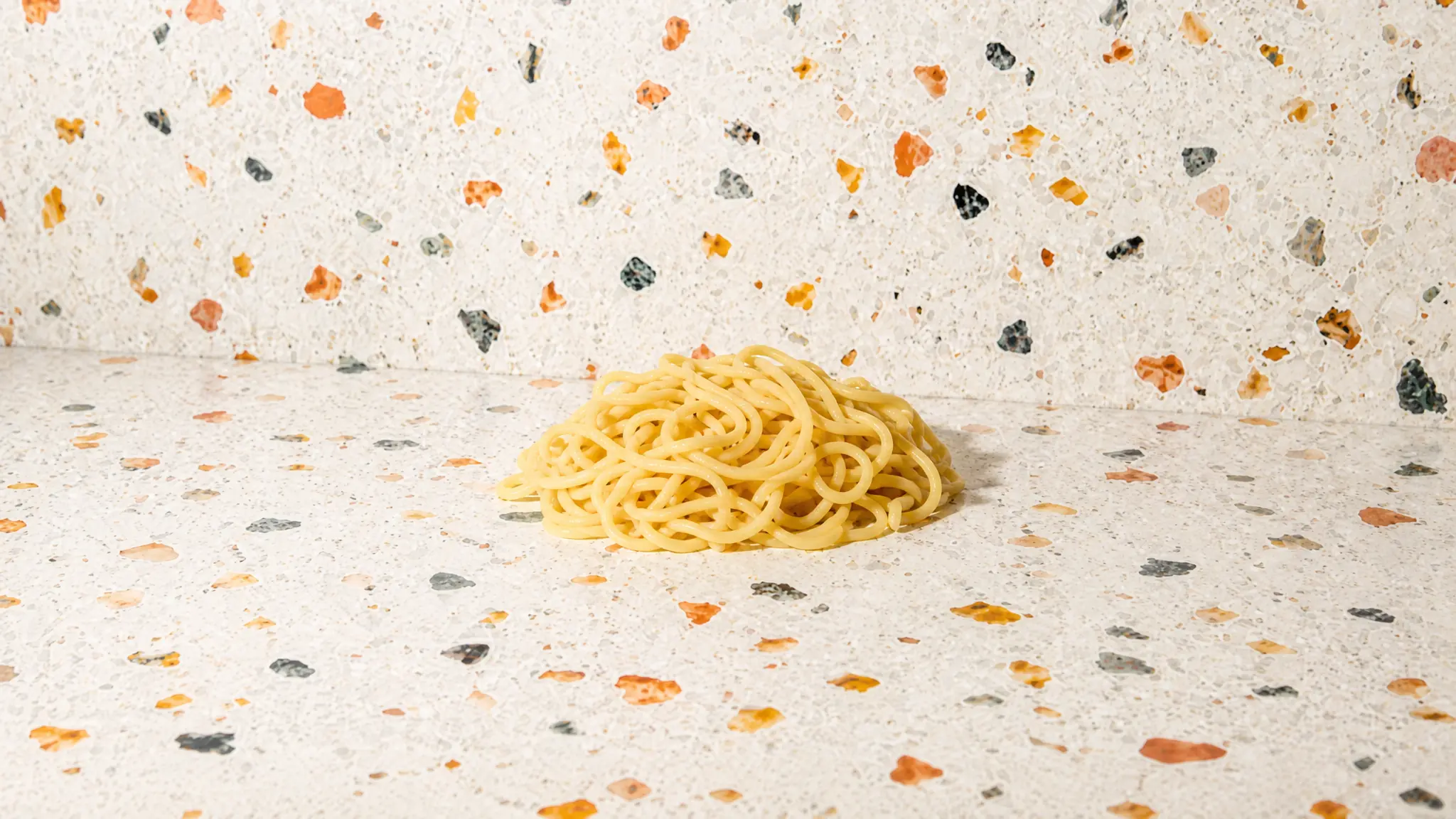
Noodles
Prepared
Last updated July 5, 2026. The Tummi Food Team maintains this Can I Feed This safety guide guide. Supporting links appear in Sources when available.


Clinically reviewed by Andria Procopio and Arefa Mohamed
Direct answer
Can babies eat Noodles?
Yes, babies can eat noodles around 6 months, when solids are introduced, choosing allergen-free or well-cooked options carefully.
- Serve Age6+months
Most babies start solids around 6 months once they show readiness signs. Match the texture and serving size to your baby's skills.
- Allergens
Noodles is flagged for egg and wheat or gluten. Introduce common allergens in a baby-safe form and follow your clinician's advice if your baby is higher risk.
- Choking Risk123452
Lower choking risk when served in the right texture. Always supervise meals and adjust the shape for your baby.
This guide is for everyday food prep questions. Ask your pediatrician about medical concerns, feeding delays, allergy plans, or serious reactions.
How Do You Serve Noodles?
How to serve Noodles to babies 6 months and older
- 1Cut fully cooked noodles into short pieces (about 6–8 cm) or serve in a shallow bowl so they’re easy to pick up or scoop.
- 2Lightly toss noodles with a small amount of sauce or a teaspoon of oil to keep strands separated and reduce stickiness and gagging.
- 3Choose soft, well-cooked noodle types and avoid firm or overly chewy varieties unless they are thoroughly softened.
- 4Offer noodles containing egg or wheat only after those allergens have already been introduced and tolerated. Check with your pediatrician if you’re unsure.
How to serve Noodles to babies 12 months and older
- 1Cook noodles until soft and easy to chew, then drain and cool to a warm (not hot) temperature before serving.
- 2Cut long strands into 2–3 inch pieces or separate into small bundles so they’re easier to grab and less likely to tangle or trigger gagging.
- 3Provide child-sized utensils and briefly demonstrate using a fork or chopsticks, but let your child try and accept hand-feeding if they need help.
- 4Always supervise meals. Stay within arm's reach and avoid walking, running, or playing while eating.
Is Noodles a Common Allergen?
This product commonly contains wheat (gluten) and many noodle varieties also contain egg—check the package or recipe. If your child has a gluten or egg allergy, choose certified gluten-free or egg-free alternatives (e.g., rice, corn, or quinoa noodles or labeled egg-free pasta) and avoid fresh egg noodles. Be alert for cross-contamination in restaurants or shared kitchens and always read labels or ask staff about ingredients. When in doubt, consult your pediatrician or allergist before serving.
Is Noodles a Choking Hazard?
Low Choking Risk
Cooked noodles are generally low choking risk for babies when they’re developmentally ready, but they can cause notable gagging because they’re slippery and may clump together. Stay within arm’s reach and closely supervise meals so you can respond quickly if gagging or choking occurs. Be familiar with infant choking first aid and watch your baby’s readiness cues, since any food can pose a risk.
Have More Questions?
Yes, most noodles are safe for babies once they are around 6 months old and can handle solids, provided they are cooked thoroughly and served in an age-appropriate texture.
It depends on the ingredients. Look for noodles made from safe, allergen-free ingredients, and avoid those with eggs or wheat if your baby has sensitivities or the allergens haven't been introduced yet.
Yes, you can freeze cooked noodles in airtight containers for up to 2 months, making them easy to prepare in advance for your baby's meals.
It depends on the variety. Organic noodles are made with more natural ingredients and may have fewer pesticides, but both organic and conventional noodles should meet safety standards for baby's consumption.
Yes, combining noodles with a variety of vegetables or proteins can help introduce new flavors and textures to your baby’s diet, encouraging acceptance of diverse foods.
Save Noodles to your food log
Track foods, reactions, and prep notes in Tummi when you want to keep your baby's feeding history in one place.
Sources
- Questions and Answers on FDA's Fortification Policy fda.gov
- Clinical and Laboratory Predictors of Egg Allergy Resolution in Children (Kim J.H., 2019) pmc.ncbi.nlm.nih.gov
- Dietary baked egg accelerates resolution of egg allergy in children (Leonard et al., 2012) pmc.ncbi.nlm.nih.gov
- Wheat & Gluten Allergy | American College of Allergy, Asthma & Immunology acaai.org
What Other Prepared Can Babies Eat?
See all →
Source-Linked Guidance
See the evidence behind the guide.
Food guides show direct links to public-health guidance and research when supporting references are available. Source inclusion does not imply endorsement.
 Centers for Disease Control and Prevention
Developmental milestones, nutrition guidelines, and allergen introduction timelines.
 American Academy of Pediatrics
Evidence-based feeding recommendations from the leading pediatric authority.
 National Institutes of Health
Peer-reviewed research on infant nutrition, allergies, and food safety.