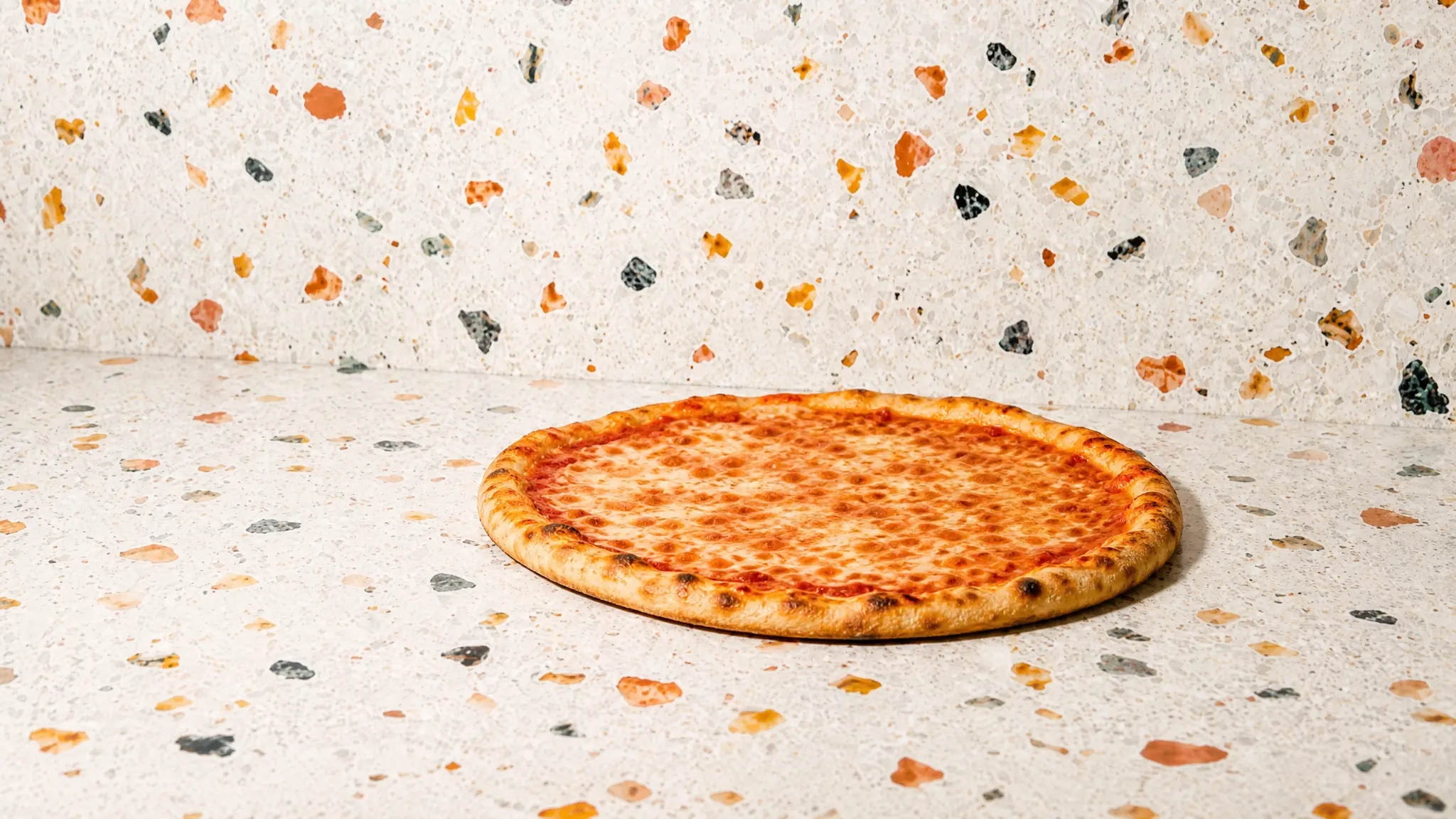
Pizza
Prepared
Last updated July 5, 2026. The Tummi Food Team maintains this Can I Feed This safety guide guide. Supporting links appear in Sources when available.



Clinically reviewed by Andria Procopio and Arefa Mohamed
Direct answer
Can babies eat Pizza?
A developmentally appropriate version of pizza can be offered around 6 months once a baby is ready for complementary foods. Choose a lower-sodium option made with pasteurized cheese, check every ingredient for allergens such as milk and wheat, exclude honey before 12 months, and modify or remove hard, sticky, chewy, or large pieces before serving the baby seated upright under close supervision.
- Serve Age6+months
Most babies start solids around 6 months once they show readiness signs. Match the texture and serving size to your baby's skills.
- Allergens
Pizza is flagged for milk and wheat or gluten. Introduce common allergens in a baby-safe form and follow your clinician's advice if your baby is higher risk.
- Choking Risk123454
Higher choking risk. Watch the prep steps closely, especially because this food can be hard, sticky, and fibrous or stringy.
This guide is for everyday food prep questions. Ask your pediatrician about medical concerns, feeding delays, allergy plans, or serious reactions.
How Do You Serve Pizza?
How to serve Pizza to babies 6 months and older
- 1Offer a long, firm piece of pizza crust for the baby to hold and gnaw; choose crusts that bend slightly and do not snap into shards.
- 2If the crust is too hard, peel off soft, well-cooked toppings and cut them into small, manageable pieces.
- 3Remove or avoid hard, chewy, stringy, or greasy bits (like undercooked meat or thick cheese edges) and do not serve honey.
- 4Always supervise closely while the baby explores food and offer only small pieces to reduce choking risk.
How to serve Pizza to babies 9 months and older
- 1Cut pizza into very small, bite-sized pieces—about the size of a fingernail—so each piece fits easily in your child's mouth.
- 2Remove large, hard, or chewy toppings (thick meat strips, pineapple chunks, whole sausage pieces) to reduce choking risk.
- 3Leave thin, soft toppings (finely chopped cooked mushrooms, melted cheese) on the slice and tear crust into soft, small pieces.
- 4Supervise closely with the child sitting upright and offer one small piece at a time; if they tend to grab or gag on big bits, serve the pizza deconstructed (soft crust torn, toppings mashed) for safer bites.
How to serve Pizza to babies 12 months and older
- 1Offer a slice with the tip trimmed to reduce flop and cut the slice into small, bite-sized pieces that the child can manage easily.
- 2Avoid stuffed crusts or pockets of melted cheese because hidden cheese can be a choking hazard.
- 3Remove any hard or chewy toppings (for example whole olives or large pepperoni) and slice softer toppings thin so they’re easy to chew.
- 4Give only a few pieces at a time, keep the child seated and watched closely while they eat. Only a few pieces at once helps prevent overfilling the mouth.
How to serve Pizza to babies 24 months and older
- 1Cut slices into narrow strips or small wedges so the child can hold and bite easily.
- 2Remove or chop any hard, chewy, or large toppings (e.g., thick pepperoni edges, whole olives) and serve them on the side so they can be sampled safely.
- 3Offer mixed textures separately from the slice—place soft cheese, cooked vegetables, and crunchy bits on different sections of the plate so the child can practice chewing each texture.
- 4Check the slice temperature and supervise while eating. Encourage slow bites and be ready to help if chewing becomes difficult.
Is Pizza a Common Allergen?
Contains dairy (cheese) and gluten (wheat crust). Parents of children with milk or wheat/gluten allergies should avoid this pizza or confirm with the vendor about allergen-free options and preparation methods; cross-contamination in restaurant kitchens is possible. Other common allergens (peanuts, tree nuts, soy, eggs, shellfish, sesame, fish) are not typical ingredients but always check toppings and kitchen practices.
Is Pizza a Choking Hazard?
Elevated Choking Risk
Pizza poses a notable choking risk for young children because thick crusts, globs of cheese, and firm or stringy toppings can become gummy or form lumps that block the airway. Thin, floppy slices can also fold and get stuck in a baby’s throat. Stay within arm’s reach during meals and be vigilant for gagging or sudden breathing difficulty so you can respond quickly.
Have More Questions?
Yes, leftover pizza can be stored for a baby if it is refrigerated or frozen promptly in a covered container. Before serving it, check that it has remained properly chilled, use pasteurized ingredients, and prepare its final texture for the baby's current eating abilities.
Yes, pureed pizza can be frozen if the cooked pizza was handled promptly and the puree is stored in a tightly closed freezer container. After thawing, check the temperature and consistency before serving because freezing can change texture, and do not use pizza containing honey for a baby younger than 12 months.
No, organic pizza is not automatically a better choice for a baby. Organic describes how its agricultural ingredients were produced and handled, so still compare sodium, check the full ingredient and allergen label, use pasteurized cheese, and prepare the texture for the baby's developmental abilities.
Pizza and vegetables can be served together by offering each in a texture suited to the baby's developmental abilities. For example, pair an appropriately prepared, lower-sodium pizza component with soft cooked vegetables, while removing hard, sticky, chewy, or large pieces and watching the baby throughout the meal.
There is no single recommended frequency for feeding a baby pizza, but high-sodium pizza should not be a routine choice. When pizza is offered, choose a lower-sodium version, check its ingredients for allergens, and include a variety of nutrient-dense foods across the baby's meals.
Save Pizza to your food log
Track foods, reactions, and prep notes in Tummi when you want to keep your baby's feeding history in one place.
Sources
- Infant Botulism — CDC cdc.gov
- Starting Solid Foods — HealthyChildren.org (American Academy of Pediatrics) healthychildren.org
- Preventing Choking — HealthyChildren.org (American Academy of Pediatrics) healthychildren.org
- Pizza — Encyclopaedia Britannica britannica.com
- Pizza: How Healthy Is It? — American Heart Association heart.org
- Choking First Aid — American Red Cross redcross.org
What Other Prepared Can Babies Eat?
See all →
Source-Linked Guidance
See the evidence behind the guide.
Food guides show direct links to public-health guidance and research when supporting references are available. Source inclusion does not imply endorsement.
 Centers for Disease Control and Prevention
Developmental milestones, nutrition guidelines, and allergen introduction timelines.
 American Academy of Pediatrics
Evidence-based feeding recommendations from the leading pediatric authority.
 National Institutes of Health
Peer-reviewed research on infant nutrition, allergies, and food safety.