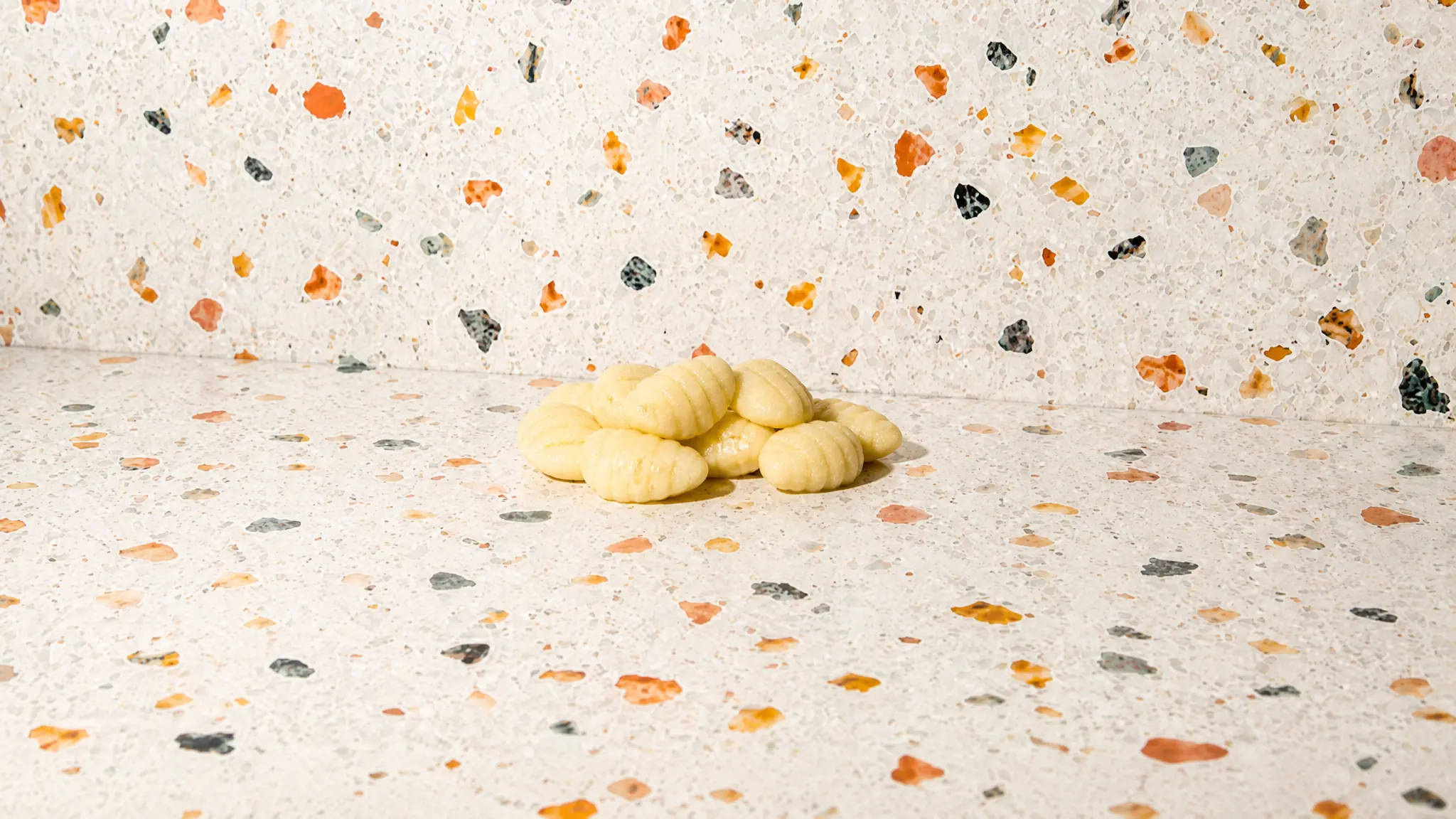
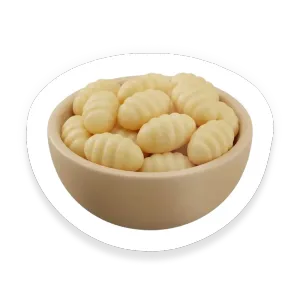
Gnocchi
Prepared
Last updated July 5, 2026. The Tummi Food Team maintains this Can I Feed This safety guide guide. Supporting links appear in Sources when available.



Clinically reviewed by Andria Procopio and Arefa Mohamed
Direct answer
Can babies eat Gnocchi?
Yes, babies can eat gnocchi around 6 months when they are starting solids, ensuring they are cooked soft and served in manageable pieces.
- Serve Age6+months
Most babies start solids around 6 months once they show readiness signs. Match the texture and serving size to your baby's skills.
- Allergens
Gnocchi is flagged for egg and wheat or gluten. Introduce common allergens in a baby-safe form and follow your clinician's advice if your baby is higher risk.
- Choking Risk123454
Higher choking risk. Watch the prep steps closely, especially because this food can be small and round and slippery.
This guide is for everyday food prep questions. Ask your pediatrician about medical concerns, feeding delays, allergy plans, or serious reactions.
How Do You Serve Gnocchi?
How to serve Gnocchi to babies 6 months and older
- 1Cook gnocchi until very soft and tender—follow package directions or boil until pillowy.
- 2For large pieces, gently smash to break them into smaller, soft portions. Aim for pea-sized pieces.
- 3Offer on the highchair tray or by hand for self-feeding, making sure pieces are soft and easily mashable.
- 4Do not serve fried or baked gnocchi—the crisp exterior makes them firmer and increases choking risk.
- 5Always stay within arm’s reach and watch closely while the child eats so you can respond quickly if needed.
How to serve Gnocchi to babies 9 months and older
- 1Cook gnocchi until very soft and fully cooked, then drain and let cool slightly so it’s not hot.
- 2Cut each piece lengthwise into halves or quarters and flatten or gently mash so pieces stay soft and don’t roll.
- 3Serve pieces in a thick sauce or a small amount of butter so they stay soft and separated; avoid coin-shaped cuts that can increase choking risk.
- 4Offer one piece at a time and watch closely; remove extras if the child overfills the mouth.
- 5Test a piece yourself—ensure it’s very soft and easy to squish between finger and thumb before serving.
How to serve Gnocchi: Varies
- 1Wait to offer whole cooked gnocchi until the child reliably takes small bites, chews thoroughly, moves food with the tongue to the sides of the mouth, and doesn’t overstuff.
- 2Prepare gnocchi in a modified texture first—cook until very soft and cut or press into small, easy-to-manage pieces; ensure pieces are bite-sized to reduce choking risk.
- 3Encourage use of utensils and model scooping and cutting during meals; only introduce large whole or baked/fried varieties once self-feeding and chewing skills are consistent.
- 4Continue to avoid smaller, firm, or hard gnocchi shapes, always supervise closely, and have the child seated upright while eating.
Is Gnocchi a Common Allergen?
Gnocchi is flagged for gluten and egg allergens. Parents of children with wheat/gluten or egg allergies should avoid this product or look for certified gluten-free/egg-free alternatives. Ingredients and recipes vary, so always read labels and ask about cross-contact in restaurants or when buying fresh/handmade gnocchi. When in doubt, choose a clearly labeled allergy-safe substitute.
Is Gnocchi a Choking Hazard?
Elevated Choking Risk
Gnocchi are a notable choking hazard because pieces are often small and can be firm or springy, increasing the risk they’ll lodge in a child’s airway. Always supervise closely and keep babies within arm’s reach during meals, and be alert for signs of choking or gagging. If you’re worried about your child’s chewing or swallowing, contact your pediatrician or review infant choking first-aid guidance.
Have More Questions?
Yes. Gnocchi can be a suitable food for babies starting solids around 6 months, but ensure it is prepared in a baby-friendly way and monitor for any allergen sensitivities.
Yes. Gnocchi provides energy-rich carbohydrates beneficial for babies' growth, but opt for versions low in sodium and prepared without added salt for health-conscious feeding.
Yes. Gnocchi often contains common allergens like egg and wheat; always check ingredients and introduce each allergen separately to monitor for reactions.
Yes. Gnocchi's firm texture and small size can pose choking risks; ensure they are soft and serve baby in an appropriate, safe manner.
No. No special utensils are required; serve gnocchi in a bowl or plate, and allow your baby to explore with hands for practicing self-feeding skills.
Save Gnocchi to your food log
Track foods, reactions, and prep notes in Tummi when you want to keep your baby's feeding history in one place.
Sources
- Gnocchi | Britannica britannica.com
- Gnocchi Recipe - Allrecipes allrecipes.com
- Choking Hazards | Infant and Toddler Nutrition - CDC cdc.gov
- Food Allergens | FDA fda.gov
What Other Prepared Can Babies Eat?
See all →
Source-Linked Guidance
See the evidence behind the guide.
Food guides show direct links to public-health guidance and research when supporting references are available. Source inclusion does not imply endorsement.
 Centers for Disease Control and Prevention
Developmental milestones, nutrition guidelines, and allergen introduction timelines.
 American Academy of Pediatrics
Evidence-based feeding recommendations from the leading pediatric authority.
 National Institutes of Health
Peer-reviewed research on infant nutrition, allergies, and food safety.