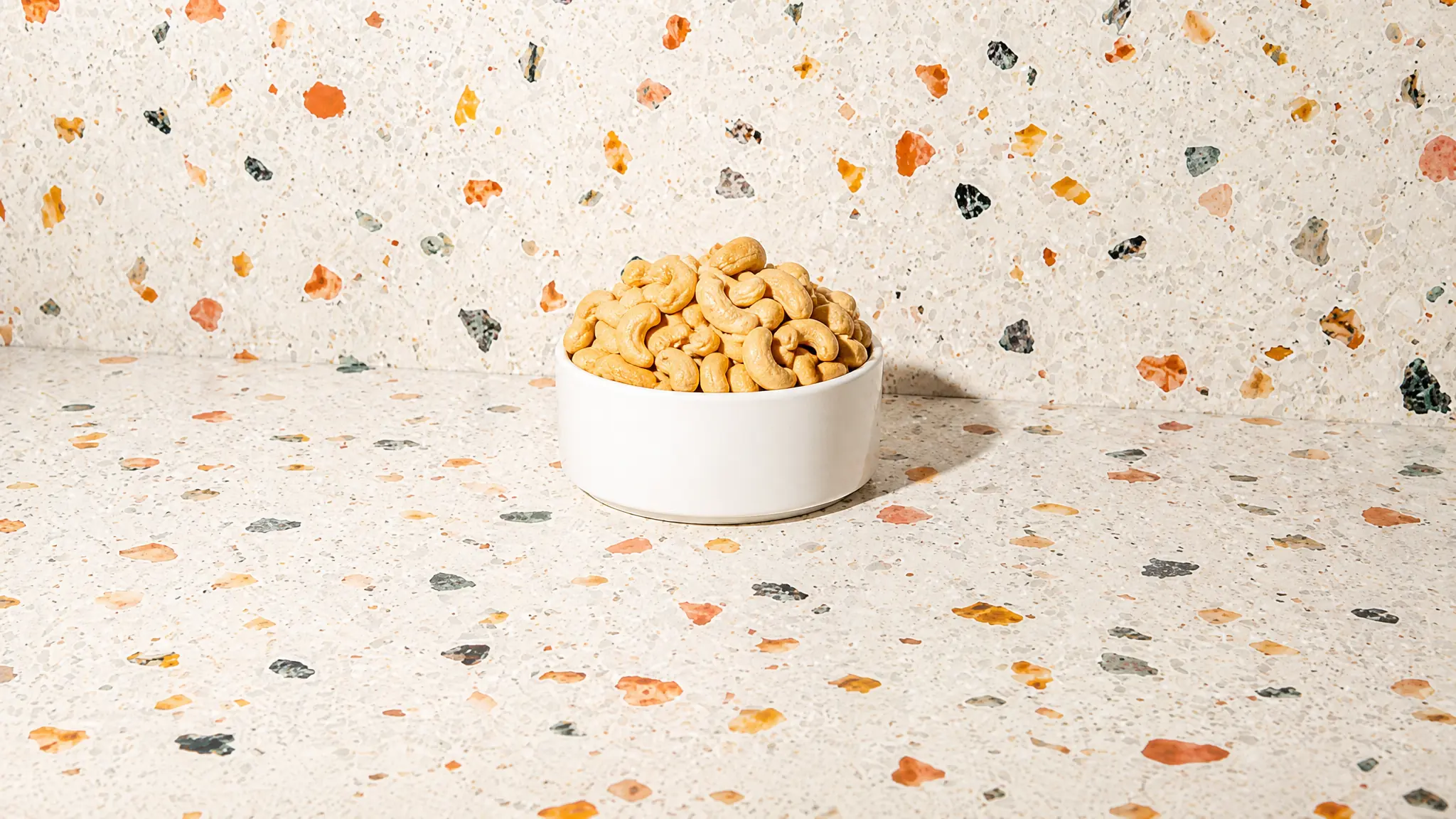

Cashew
Treenut
Last updated July 5, 2026. The Tummi Food Team maintains this Can I Feed This safety guide guide. Supporting links appear in Sources when available.



Clinically reviewed by Andria Procopio and Arefa Mohamed
Direct answer
Can babies eat Cashew?
Yes, finely ground cashews or cashew butter can be introduced around 6 months, but whole or chopped cashews are choking hazards for babies.
- Serve Age6+months
Most babies start solids around 6 months once they show readiness signs. Match the texture and serving size to your baby's skills.
- Allergens
Cashew is flagged for tree nut. Introduce common allergens in a baby-safe form and follow your clinician's advice if your baby is higher risk.
- Choking Risk123454
Higher choking risk. Watch the prep steps closely, especially because this food can be small and round and hard.
This guide is for everyday food prep questions. Ask your pediatrician about medical concerns, feeding delays, allergy plans, or serious reactions.
How Do You Serve Cashew?
How to serve Cashew to babies 6 months and older
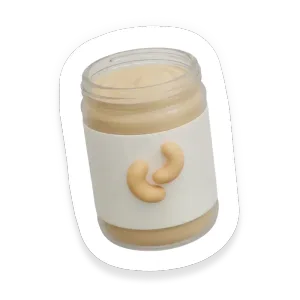
- 1Mix 1–2 teaspoons of smooth cashew butter with 1–2 teaspoons of breast milk, formula, or water and stir until completely lump-free so it coats a spoon easily.
- 2Use the thinned cashew butter as a dip or stir a small spoonful into porridge, yogurt, or cooked vegetables; start with tiny amounts and increase slowly.
- 3Finely grind a pinch of cashew and lightly sprinkle over very soft fruits (banana, ripe avocado) or well-cooked vegetable pieces to avoid any chunks.
- 4Offer only small portions on a spoon or as a thin dip, keep the baby seated upright, stay within arm’s reach, and have a drink available to help wash down sticky bits.
How to serve Cashew to babies 12 months and older
- 1Thin cashew butter with a little warm water, breast milk, or formula before spreading — spread it very thinly so it won’t form sticky, thick clumps.
- 2Mix finely ground cashews or thinned cashew butter into warm cereal, yogurt, pureed/mashed vegetables, or sauces to add flavor and nutrients without changing texture.
- 3Offer fortified, unsweetened cashew milk occasionally as a drink, but keep breast milk or formula as the main milk source if still applicable; check labels for added sugars or salt.
- 4Never give whole cashews or large pieces — avoid whole nuts — and always serve soft, non-sticky textures in very small spoonfuls while supervising to reduce choking risk.
- 5If there are any allergy concerns or a family history of food allergies, consult your pediatrician before introducing cashews.
How to serve Cashew to babies 24 months and older
- 1Check readiness: Ensure the child reliably takes small bites, chews thoroughly, and follows mealtime directions — if not, continue using ground cashews or cashew butter until those skills improve.
- 2Teach by modeling: Start with one cashew half. Demonstrate taking a single bite and moving the piece to the back molars, then let them try while you hold the nut lightly for their first few attempts.
- 3Supervise and position: Keep them seated upright and within arm’s reach at the table or high chair, watching their mouth until the nut is fully chewed and swallowed; offer only 1–2 practice nuts per session.
- 4Prep and safety tips: Use plain, unsalted cashew halves or break them into smaller pieces; if in doubt, offer finely chopped cashews or cashew butter as a safer alternative, and remove distractions during practice.
Is Cashew a Common Allergen?
Cashews are a tree nut and a common, potentially severe allergen—reactions can range from hives and vomiting to life‑threatening anaphylaxis. Cashew allergy often cross‑reacts with pistachio and may co‑occur with other tree‑nut allergies, so avoid related nuts until safely evaluated. Cashew proteins can appear in many processed foods, oils, sauces and unexpected items—always read labels and ask about ingredients. If a child has a diagnosed cashew allergy, inform all caregivers, carry an epinephrine auto‑injector, and follow a written allergy action plan.
Is Cashew a Choking Hazard?
Elevated Choking Risk
Cashews pose a notable choking risk: whole cashews are small and hard and cashew butter can be sticky, both of which can increase the chance of airway blockage. When introducing cashews, stay within arm’s reach, keep baby seated upright and attentive during feeds, and closely monitor chewing and swallowing. Watch for persistent coughing, gagging that doesn’t clear, or any signs of airway distress—stop immediately and seek emergency care if you’re concerned.
Have More Questions?
It depends. Finely ground cashews or cashew butter can be introduced around 6 months when baby is ready for solids, but whole or chopped cashews are choking hazards for babies and toddlers.
Yes. Cashews are healthy and provide essential nutrients, but they should be served in age-appropriate forms to prevent choking and ensure safety.
Yes. Cashews are considered a common allergen, so introduce them cautiously, preferably after consulting with a healthcare professional, especially if there's a family history of allergies.
Yes. Whole cashews pose a significant choking risk for young children due to their size and firmness, so always prepare and serve them in a safe manner.
Yes. Cashew milk can be given to toddlers after their first birthday, but it should not replace breast milk or formula and should be fortified with nutrients like calcium and vitamin D.
Save Cashew to your food log
Track foods, reactions, and prep notes in Tummi when you want to keep your baby's feeding history in one place.
Sources
- Defining challenge-proven coexistent nut and sesame seed allergy (Brough et al., 2020) pubmed.ncbi.nlm.nih.gov
- Clinical Relevance of Cross-Reactivity in Food Allergy (Cox et al., 2021) pubmed.ncbi.nlm.nih.gov
- Everything You Need to Know About Tree Nut Allergy (American Academy of Allergy Asthma & Immunology) aaaai.org
- Tree Nut — Food Allergy Research & Education (FARE) foodallergy.org
- Multicentre Double-Blind Placebo-Controlled Food Challenge Study in Children Sensitised to Cashew Nut (van der Valk et al., 2016) journals.plos.org
What Other Treenut Can Babies Eat?
See all →

Source-Linked Guidance
See the evidence behind the guide.
Food guides show direct links to public-health guidance and research when supporting references are available. Source inclusion does not imply endorsement.
 Centers for Disease Control and Prevention
Developmental milestones, nutrition guidelines, and allergen introduction timelines.
 American Academy of Pediatrics
Evidence-based feeding recommendations from the leading pediatric authority.
 National Institutes of Health
Peer-reviewed research on infant nutrition, allergies, and food safety.