
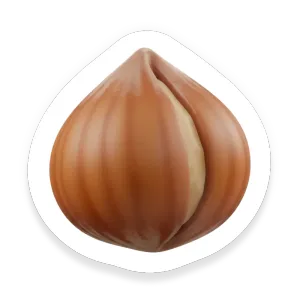
Hazelnut (Filbert)
Treenut
Last updated July 5, 2026. The Tummi Food Team maintains this Can I Feed This safety guide guide. Supporting links appear in Sources when available.



Clinically reviewed by Andria Procopio and Arefa Mohamed
Direct answer
Can babies eat Hazelnut (Filbert)?
Yes. Once a baby is developmentally ready for solid foods, usually around 6 months, hazelnut can be introduced finely ground into food or as smooth nut butter spread thinly on another food; do not offer whole or chopped nuts or spoonfuls of nut butter.
- Serve Age6+months
Most babies start solids around 6 months once they show readiness signs. Match the texture and serving size to your baby's skills.
- Allergens
Hazelnut (Filbert) is flagged for tree nut. Introduce common allergens in a baby-safe form and follow your clinician's advice if your baby is higher risk.
- Choking Risk123454
Higher choking risk. Watch the prep steps closely, especially because this food can be small and round and hard.
This guide is for everyday food prep questions. Ask your pediatrician about medical concerns, feeding delays, allergy plans, or serious reactions.
How Do You Serve Hazelnut (Filbert)?
How to serve Hazelnut (Filbert) to babies 6 months and older
- 1Finely grind hazelnuts in a food processor or mortar and pestle until no large pieces remain and the texture is very powdery to reduce choking risk.
- 2Sprinkle a small pinch (about 1/4–1/2 teaspoon) over yogurt, warm cereal, cooked squash, or mixed grains and stir so it disperses evenly—avoid clumps.
- 3To make a baby-friendly hazelnut spread, blend the ground nuts into a smooth paste and thin gradually with water, breastmilk, or formula until it is non-sticky and can be spread very thinly on other foods.
- 4Introduce hazelnuts one new food at a time and start small, watching for allergic reactions for 2–3 days; store any homemade spread in an airtight container in the refrigerator and use within 3 days.
How to serve Hazelnut (Filbert) to babies 12 months and older
- 1Finely grind hazelnuts into a powder and stir into yogurt or warm cereal to add flavor without changing texture.
- 2Make a thin, smooth hazelnut butter and mix a small spoonful into yogurt, porridge, or spread very lightly on toast—avoid thick globs.
- 3Offer hazelnuts only in forms that remove choking risk; never give whole or large pieces, always grind or smooth before serving.
- 4Hazelnut milk can be offered occasionally as a drink, but it is low in calories and protein compared with animal milks, so pair it with other protein-rich foods.
How to serve Hazelnut (Filbert) to babies 36 months and older
- 1Offer hazelnuts only in safe forms like finely ground hazelnut or smooth hazelnut butter; avoid whole nuts until chewing is consistently reliable.
- 2When you first introduce whole hazelnuts, use halved or finely chopped pieces and supervise the child closely at all times.
- 3Teach and model the steps: hold the nut between fingers, place it toward the back teeth, and chew slowly and thoroughly until it is small enough to swallow.
- 4Give only one nut at a time and coach the child verbally—one nut at a time—so you guide chewing instead of putting food directly into their mouth.
Is Hazelnut (Filbert) a Common Allergen?
Hazelnuts (filberts) are tree nuts and a common cause of allergic reactions; avoid giving to individuals with nut allergies as exposures can cause mild to severe (including anaphylactic) reactions. They can appear in whole form or hidden in spreads, chocolates, baked goods, and some oils—always check ingredient labels and 'may contain' or facility warnings. Even trace amounts from cross-contact can trigger reactions, so avoid shared utensils and read packaging; keep emergency medication (e.g., epinephrine) available if prescribed. Consult your child's allergist before introducing hazelnuts if there's any history of nut allergy or uncertainty.
Is Hazelnut (Filbert) a Choking Hazard?
Elevated Choking Risk
Hazelnuts are a significant choking hazard — whole nuts, nut pieces, and thick globs of nut butter can block a baby’s airway. Because hazelnuts are small, round, and very firm, they’re especially risky even for older toddlers. Always supervise closely, keep children seated and within arm’s reach during meals, and never allow them to walk or run with nuts in their mouth.
Have More Questions?
No. Do not give a baby whole or chopped hazelnuts or spoonfuls of hazelnut butter because these forms are choking hazards; use finely ground hazelnut mixed into food or smooth hazelnut butter spread thinly on another food.
Yes. Hazelnuts contain protein and can be included as one food in a varied diet, provided they are served in a developmentally appropriate form.
Yes. Hazelnut is a major tree-nut allergen, so it can cause an allergic reaction.
No. Whole or chopped hazelnuts and spoonfuls of hazelnut butter are choking hazards for babies; finely ground hazelnut mixed into food or smooth hazelnut butter spread thinly on another food are more appropriate forms.
No. Hazelnut milk should not be offered as a drink before 12 months and should not replace breast milk or infant formula; from 12 months, choose an unsweetened, calcium-fortified product if offering it as part of a balanced diet.
Save Hazelnut (Filbert) to your food log
Track foods, reactions, and prep notes in Tummi when you want to keep your baby's feeding history in one place.
Sources
- Evidence of dysbiosis in the intestinal microbial ecosystem of children and adolescents with primary hyperlipidemia and the potential role of regular hazelnut intake doi.org
- Health Benefits of Nut Consumption doi.org
- Defining challenge-proven coexistent nut and sesame seed allergy: A prospective multicenter European study doi.org
- Cow's Milk Substitutes for Children: Nutritional Aspects of Milk from Different Mammalian Species, Special Formula and Plant-Based Beverages doi.org
What Other Treenut Can Babies Eat?
See all →






Source-Linked Guidance
See the evidence behind the guide.
Food guides show direct links to public-health guidance and research when supporting references are available. Source inclusion does not imply endorsement.
 Centers for Disease Control and Prevention
Developmental milestones, nutrition guidelines, and allergen introduction timelines.
 American Academy of Pediatrics
Evidence-based feeding recommendations from the leading pediatric authority.
 National Institutes of Health
Peer-reviewed research on infant nutrition, allergies, and food safety.