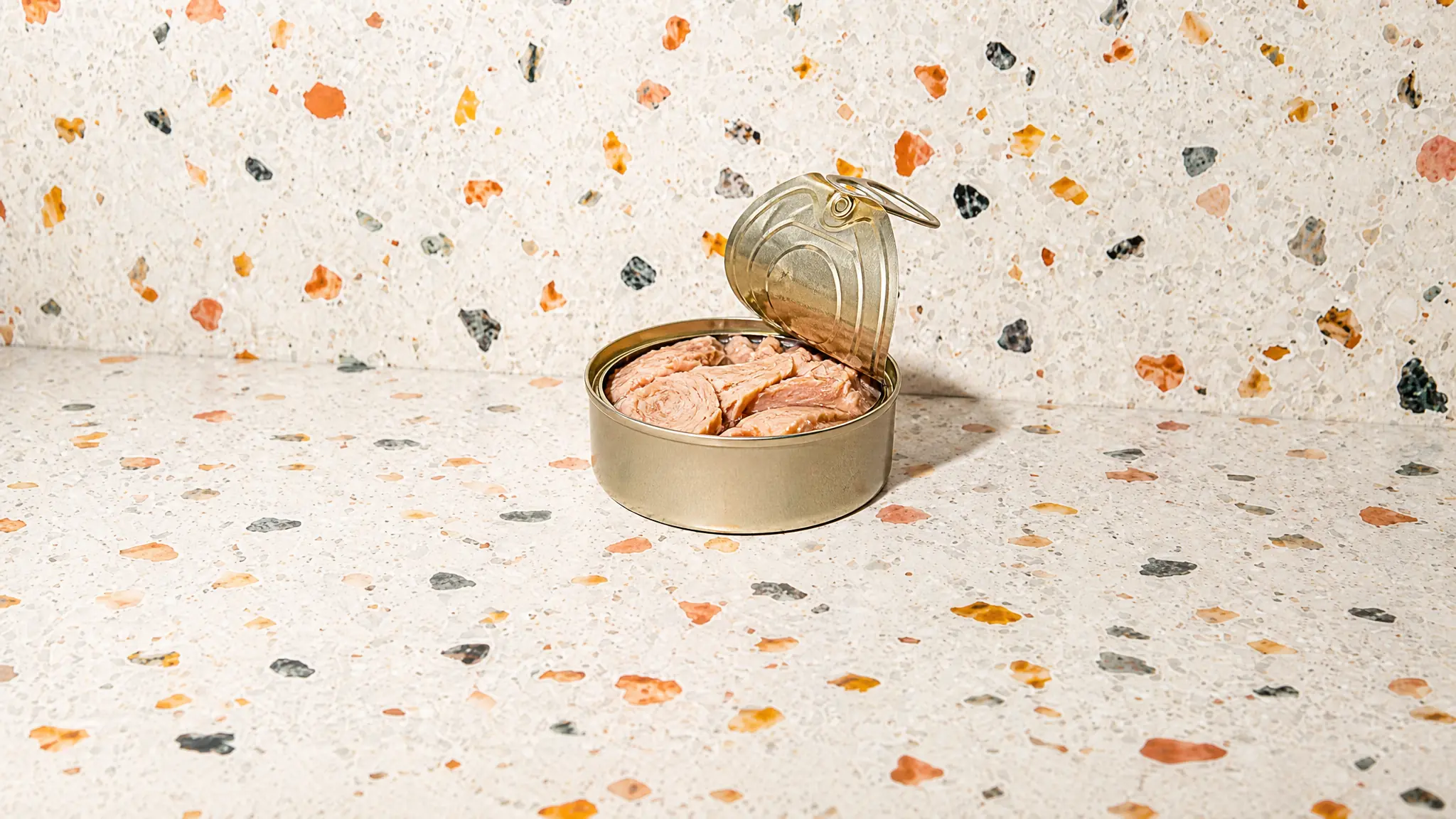
Tuna (Skipjack, Light)
Fish
Last updated July 5, 2026. The Tummi Food Team maintains this Can I Feed This safety guide guide. Supporting links appear in Sources when available.



Clinically reviewed by Andria Procopio and Arefa Mohamed
Direct answer
Can babies eat Tuna (Skipjack, Light)?
Yes. Canned light tuna, which commonly includes skipjack, can be introduced around 6 months once your baby is developmentally ready for complementary foods. Offer it in a soft, age-appropriate form, remember that fish is a common allergen, and vary it with other lower-mercury fish choices.
- Serve Age6+months
Most babies start solids around 6 months once they show readiness signs. Match the texture and serving size to your baby's skills.
- Allergens
Tuna (Skipjack, Light) is flagged for fish. Introduce common allergens in a baby-safe form and follow your clinician's advice if your baby is higher risk.
- Choking Risk123451
Lower choking risk when served in the right texture. Always supervise meals and adjust the shape for your baby.
This guide is for everyday food prep questions. Ask your pediatrician about medical concerns, feeding delays, allergy plans, or serious reactions.
How Do You Serve Tuna (Skipjack, Light)?
How to serve Tuna (Skipjack, Light) to babies 6 months and older
- 1Drain canned skipjack (light) tuna, check for and remove any bones, then finely flake or mash so pieces are soft and small.
- 2Stir a small amount (start with 1–2 teaspoons) into porridge, yogurt, or mashed foods so it’s scoopable and easy to swallow.
- 3Spread a thin layer of mashed tuna on toast strips or form into soft, large fish cakes—make pieces too large for baby to fit whole in their mouth to reduce choking risk.
- 4Choose skipjack (light) to lower mercury and offer tuna once or twice a week; always check temperature and watch closely for any allergic reaction when first introducing fish.
How to serve Tuna (Skipjack, Light) to babies 9 months and older
- 1Make sure canned tuna is fully cooled and flaked into pea-sized pieces; offer bite-sized flakes or short, soft strips of fish cake so your baby can practice picking up food with a developing pincer grasp.
- 2Drain (and rinse if desired) to reduce excess liquid and sodium, then mix tuna into mashed avocado, plain yogurt, or cooked vegetables to create scoopable, soft textures for self-feeding.
- 3Begin with a single pea-sized piece and watch closely while your baby eats — never leave unattended.
- 4Serve tuna in moderation and choose lower-mercury options like skipjack; rotate with other protein foods to limit exposure.
How to serve Tuna (Skipjack, Light) to babies 18 months and older
- 1Cut the sandwich into manageable strips or bite-size pieces so it's easy for little hands to hold and chew.
- 2Model how to hold the sandwich and take small bites, and sit face-to-face to supervise every mouthful.
- 3Drain, flake, and check canned tuna for bones. Serve as a thin spread or a small scoop rather than large chunks to reduce choking risk.
- 4Keep portions moderate and rotate tuna with other low‑mercury fish to vary protein sources.
- 5Choose reduced‑sodium canned tuna or rinse and mix with low‑salt ingredients (like mashed avocado or plain yogurt) to lower salt.
Is Tuna (Skipjack, Light) a Common Allergen?
Tuna (including canned light/skipjack) is a common finned-fish allergen and can trigger allergic reactions in sensitive individuals. Because many fish proteins cross-react, clinicians often advise people with a fish allergy to avoid all finned fish rather than rely on tolerance to a single species; fish allergies are separate from shellfish allergies. Check labels and be alert for cross-contact in processing, and ensure your child carries epinephrine if prescribed and gets emergency care for any signs of anaphylaxis. Consult your allergist before offering tuna if your child has a known fish allergy.
Is Tuna (Skipjack, Light) a Choking Hazard?
Low Choking Risk
Canned tuna is generally low risk for choking because the canning process softens any small bones, but any food can potentially cause choking. Fresh tuna bones can be a hazard if left in place, so check for and remove bones before offering fish to a child. Always stay within arm’s reach while baby is eating and be familiar with basic choking first aid.
Have More Questions?
Yes. Refrigerate leftover tuna promptly in a covered container at 4°C (40°F) or below, and use the storage limit for the specific preparation; for example, federal guidance lists 3 to 4 days for tuna salad. Use the shortest storage limit when tuna is mixed with other ingredients.
Yes. Tuna puree can be frozen in a sealed freezer-safe container, although its texture may change. If the puree contains other foods, follow the most restrictive storage guidance for the ingredients in the mixture.
No. An organic label describes certified production and handling methods, but it does not show that tuna is lower in mercury or nutritionally better for a baby. For mercury guidance, choose canned light tuna, commonly including skipjack, and vary the fish you offer.
Yes. You can mix tuna with other foods, such as soft cooked vegetables, grains, avocado, or pasteurized plain yogurt, provided the finished texture matches your baby's eating skills. Check every ingredient for relevant allergens and avoid raw or undercooked fish.
There is no single required tuna portion for every baby. Offer a small amount in an age-appropriate texture and let your baby decide how much to eat by following hunger and fullness cues; vary tuna with other lower-mercury fish choices.
Save Tuna (Skipjack, Light) to your food log
Track foods, reactions, and prep notes in Tummi when you want to keep your baby's feeding history in one place.
Sources
- Scombrotoxin Poisoning and Decomposition - U.S. Food & Drug Administration fda.gov
- Fish - Food Allergy Research & Education foodallergy.org
- Fish: A Top 9 Food Allergen - Food Allergy & Anaphylaxis Connection Team (FAACT) foodallergyawareness.org
What Other Fish Can Babies Eat?
See all →



Source-Linked Guidance
See the evidence behind the guide.
Food guides show direct links to public-health guidance and research when supporting references are available. Source inclusion does not imply endorsement.
 Centers for Disease Control and Prevention
Developmental milestones, nutrition guidelines, and allergen introduction timelines.
 American Academy of Pediatrics
Evidence-based feeding recommendations from the leading pediatric authority.
 National Institutes of Health
Peer-reviewed research on infant nutrition, allergies, and food safety.