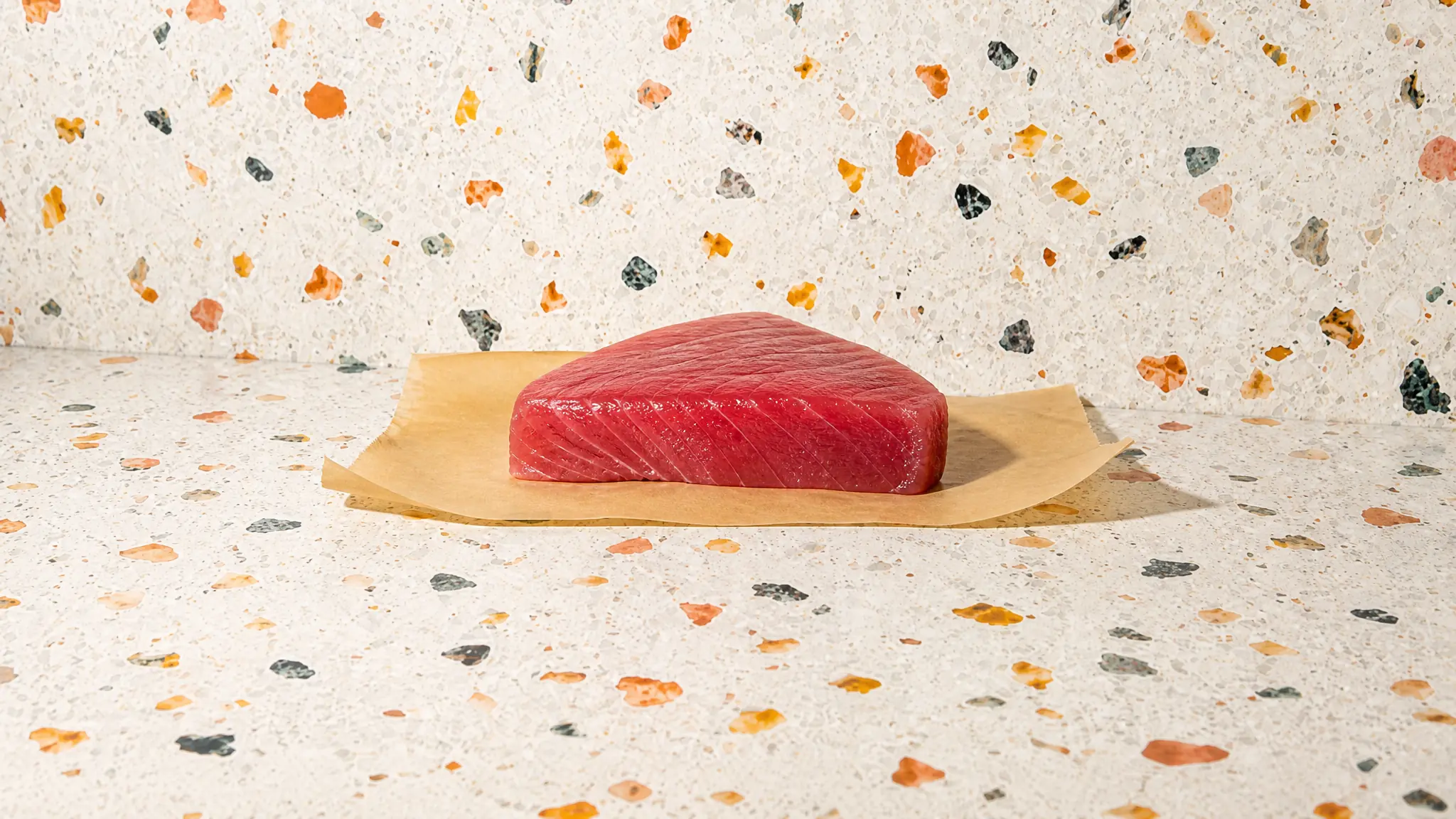

Tuna
Fish
Last updated July 5, 2026. The Tummi Food Team maintains this Can I Feed This safety guide guide. Supporting links appear in Sources when available.



Clinically reviewed by Andria Procopio and Arefa Mohamed
Direct answer
Can babies eat Tuna?
Babies can have cooked, boneless tuna from around 6 months, once they are developmentally ready for solid foods. Choose lower-mercury canned light tuna, offer a variety of fish, and do not serve bigeye tuna; albacore and yellowfin are higher-mercury choices than canned light tuna.
- Serve Age6+months
Most babies start solids around 6 months once they show readiness signs. Match the texture and serving size to your baby's skills.
- Allergens
Tuna is flagged for fish. Introduce common allergens in a baby-safe form and follow your clinician's advice if your baby is higher risk.
- Choking Risk123451
Lower choking risk when served in the right texture. Always supervise meals and adjust the shape for your baby.
This guide is for everyday food prep questions. Ask your pediatrician about medical concerns, feeding delays, allergy plans, or serious reactions.
How Do You Serve Tuna?
How to serve Tuna: 3 years +
- 1Offer canned light tuna (skipjack) in moderation as a spread, dip, or on its own; it is generally lower in mercury than albacore and larger tunas.
- 2Serve fresh tuna only when well cooked and after carefully removing all bones; cut into bite-sized pieces or longer strips to match your child's chewing ability.
- 3Limit servings of higher‑mercury tunas (albacore, bigeye, yellowfin) by reducing both portion size and frequency — choose smaller portions and serve these less often.
- 4Alternate tuna with lower‑mercury fish and consult local or national guidance for specific portion and frequency recommendations if you need precise limits.
How to serve Tuna to babies 6 months and older
- 1Drain and mash canned skipjack (chunk light) tuna with a fork until flaky, then stir a small spoonful into porridge, yogurt, or mashed vegetables for extra protein and flavor.
- 2For finger foods, spread a thin layer of the mashed tuna on a soft toast strip, pancake, or cooked veggie strip, and cut into pieces sized for comfortable self-feeding.
- 3Start with a small amount (about 1–2 teaspoons) to check tolerance. Increase gradually as your child eats more and watch for signs of allergy or gagging.
- 4Choose canned skipjack (chunk light) to limit mercury exposure and offer tuna in moderation—about once or twice a week as part of a varied diet.
How to serve Tuna to babies 9 months and older
- 1Offer very small, soft, bite-sized pieces of well-cooked tuna with skin and bones removed. Reduce choking risk by making each piece easy to squash between your fingers.
- 2Choose lower‑mercury options like canned light (skipjack) tuna and avoid frequent servings of albacore, bigeye, or yellowfin.
- 3If spoon-feeding, mash or mix the tuna into a soft, scoopable food so it’s smooth and easy to swallow.
- 4Remove skin and check carefully for bones before serving, cool to a safe temperature, and always supervise meals.
Is Tuna a Common Allergen?
Tuna is a fish allergen and can cause severe reactions. Fish allergens (parvalbumins) are heat-stable, so cooking or canning may not prevent reactions—avoid tuna if your child has a fish allergy. Fish and shellfish are different allergens but cross-reactivity and cross-contact are possible; always read labels and ask about preparation at restaurants. If fish allergy is known or suspected, consult an allergist and keep emergency medication (epinephrine) available.
Is Tuna a Choking Hazard?
Low Choking Risk
Tuna is generally a low choking risk for babies when any bones and skin are removed, and canned tuna’s bones are typically softened by the canning process. However, bones from fresh tuna can get stuck in the throat, so carefully check for and remove any bones and stay within reach while your child eats in case they need help.
Have More Questions?
Babies can have cooked, boneless tuna from around 6 months, once they are developmentally ready for solid foods. Prefer lower-mercury canned light tuna, do not serve bigeye tuna, and recognize that albacore and yellowfin are higher-mercury choices than canned light tuna.
How often tuna is offered should depend on the species and the rest of the child's fish intake. Choose canned light tuna more often than albacore or yellowfin, vary the fish offered, and do not serve bigeye tuna to children.
Canned light tuna, which most often contains skipjack, is the preferred lower-mercury tuna choice for babies. Do not serve bigeye tuna to children; albacore and yellowfin contain more mercury than canned light tuna and are classified separately as Good Choices by FDA and EPA.
Yes. Fish are a common allergen, including tuna, so introduce with caution and observe for any allergic reactions, especially if there's a history of allergies in your family.
Tuna can be a choking hazard if it contains bones or is served in a form that does not match the baby's eating skills. Remove all bones, flake or cut cooked tuna to a developmentally appropriate texture, and watch the baby throughout the meal.
Save Tuna to your food log
Track foods, reactions, and prep notes in Tummi when you want to keep your baby's feeding history in one place.
Sources
- U.S. Food & Drug Administration — Advice about Eating Fish (Mercury guidance) fda.gov
- U.S. Environmental Protection Agency — Basic Information about Mercury epa.gov
- Harvard T.H. Chan School of Public Health — Fish: Friend or Foe? hsph.harvard.edu
- Rice et al. (2014) — Environmental mercury and its toxic effects doi.org
- Karimi et al. (2012) — A Quantitative Synthesis of Mercury in Commercial Seafood doi.org
- Environmental Defense Fund — Tuna (Seafood selector) edf.org
- Food Allergy Research & Education — Fish Allergy foodallergy.org
- U.S. Food & Drug Administration — Scombrotoxin poisoning and decomposition (2017) fda.gov
What Other Fish Can Babies Eat?
See all →








Source-Linked Guidance
See the evidence behind the guide.
Food guides show direct links to public-health guidance and research when supporting references are available. Source inclusion does not imply endorsement.
 Centers for Disease Control and Prevention
Developmental milestones, nutrition guidelines, and allergen introduction timelines.
 American Academy of Pediatrics
Evidence-based feeding recommendations from the leading pediatric authority.
 National Institutes of Health
Peer-reviewed research on infant nutrition, allergies, and food safety.