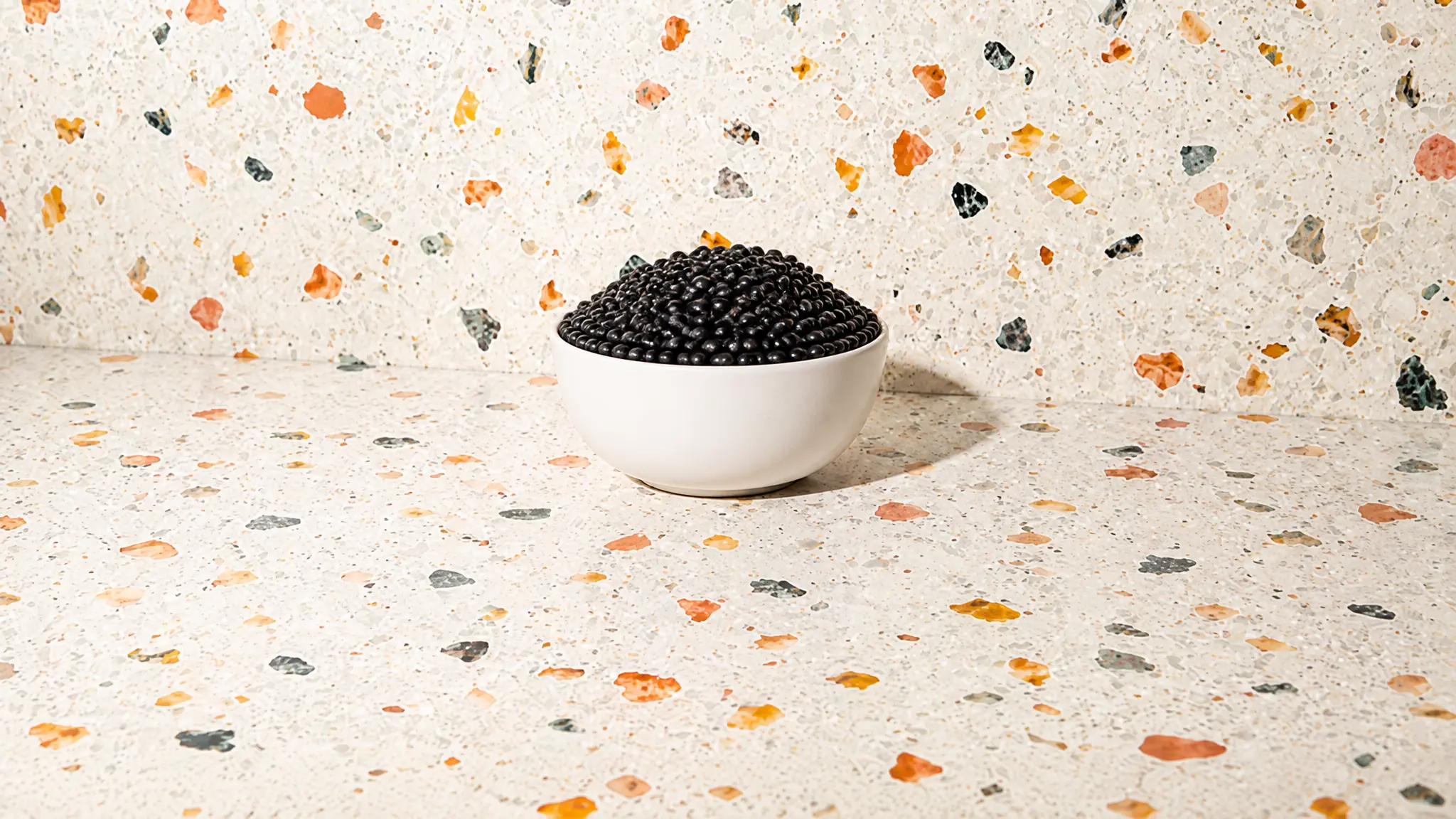
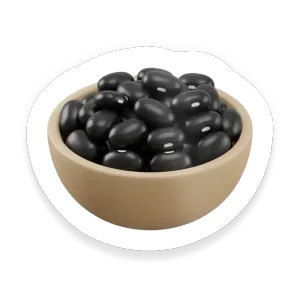
Black Beans
Legume
Last updated July 5, 2026. The Tummi Food Team maintains this Can I Feed This safety guide guide. Supporting links appear in Sources when available.



Clinically reviewed by Andria Procopio and Arefa Mohamed
Direct answer
Can babies eat Black Beans?
Yes, black beans can be introduced around 6 months of age, when your baby is ready for solids, prepared thoroughly and mashed to avoid choking hazards.
- Serve Age6+months
Most babies start solids around 6 months once they show readiness signs. Match the texture and serving size to your baby's skills.
- No Allergens
Black Beans is not flagged as one of the major allergens tracked in this database. Still watch your baby closely when serving any new food.
- Choking Risk123451
Lower choking risk when served in the right texture. Always supervise meals and adjust the shape for your baby.
This guide is for everyday food prep questions. Ask your pediatrician about medical concerns, feeding delays, allergy plans, or serious reactions.
How Do You Serve Black Beans?
How to serve Black Beans to babies 6 months and older
- 1Rinse dried beans and soak overnight to reduce cooking time and gas. Cook in fresh water until very tender — skins should break easily.
- 2Mash or puree to a smooth or slightly textured paste depending on the baby’s chewing skills.
- 3Thin with breast milk, formula, olive oil, or plain yogurt to reach a spoonable consistency; stir into porridges or mashed vegetables.
- 4Serve spoon-fed or let the baby scoop with fingers; offer small amounts and watch for digestive upset or gagging.
- 5Do not add salt, sugar, honey, or strong spices; refrigerate leftovers promptly and use within 48 hours.
How to serve Black Beans to babies 9 months and older
- 1Cook beans until very soft, then drain and cool; mash or puree for a smooth texture that's easy to scoop or spread.
- 2If your baby is picking up food with a pincer grasp, offer whole cooked beans that are gently flattened or halved so they're easier to pick up and less likely to choke.
- 3Serve mashed or pureed beans on a spoon, spread thinly on a soft cracker, or offer whole/flattened beans for dipping to support scooping and self-feeding practice.
- 4Mix beans with soft cooked vegetables, mashed avocado, or plain yogurt for extra flavor and nutrients — avoid added salt and large chunks.
- 5Always supervise meals, offer small portions, and adjust texture to your baby’s chewing; test texture by pressing between your fingers to ensure it's easily mashable.
How to serve Black Beans to babies 12 months and older
- 1Offer fully cooked whole black beans as finger food — serve a few at a time so your child can pick them up and explore texture.
- 2Mash or chop a portion until very soft and easy to gum for spoon or fork practice, then place the mashed beans on a spoon for your child to try.
- 3Encourage utensil use by scooping beans onto a spoon or fork and placing it beside the child’s hand for them to attempt, then praise their tries.
- 4Check each bean is soft and slightly mashed. Supervise closely and offer small portions to reduce choking risk.
Is Black Beans a Common Allergen?
Black beans themselves are not one of the US "top" major food allergens and are usually well tolerated. Because they are legumes, rare cross‑sensitization with peanut or other legumes can occur, so consult your allergist if your child has a peanut allergy. Check labels on canned or processed beans for possible cross‑contact with soy, wheat, tree nuts or added dairy/soy seasonings. For infants, introduce cooked, mashed or pureed black beans around 6 months and watch for choking or any new allergic symptoms.
Is Black Beans a Choking Hazard?
Very Low Choking Risk
Black beans can be a choking hazard because their small, rounded shape and potential firmness can block an infant’s airway. Parents should stay within arm’s reach and closely watch for signs of gagging or choking when offering them, and make sure they’re comfortable using infant choking first-aid.
Have More Questions?
Yes. Black beans can be stored in an airtight container in the fridge for up to 3-4 days, or they can be frozen for longer storage, typically up to 3 months.
Yes. You can freeze pureed black beans in ice cube trays and then transfer the frozen cubes to a resealable bag for convenient portions.
Yes. Organic black beans are grown without synthetic pesticides or fertilizers, making them a preferable choice if you're aiming for organic options for your baby.
Yes. You can combine black beans with other baby-safe foods to create nutritious mixed dishes, such as with vegetables or grains, to introduce a variety of flavors.
A typical serving size for a baby around 6-8 months might be about 1-2 tablespoons of cooked black beans, gradually increasing as your baby gets older and shows readiness.
Save Black Beans to your food log
Track foods, reactions, and prep notes in Tummi when you want to keep your baby's feeding history in one place.
Sources
- Hilger et al. (2015) Micronutrient Intake in Healthy Toddlers: A Multinational Perspective. Nutrients. doi.org
- Chan et al. (2019) Managing Cross-Reactivity in Those with Peanut Allergy. J Allergy Clin Immunol In Pract. doi.org
- Bublin & Breiteneder (2014) Cross-reactivity of peanut allergens. Current Allergy and Asthma Reports. doi.org
- Kashyap & Kashyap (2015) Oral Allergy Syndrome: An Update. Journal of Allergy. doi.org
- National Health Service. Oral allergy syndrome. nhs.uk
- Singh et al. (2017) Bioactive constituents in pulses and their health benefits. Journal of Food Science and Technology. doi.org
- Deol & Bains (2010) Effect of household cooking methods on nutritional and anti nutritional factors in green cowpea pods. Journal of Food Science and Technology. doi.org
- Chitra et al. (1996) Phytic acid, in vitro protein digestibility... Plant Foods Hum Nutr. doi.org
- Margier et al. (2018) Nutritional Composition and Bioactive Content of Legumes. Nutrients. doi.org
- Grases et al. (2006) Renal lithiasis and nutrition. Nutrition Journal. doi.org
- Harvard T.H. Chan School of Public Health. Are Anti-Nutrients Harmful? hsph.harvard.edu
- Queiroz et al. (2002) Soaking the common bean... J Nutr Sci Vitaminol (Tokyo). doi.org
What Other Legume Can Babies Eat?
See all →


Source-Linked Guidance
See the evidence behind the guide.
Food guides show direct links to public-health guidance and research when supporting references are available. Source inclusion does not imply endorsement.
 Centers for Disease Control and Prevention
Developmental milestones, nutrition guidelines, and allergen introduction timelines.
 American Academy of Pediatrics
Evidence-based feeding recommendations from the leading pediatric authority.
 National Institutes of Health
Peer-reviewed research on infant nutrition, allergies, and food safety.