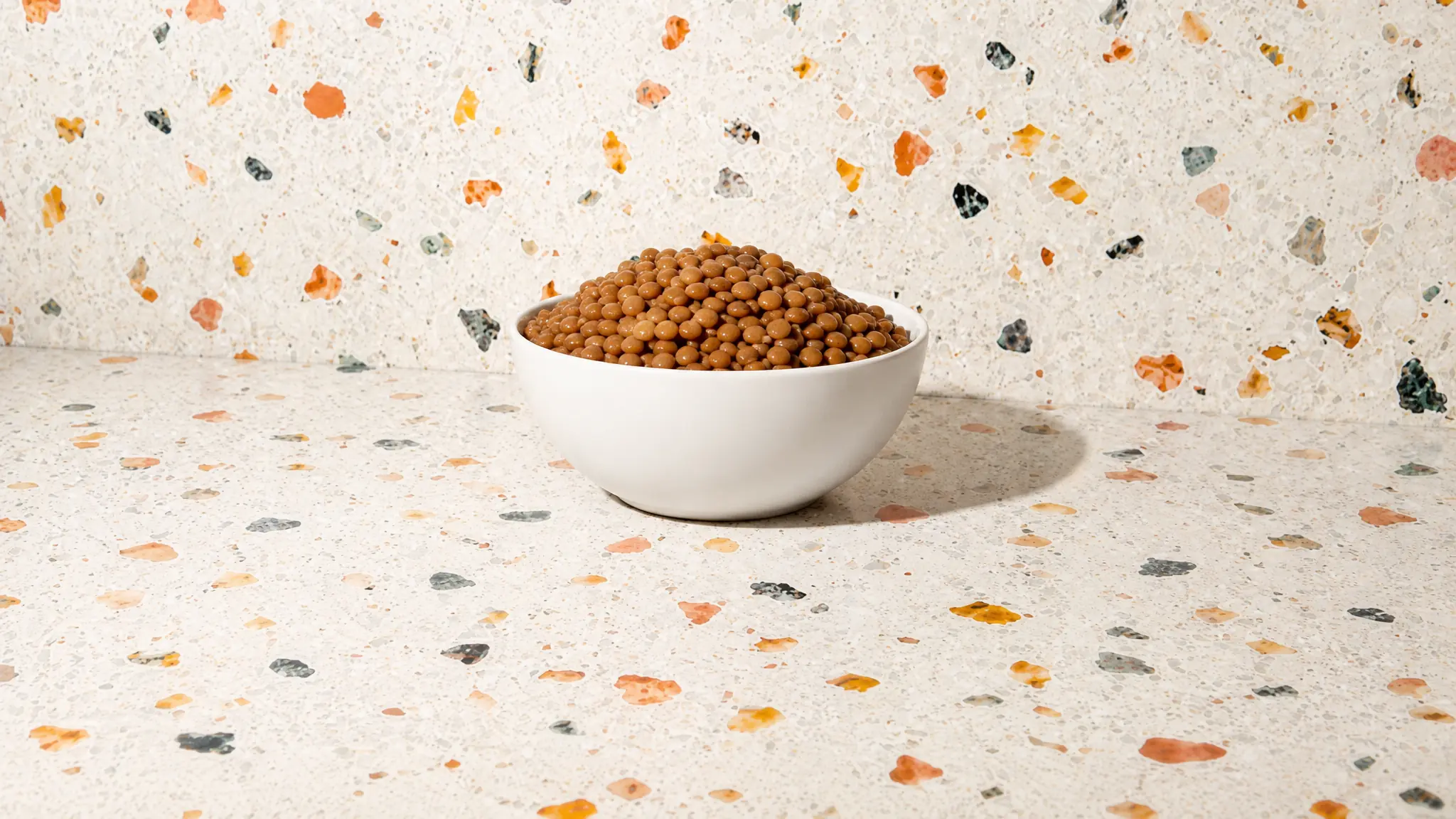
Lentil
Legume
Last updated July 5, 2026. The Tummi Food Team maintains this Can I Feed This safety guide guide. Supporting links appear in Sources when available.



Clinically reviewed by Andria Procopio and Arefa Mohamed
Direct answer
Can babies eat Lentil?
Yes, babies can eat lentils starting around 6 months old, when they are ready to begin solids, ensuring they are cooked and mashed for easy swallowing.
- Serve Age6+months
Most babies start solids around 6 months once they show readiness signs. Match the texture and serving size to your baby's skills.
- No Allergens
Lentil is not flagged as one of the major allergens tracked in this database. Still watch your baby closely when serving any new food.
- Choking Risk123451
Lower choking risk when served in the right texture. Always supervise meals and adjust the shape for your baby.
This guide is for everyday food prep questions. Ask your pediatrician about medical concerns, feeding delays, allergy plans, or serious reactions.
How Do You Serve Lentil?
How to serve Lentil to babies 6 months and older
- 1Cook lentils until very soft and mostly falling apart — try a 1:3 lentil-to-water ratio and simmer 20–25 minutes, or pressure-cook for about 6–8 minutes, so they are easily scoopable.
- 2Lightly mash or blend to a thick, spoonable texture; if mixing with vegetables or porridge, keep pieces large enough to scoop but soft enough to mash with gums.
- 3Serve warm on a shallow plate or in a small bowl with a pre-loaded spoon or as larger soft shapes (like patties) the baby can grasp to encourage self-feeding.
- 4For variety, fold cooked lentils into mashed sweet potato, yogurt, or porridge. Use small spoonfuls and watch closely for any choking signs.
How to serve Lentil to babies 9 months and older
- 1Offer lentils in soft, scoopable forms like purees, stews, or mixed into yogurt or mashed vegetables so they’re easy to spoon.
- 2Start serving lentils as small clumps or bite-sized pieces bound with safe ingredients like mashed potato, soft cheese, or cooked egg. These clumps are easier to pick up for developing hands.
- 3Avoid giving single whole lentils alone since they’re hard to grasp; larger pieces are a safer, more manageable choice.
- 4Always check temperature, make sure lentils are very soft and well-cooked, and supervise every bite to reduce choking risk.
How to serve Lentil to babies 12 months and older
- 1Cook lentils until very tender; red/split lentils soften in about 10–15 minutes, while whole brown/green lentils typically take about 20–30 minutes.
- 2For spooned servings, mash or mix cooked lentils with a binder such as mashed avocado, plain yogurt, or puréed vegetables to create a scoopable, cohesive texture.
- 3For finger-food options, drain lentils well and toss with a little oil, sauce, or finely chopped soft vegetables; form small piles or gentle patties so they’re easy to pick up.
- 4Offer an age-appropriate spoon and finger options so the child practices both. Very soft lentils and close supervision reduce choking risk.
Is Lentil a Common Allergen?
Although lentils are not tree nuts, peanuts, dairy, eggs, fish, shellfish, gluten, or sesame, they are legumes and can cause allergic reactions in some children. Children with peanut or soy allergies may—rarely—react to lentils due to legume cross-reactivity, so introduce them slowly and watch for symptoms. Note that packaged or mixed lentil products can include other allergens (spices, wheat), so always check labels. For infants, cook and mash lentils well to reduce choking risk and introduce new foods one at a time under supervision.
Is Lentil a Choking Hazard?
Very Low Choking Risk
Well-cooked lentils present a low choking risk for most babies when matched to their developmental ability, but any food can pose a risk. Always keep your baby seated upright and within an arm’s reach during meals, watch closely for signs of choking versus gagging, and be ready to respond quickly. Consider getting basic infant choking first-aid training so you know how to act if needed.
Have More Questions?
Yes. Refrigerate cooked lentils promptly in a covered container and use them within 3–4 days, or freeze them for later use.
Yes. Cooked lentil puree can be frozen promptly in a sealed, freezer-safe container for later use.
Not necessarily. The USDA organic label describes verified production methods; it does not establish that organic lentils are better for a baby than conventional lentils.
Yes. Combining lentils with vitamin C-rich foods like bell peppers or citrus can enhance iron absorption for your baby.
There is no single required portion of lentils for every baby. Offer a small amount of soft, cooked lentils and let your baby decide how much to eat by following their hunger and fullness cues.
Save Lentil to your food log
Track foods, reactions, and prep notes in Tummi when you want to keep your baby's feeding history in one place.
Sources
- Micronutrient Intake in Healthy Toddlers: A Multinational Perspective pmc.ncbi.nlm.nih.gov
- Iron - Consumer (NIH Office of Dietary Supplements) ods.od.nih.gov
- Clinical features of legume allergy in children from a Mediterranean area pubmed.ncbi.nlm.nih.gov
- Prevalence of Food Sensitization and Food Allergy in Children Across Europe pubmed.ncbi.nlm.nih.gov
- Allergy to lentils in Mediterranean pediatric patients pubmed.ncbi.nlm.nih.gov
- Frequency of food allergy in a pediatric population from Spain pubmed.ncbi.nlm.nih.gov
- Managing Cross-Reactivity in Those with Peanut Allergy pubmed.ncbi.nlm.nih.gov
- Legume cross-reactivity (Allergologia et Immunopathologia, 2003) pubmed.ncbi.nlm.nih.gov
- Oral Allergy Syndrome: An Update for Stomatologists pmc.ncbi.nlm.nih.gov
- A review of the impact of preparation and cooking on the nutritional quality of vegetables and legumes sciencedirect.com
- Changes in levels of phytic acid, lectins and oxalates during soaking and cooking of Canadian pulses pubmed.ncbi.nlm.nih.gov
What Other Legume Can Babies Eat?
See all →

Source-Linked Guidance
See the evidence behind the guide.
Food guides show direct links to public-health guidance and research when supporting references are available. Source inclusion does not imply endorsement.
 Centers for Disease Control and Prevention
Developmental milestones, nutrition guidelines, and allergen introduction timelines.
 American Academy of Pediatrics
Evidence-based feeding recommendations from the leading pediatric authority.
 National Institutes of Health
Peer-reviewed research on infant nutrition, allergies, and food safety.