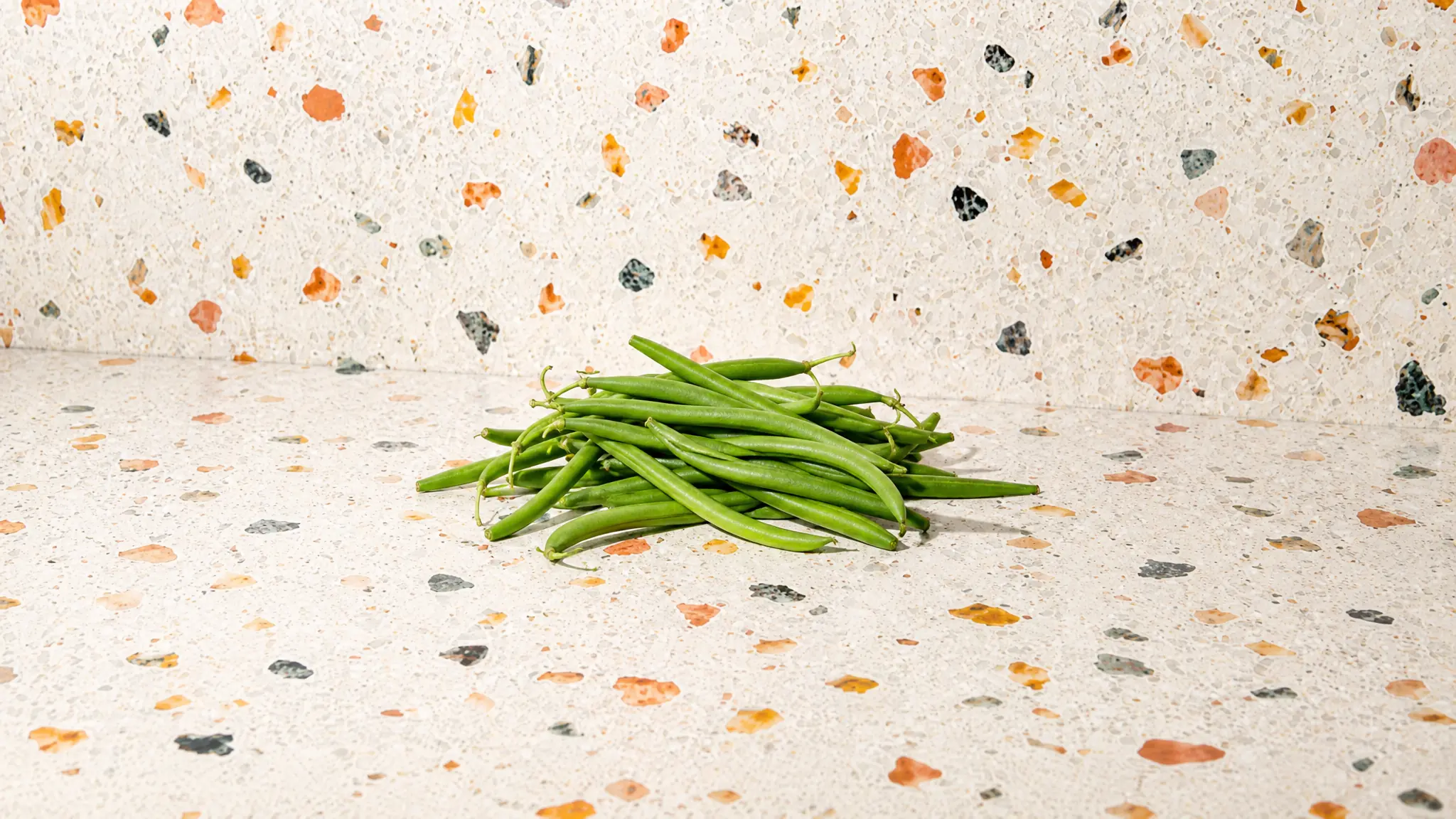
Green Beans
Legume
Last updated July 5, 2026. The Tummi Food Team maintains this Can I Feed This safety guide guide. Supporting links appear in Sources when available.



Clinically reviewed by Andria Procopio and Arefa Mohamed
Direct answer
Can babies eat Green Beans?
Green beans can be introduced around 6 months, once your baby is developmentally ready for solid foods. Cook them until soft, then mash, blend, or serve in a shape and texture suited to your baby's eating skills.
- Serve Age6+months
Most babies start solids around 6 months once they show readiness signs. Match the texture and serving size to your baby's skills.
- No Allergens
Green Beans is not flagged as one of the major allergens tracked in this database. Still watch your baby closely when serving any new food.
- Choking Risk123453
Some choking risk. Use the prep section to change the size, shape, or texture before serving.
This guide is for everyday food prep questions. Ask your pediatrician about medical concerns, feeding delays, allergy plans, or serious reactions.
How Do You Serve Green Beans?
How to serve Green Beans to babies 6 months and older
- 1Serve cooked green bean pods whole (do not cut) so baby can grasp and gnaw. Cook until very tender—steam or simmer until soft, then cool to lukewarm before offering.
- 2Prefer thin, fresh pods; if large or tough, slice them lengthwise after cooking so there are no hard cores. Soft pods are safer and reduce choking risk.
- 3Whole pods support self-feeding and fine-motor practice—always supervise every bite and remove any tough stems or fibrous strings before serving.
- 4Raw beans may be used as a utensil for scooping purees but aren’t expected to be eaten; discard if the bean is too hard or breaks into large pieces.
How to serve Green Beans to babies 12 months and older
- 1Steam or simmer until just tender, then cut into 1/2-inch pieces so they’re easy to pick up and swallow.
- 2Serve cooled to lukewarm and remove any tough ends or strings to reduce choking risk. Always supervise while the child eats.
- 3Offer pieces for finger-feeding and place a few soft pieces on a child-sized fork so they can practice spearing—encourage but don’t force.
- 4As chewing and self-feeding improve, shorten cooking time to make beans firmer and gradually offer whole trimmed beans to encourage chewing.
Is Green Beans a Common Allergen?
Green beans are not a common allergen and do not contain peanut, tree nuts, dairy, egg, soy, wheat/gluten, sesame, fish, or shellfish. However, packaged or processed green beans may include added ingredients or carry a risk of cross‑contamination—always check labels. For infants and toddlers, serve cooked and mashed or pureed to reduce choking risk and avoid added salt or seasonings.
Is Green Beans a Choking Hazard?
Moderate Choking Risk
Green beans can be a choking hazard because their firm, rounded pieces and small inner beans can resemble the shape and size of a baby’s airway. While munching often flattens the pod and lowers risk, caregivers should supervise closely and stay within arm’s reach so they can respond quickly if gagging or choking occurs. Know basic infant choking first aid and keep mealtimes calm and seated to reduce risk.
Save Green Beans to your food log
Track foods, reactions, and prep notes in Tummi when you want to keep your baby's feeding history in one place.
Sources
- Green bean hypersensitivity: an occupational allergy in a homemaker doi.org
- NITRATE IN LEAFY GREEN VEGETABLES AND ESTIMATED INTAKE doi.org
- Food sources of nitrates and nitrites: the physiological context for potential health benefits doi.org
- Infant methemoglobinemia: the role of dietary nitrate in food and water doi.org
- Vegetable-borne nitrate and nitrite and the risk of methaemoglobinaemia doi.org
What Other Legume Can Babies Eat?
See all →
Source-Linked Guidance
See the evidence behind the guide.
Food guides show direct links to public-health guidance and research when supporting references are available. Source inclusion does not imply endorsement.
 Centers for Disease Control and Prevention
Developmental milestones, nutrition guidelines, and allergen introduction timelines.
 American Academy of Pediatrics
Evidence-based feeding recommendations from the leading pediatric authority.
 National Institutes of Health
Peer-reviewed research on infant nutrition, allergies, and food safety.