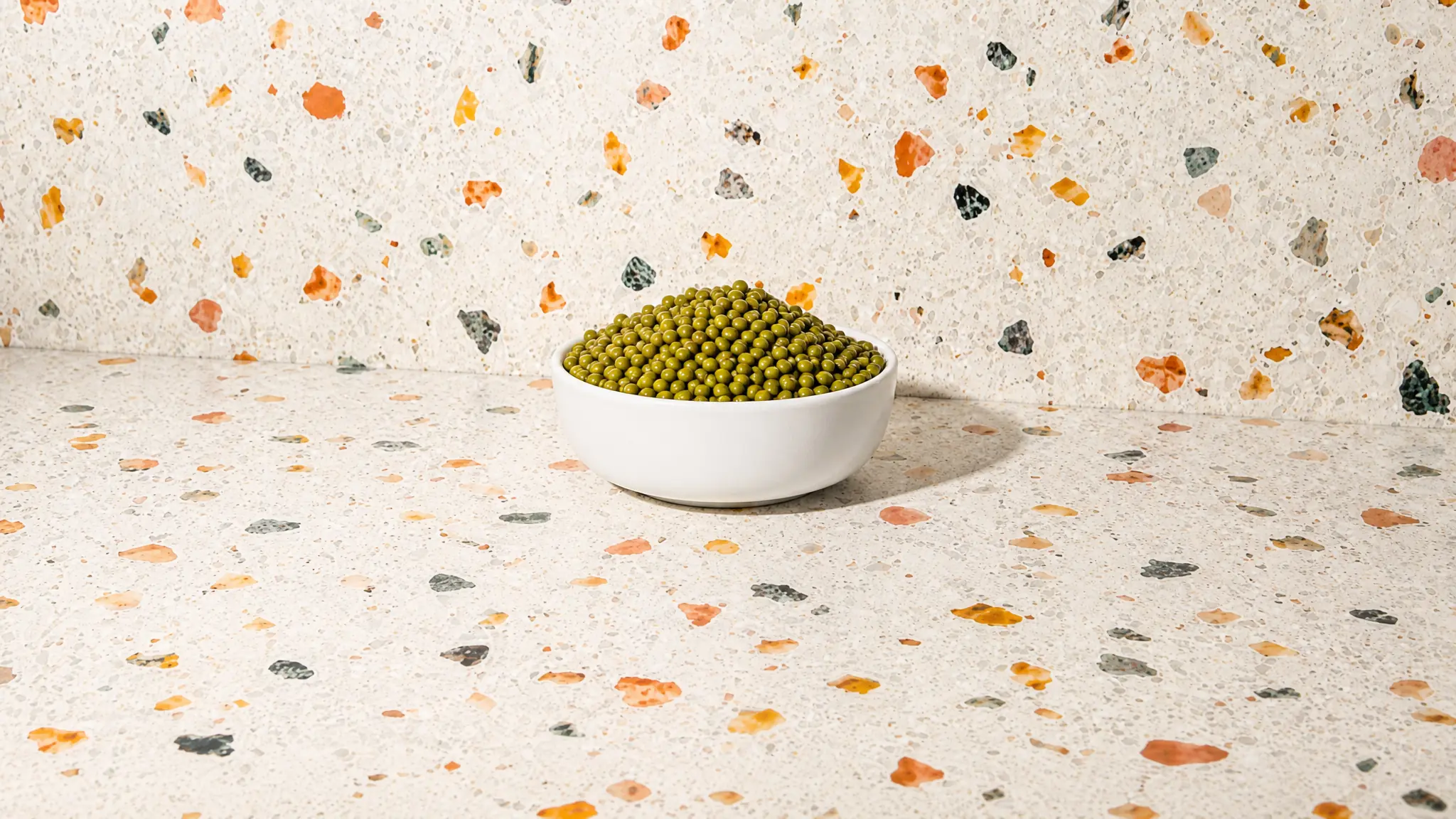
Mung Bean
Legume
Last updated July 5, 2026. The Tummi Food Team maintains this Can I Feed This safety guide guide. Supporting links appear in Sources when available.


Clinically reviewed by Andria Procopio and Arefa Mohamed
Direct answer
Can babies eat Mung Bean?
Yes, mung beans can be introduced around 6 months when your baby is ready for solids, prepared thoroughly to ensure safety.
- Serve Age6+months
Most babies start solids around 6 months once they show readiness signs. Match the texture and serving size to your baby's skills.
- No Allergens
Mung Bean is not flagged as one of the major allergens tracked in this database. Still watch your baby closely when serving any new food.
- Choking Risk123451
Lower choking risk when served in the right texture. Always supervise meals and adjust the shape for your baby.
This guide is for everyday food prep questions. Ask your pediatrician about medical concerns, feeding delays, allergy plans, or serious reactions.
How Do You Serve Mung Bean?
How to serve Mung Bean to babies 6 months and older
- 1Cook mung beans until very soft, then puree or mash into a smooth or gently textured paste; thin with breastmilk, formula, yogurt, or a little olive oil to reach a spoonable consistency.
- 2For spoon-feeding, offer a small spoon-sized portion and feed gently; for self-feeding, spread a thin layer on a rice cake or toast strip and trim any hard edges.
- 3Stir mashed mung beans into congee, porridge, or mashed vegetables to introduce new flavors and reduce fiber density; start with 1–2 teaspoons and increase slowly while watching tolerance.
- 4Serve warm but not hot and check the texture to avoid lumps that could cause gagging; refrigerate leftovers up to 24 hours and reheat only once.
- 5Observe for digestive upset or allergic signs after new foods, and pause or seek pediatric advice if you notice persistent symptoms.
How to serve Mung Bean to babies 9 months and older
- 1Cook mung beans until very soft (soak 2–4 hours, then simmer 20–30 minutes or pressure-cook) so they mash easily and reduce choking risk.
- 2Mix cooked, mashed mung beans into scoopable foods like yogurt, mashed potato, or khichdi and offer with a pre-loaded spoon or let the baby self-feed with fingers to practice motor skills.
- 3For babies using a pincer grasp, soften or flatten individual beans with a fork or roll them into small, soft balls; cut dosa, idli, or pancake into bite-size strips to make grabbing simpler.
- 4Purees and dals remain fine—serve a mix of textures at each meal so the baby learns both scooping and finger-feeding.
How to serve Mung Bean to babies 12 months and older
- 1Cook mung beans until very soft — simmer until they fall apart and drain; soft texture makes them easy to mash or scoop.
- 2Offer small, manageable portions by slightly mashing whole beans or forming them into tiny patties or balls so toddlers can pick up or spear them.
- 3Thoroughly cook mung bean sprouts until steaming hot to reduce foodborne risk, and chop long strands to remove choking hazards.
- 4Serve in mild family dishes (gentle curries, salads, or mixed with mashed vegetables) and encourage utensil use while keeping pieces easy to handle.
- 5Always check serving temperature and supervise eating; avoid adding salt, sugar, or honey for toddlers.
Is Mung Bean a Common Allergen?
Mung beans are legumes and aren’t among the major regulated allergens (peanut, soy, lupin), but they can cause allergic reactions in some people. Reactions are uncommon, though case reports (including to mung bean sprouts) and cross‑reactivity with other legumes or pollen (e.g., birch) have been described. If a child has a known legume allergy or pollen‑related food sensitivities, introduce mung beans cautiously and consult an allergist before trying. Watch for typical allergy signs and seek emergency care for severe symptoms (difficulty breathing, swelling, fainting).
Is Mung Bean a Choking Hazard?
Very Low Choking Risk
Mung beans are generally not a choking hazard — their small size means they’re unlikely to block the airway when they’re cooked and handled appropriate to your child’s developmental abilities. Raw or undercooked beans can be firmer, and any person can choke on food, so stay within arm’s reach during meals and watch for signs of gagging or choking. If your baby is still developing oral motor skills, be extra cautious with very small or loose pieces.
Have More Questions?
Yes. Mung beans can be stored in an airtight container in the fridge for up to 3 days, or frozen for longer storage. Ensure they are cooled before refrigerating or freezing to maintain freshness.
Yes. You can freeze cooked mung purees in individual portions, such as ice cube trays, for up to 3 months. Thaw in the refrigerator before serving to your baby.
It depends. Organic mung beans may have fewer pesticides but are generally more expensive; conventional mung beans are widely available and safe when properly cooked and stored.
It depends. Combining mung beans with foods rich in vitamin C, like bell peppers or tomatoes, can enhance iron absorption, but always introduce new combinations gradually and observe for any reactions.
It depends. Portion sizes for babies generally start with a few teaspoons of mashed or pureed mung beans, gradually increasing as your baby becomes accustomed to new textures and flavors.
Save Mung Bean to your food log
Track foods, reactions, and prep notes in Tummi when you want to keep your baby's feeding history in one place.
Sources
- Managing Cross-Reactivity in Those with Peanut Allergy doi.org
- Cross-reactivity of peanut allergens doi.org
- Oral Allergy Syndrome: An Update for Stomatologists doi.org
- Vig r 6: cytokinin-specific binding protein from mung bean sprouts (cross-reactivity study) doi.org
- Bioactive constituents in pulses and their health benefits doi.org
- Effect of household cooking methods on nutritional and anti nutritional factors in green cowpea doi.org
- Phytic acid, in vitro protein digestibility, dietary fiber, and minerals of pulses doi.org
- Renal lithiasis and nutrition doi.org
- Nutritional Composition and Bioactive Content of Legumes (Nutrients) doi.org
What Other Legume Can Babies Eat?
See all →
Source-Linked Guidance
See the evidence behind the guide.
Food guides show direct links to public-health guidance and research when supporting references are available. Source inclusion does not imply endorsement.
 Centers for Disease Control and Prevention
Developmental milestones, nutrition guidelines, and allergen introduction timelines.
 American Academy of Pediatrics
Evidence-based feeding recommendations from the leading pediatric authority.
 National Institutes of Health
Peer-reviewed research on infant nutrition, allergies, and food safety.