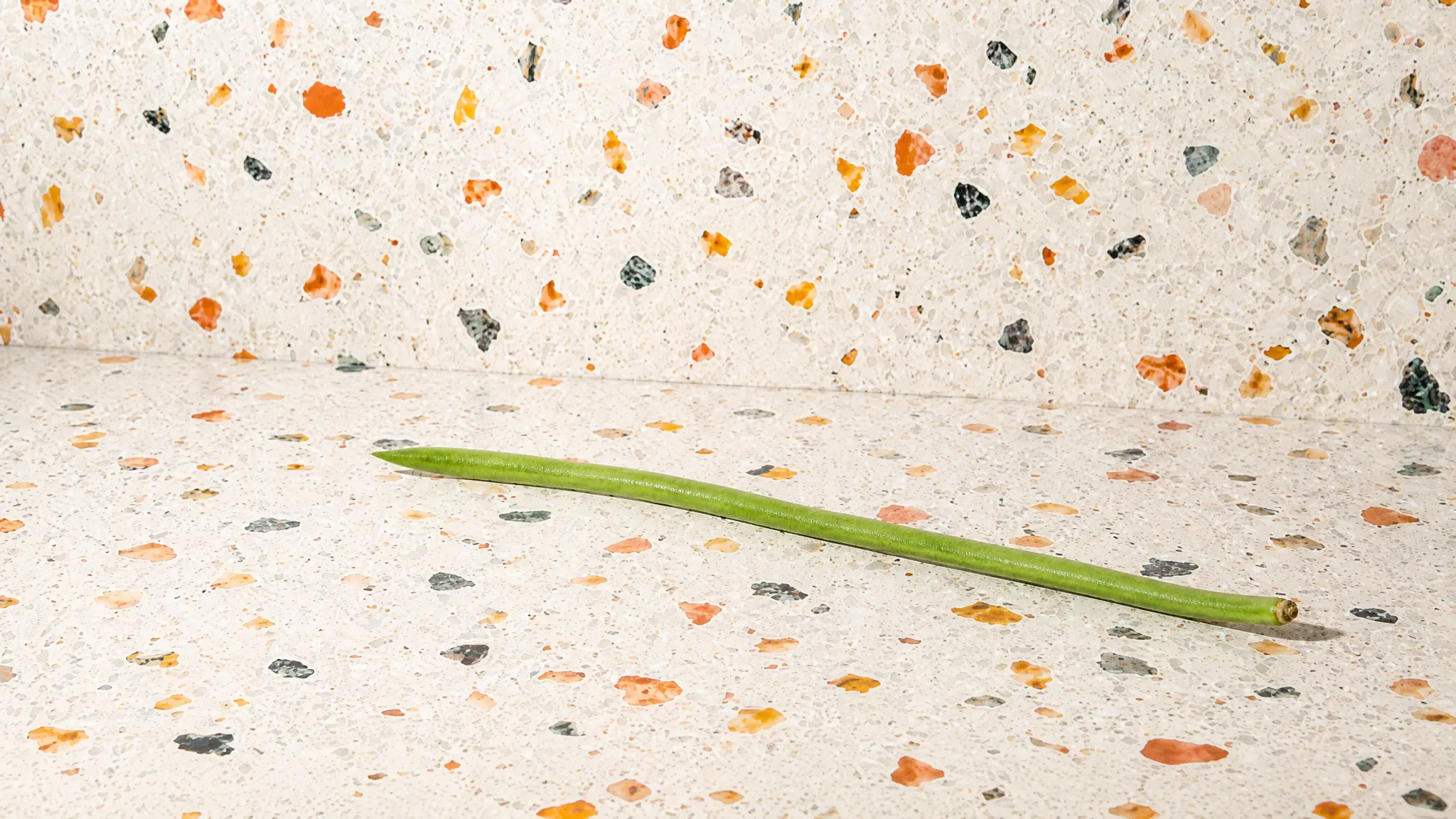
Yardlong Bean
Legume
Last updated July 5, 2026. The Tummi Food Team maintains this Can I Feed This safety guide guide. Supporting links appear in Sources when available.



Clinically reviewed by Andria Procopio and Arefa Mohamed
Direct answer
Can babies eat Yardlong Bean?
Yes, babies can eat yardlong beans starting around 6 months when they are prepared thoroughly and cooked until soft.
- Serve Age6+months
Most babies start solids around 6 months once they show readiness signs. Match the texture and serving size to your baby's skills.
- No Allergens
Yardlong Bean is not flagged as one of the major allergens tracked in this database. Still watch your baby closely when serving any new food.
- Choking Risk123453
Some choking risk. Use the prep section to change the size, shape, or texture before serving.
This guide is for everyday food prep questions. Ask your pediatrician about medical concerns, feeding delays, allergy plans, or serious reactions.
How Do You Serve Yardlong Bean?
How to serve Yardlong Bean to babies 6 months and older
- 1Cook the beans until the pod and inner beans are very soft—steam, boil, or sauté until a fork or your finger easily mashes them.
- 2Trim off tough ends and any stringy fibers, then cut into long strips about 4–5 inches (10–13 cm) so a portion extends from each side of the child’s closed fist; longer strips are easier to hold and reduce choking risk compared with small round pieces.
- 3When sharing family meals, remove one or two beans from your plate and trim them before offering; keep seasoned or sauced pieces plain to avoid added salt or choking hazards.
- 4Always supervise while eating and offer one piece at a time; discard any pieces that remain firm or have a hard core.
How to serve Yardlong Bean to babies 12 months and older
- 1Cook yardlong beans until very soft, then cut into short, bite-sized pieces that are easy for little hands to pick up.
- 2Serve as finger food or mixed into family meals so your child learns to eat the same foods; offer small amounts first to monitor how they handle the texture.
- 3Encourage use of child-safe utensils and model scooping or spearing to build independent feeding skills.
- 4Cut across the width (not lengthwise) to avoid long strands, check pieces are soft and not stringy, and supervise eating to reduce choking risk.
How to serve Yardlong Bean to babies 18 months and older
- 1Trim and wash the yardlong beans, removing tough ends; cut into 1–2-inch pieces for soft, bite-sized servings.
- 2Steam or blanch for 4–6 minutes until tender but not mushy, then drain and cool to room temperature before serving.
- 3To practice biting and tearing, offer longer cooked sections about 3–4 inches long that the child can hold and bite from.
- 4Always supervise meals, serve one piece at a time, and ensure pieces are soft enough to mash with gums or bite safely to minimize choking hazards.
Is Yardlong Bean a Common Allergen?
Yardlong beans are legumes and are generally safe for most children. They are not common sources of peanut, tree‑nut, dairy, egg, fish, shellfish, sesame, or gluten allergies, but because they belong to the legume family some people with peanut or soy allergy may show cross‑reactivity. If your child has a diagnosed peanut or soy allergy, check with your allergist before serving and introduce yardlong beans cautiously (one new food at a time) while monitoring for symptoms.
Is Yardlong Bean a Choking Hazard?
Moderate Choking Risk
Yardlong beans can be a choking hazard because their pods are tough to chew and small sections can be round and easily swallowed rather than chewed. Babies may not be able to break them down reliably with gums alone, which increases the risk of airway obstruction. Stay within arm’s reach and watch closely at every meal, and make sure you know infant choking first aid so you can act quickly if needed.
Have More Questions?
Yes, yardlong beans can be stored in the refrigerator for up to 3-4 days after purchase. It's best to keep them in a plastic bag or container to maintain freshness.
Yes, you can freeze yardlong beans after cooking or blanching them to extend their shelf life for up to 6 months. Ensure they are cooled and stored in airtight containers or freezer bags.
It depends; organic yardlong beans generally have fewer pesticides, but both organic and conventional beans can be safe for babies if thoroughly washed and cooked.
Yes, you can combine yardlong beans with other cooked vegetables or grains to introduce a variety of flavors and textures to your baby’s diet gradually.
For babies, a typical serving size of cooked yardlong beans is about 1-2 tablespoons, depending on their age and appetite. Always observe your baby’s cues.
Save Yardlong Bean to your food log
Track foods, reactions, and prep notes in Tummi when you want to keep your baby's feeding history in one place.
Sources
- Ranking of 10 legumes according to the prevalence of sensitization as a parameter to characterize allergenic proteins doi.org
- Managing Cross-Reactivity in Those with Peanut Allergy doi.org
- Cross-reactivity of peanut allergens doi.org
- Oral Allergy Syndrome: An Update for Stomatologists doi.org
- Oral allergy syndrome (NHS) nhs.uk
- Vig r 6 from mung bean sprouts cross-reacts with Bet v 1-related allergens doi.org
- Oral Allergy Syndrome (OAS) or Pollen Fruit Syndrome (PFS) (AAAAI) aaaai.org
What Other Legume Can Babies Eat?
See all →
Source-Linked Guidance
See the evidence behind the guide.
Food guides show direct links to public-health guidance and research when supporting references are available. Source inclusion does not imply endorsement.
 Centers for Disease Control and Prevention
Developmental milestones, nutrition guidelines, and allergen introduction timelines.
 American Academy of Pediatrics
Evidence-based feeding recommendations from the leading pediatric authority.
 National Institutes of Health
Peer-reviewed research on infant nutrition, allergies, and food safety.