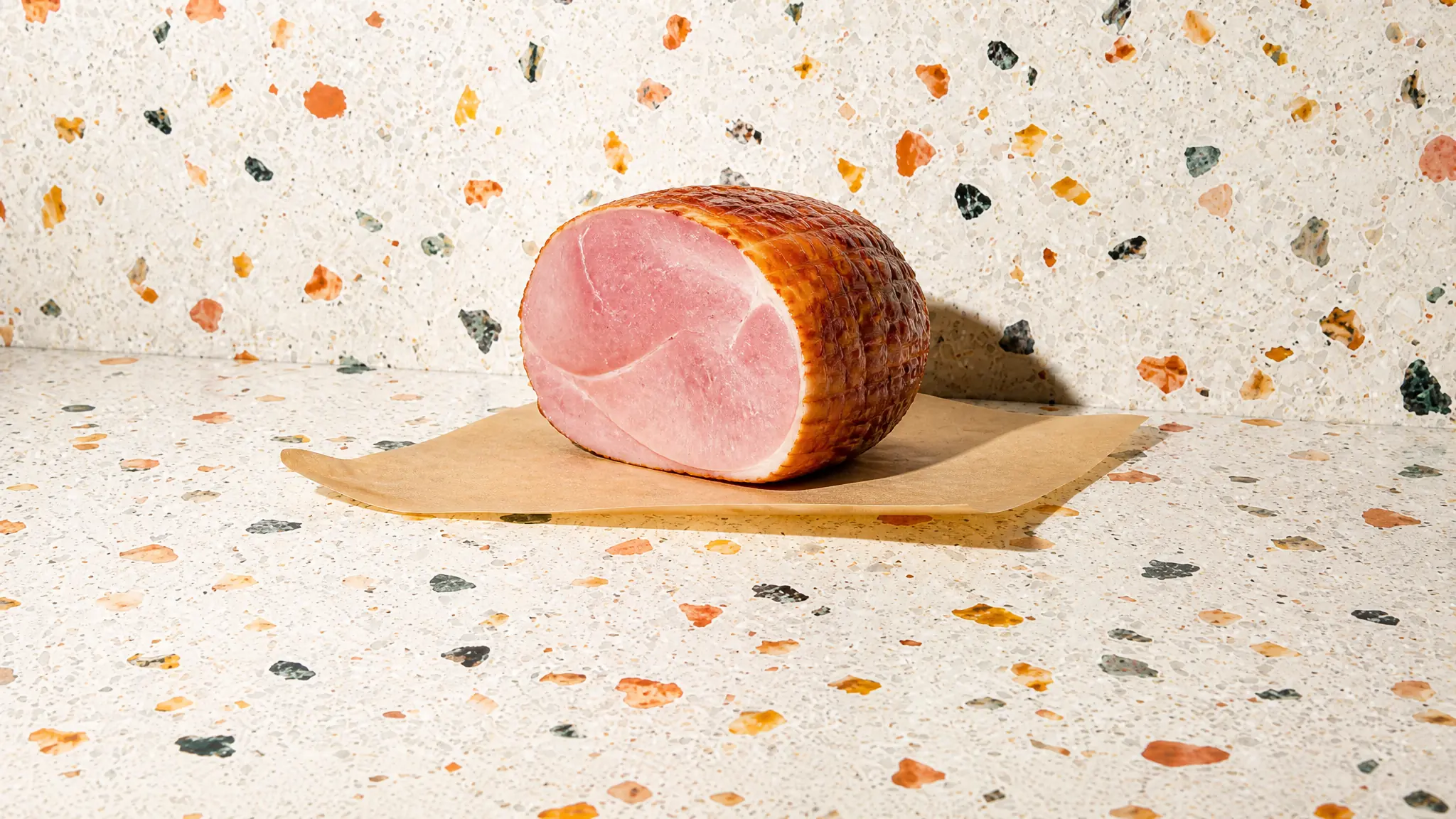
Ham
Meat
Last updated July 5, 2026. The Tummi Food Team maintains this Can I Feed This safety guide guide. Supporting links appear in Sources when available.



Clinically reviewed by Andria Procopio and Arefa Mohamed
Direct answer
Can babies eat Ham?
Yes, ham can be introduced around 6 months if it is plain and free of honey; wait until after 12 months if it contains honey.
- Serve Age6+months
Most babies start solids around 6 months once they show readiness signs. Match the texture and serving size to your baby's skills.
- No Allergens
Ham is not flagged as one of the major allergens tracked in this database. Still watch your baby closely when serving any new food.
- Choking Risk123451
Lower choking risk when served in the right texture. Always supervise meals and adjust the shape for your baby.
This guide is for everyday food prep questions. Ask your pediatrician about medical concerns, feeding delays, allergy plans, or serious reactions.
How Do You Serve Ham?
How to serve Ham to babies 6 months and older
- 1Remove all rind, skin, loose gristle, and excess fat, then cut a long, flat strip about the width of two adult fingers pressed together to reduce choking risk.
- 2If the slice is thick, rubbery, or too floppy to chew safely, finely chop or mince the ham and mix it into a scoopable food like mashed potatoes or porridge.
- 3Do not use glazed hams that contain honey for infants under 12 months.
- 4Consider delaying deli-style ham because of foodborne-illness risk; if using deli meat, heat until steaming then cool before serving.
How to serve Ham to babies 9 months and older
- 1Trim away all rind, visible gristle, and excess fat; cut the ham into thin, flat shreds or a single long strip so baby can easily pick up pieces.
- 2If the texture is hard to manage, finely chop the ham and mix it into a scoopable base such as mashed potatoes, yogurt, or macaroni and cheese.
- 3For deli or cured hams, heat until steaming and let cool slightly to reduce foodborne risk; avoid any honey-containing glazes for babies under 12 months.
- 4Make sure pieces are soft with no hard edges and supervise every bite to reduce choking risk.
How to serve Ham to babies 18 months and older
- 1Cut ham into very small, bite-sized pieces or shred it so your child can chew safely; for sandwiches, use thin slices and demonstrate holding and taking small bites.
- 2Avoid firm cubes or chewy strips that pose a choking hazard — finely chop, shred, or lightly warm to soften based on your child’s chewing ability.
- 3Reheat deli or pre-cooked ham until it is steaming, then let it cool slightly before serving to reduce the risk of infection.
- 4Supervise meals and watch for how your child manipulates food; separate components if they tend to remove fillings and adjust portion size to what they can manage.
Is Ham a Common Allergen?
Plain ham (pork) is not one of the common major allergens (milk, eggs, fish, shellfish, tree nuts, peanuts, wheat, soy), but processed or cured hams can include allergenic ingredients (e.g., milk, wheat/gluten or soy) or be exposed to cross-contact during processing. Always check the product ingredient list and any “Contains” or advisory labeling, and prefer single-ingredient, clearly labeled products for children with allergies. If you’re unsure, contact the manufacturer or avoid giving ham until you’ve confirmed it’s safe for your child. For children with diagnosed food allergies, follow your clinician’s guidance.
Is Ham a Choking Hazard?
Low Choking Risk
Ham can be a choking hazard because chunks and cubes are firm and may be difficult for babies to chew and swallow. Always keep babies within arm’s reach and closely supervise them during meals, watching for signs of gagging, coughing, or trouble breathing. Caregivers should learn basic infant choking first aid so they can respond quickly if an emergency occurs.
Have More Questions?
It depends. Babies can have cooked, plain ham as soon as they are ready for solids around 6 months, but avoid processed or cured varieties with added ingredients like honey until after 12 months.
It depends. Typically, babies can have small, finely chopped or shredded ham once they are comfortable with solid foods, usually around 8-10 months, to reduce choking risk.
It depends. Choose ham that is free of added sugars, honey, or preservatives; freshly cooked or minimally processed ham is best for babies.
It depends. When serving ham to toddlers, always cut it into small pieces or strips appropriate for their chewing ability, typically 1 year and older.
It depends. Many parents opt to store cooked ham in airtight containers in the refrigerator for 3-4 days or freeze it for up to 1-2 months.
Save Ham to your food log
Track foods, reactions, and prep notes in Tummi when you want to keep your baby's feeding history in one place.
Sources
- Meat Allergy - American College of Allergy, Asthma & Immunology acaai.org
- Meat allergy and allergens - Wilson JM, Platts-Mills TA (2018), Molecular Immunology pmc.ncbi.nlm.nih.gov
- Alpha-gal and Red Meat Allergy - American Academy of Allergy, Asthma & Immunology aaaai.org
- Alpha-gal Syndrome - CDC cdc.gov
- 2022 Outbreak of Listeria Infections Linked to Deli Meats and Cheese - CDC (archived Mar 29, 2023) archive.cdc.gov
What Other Meat Can Babies Eat?
See all →
Source-Linked Guidance
See the evidence behind the guide.
Food guides show direct links to public-health guidance and research when supporting references are available. Source inclusion does not imply endorsement.
 Centers for Disease Control and Prevention
Developmental milestones, nutrition guidelines, and allergen introduction timelines.
 American Academy of Pediatrics
Evidence-based feeding recommendations from the leading pediatric authority.
 National Institutes of Health
Peer-reviewed research on infant nutrition, allergies, and food safety.