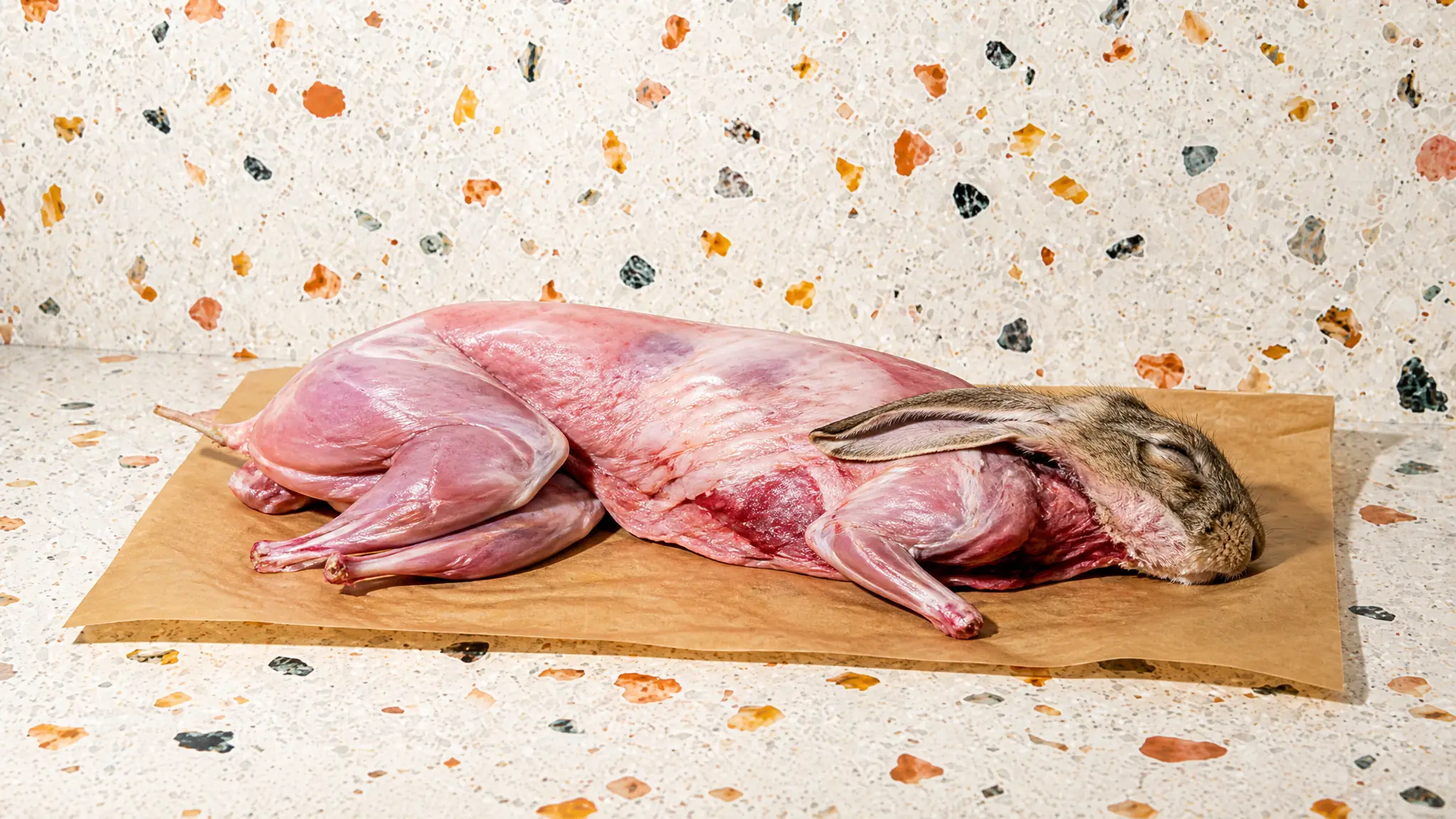
Hare
Meat
Last updated July 5, 2026. The Tummi Food Team maintains this Can I Feed This safety guide guide. Supporting links appear in Sources when available.



Clinically reviewed by Andria Procopio and Arefa Mohamed
Direct answer
Can babies eat Hare?
Yes, babies can eat hare around 6 months old, when they start solids, ensuring it is properly cooked and served in small, manageable pieces.
- Serve Age6+months
Most babies start solids around 6 months once they show readiness signs. Match the texture and serving size to your baby's skills.
- No Allergens
Hare is not flagged as one of the major allergens tracked in this database. Still watch your baby closely when serving any new food.
- Choking Risk123451
Lower choking risk when served in the right texture. Always supervise meals and adjust the shape for your baby.
This guide is for everyday food prep questions. Ask your pediatrician about medical concerns, feeding delays, allergy plans, or serious reactions.
How Do You Serve Hare?
How to serve Hare to babies 6 months and older
- 1Cut a thick strip of cooked hare about the width and length of two adult fingers pressed together so baby can grasp and gum it safely.
- 2Remove all skin, visible fat, and any bones—ensure no bone fragments remain before offering.
- 3Cook until very tender (braise, simmer, or slow-cook) and test by pulling with a fork so fibers easily separate.
- 4If small pieces break off, pause and watch while baby manages them; alternatively shred or finely chop the meat and mix into mashed vegetables, porridge, or yogurt so baby can self-feed with hands or a pre-loaded utensil.
How to serve Hare to babies 9 months and older
- 1Cook using a moist, slow method like braising, confit, or stewing until the meat pulls apart easily and bones are removed.
- 2Cut or finely shred into very small, manageable pieces (about pea-sized) so the baby can handle them safely.
- 3Add a small amount of cooking liquid, mild gravy, or warm broth to coat and soften the meat for easier swallowing.
- 4For an even gentler texture, mash or purée with a little liquid until smooth or slightly textured — test temperature before serving.
- 5Mix with mashed vegetables for extra moisture and familiar flavor, and avoid adding salt or strong spices.
How to serve Hare to babies 12 months and older
- 1Slice slow-cooked hare into thin slices or narrow strips and then cut into small, bite-size pieces about the size of a thumbnail.
- 2Quarter and gently flatten hare sausage so it is no longer round, then cut into small pieces to reduce choking risk.
- 3Remove all bones, cartilage, and any tough gristle—check by running a finger over pieces to be sure no fragments remain.
- 4Avoid large cubes or chunky pieces; serve portions that resemble the family meal in texture and appearance and offer small amounts at first to monitor tolerance.
Is Hare a Common Allergen?
Hare is mammalian meat and can trigger red‑meat (alpha‑gal) allergy in susceptible individuals; parents of children with known mammalian meat or alpha‑gal sensitivities should avoid it. Although not a common childhood allergen like peanuts or dairy, cross‑contamination may occur during hunting, butchering, or cooking (shared equipment or coatings), so check preparation methods. When introducing hare for the first time, offer a small amount and watch closely for allergic symptoms; seek medical help for any concerning reaction.
Is Hare a Choking Hazard?
Low Choking Risk
Hare meat is a common choking hazard because it’s very lean and can become tough and chewy, and any bones or cartilage are additional choking risks—remove them completely. Stay within arm’s reach and closely supervise babies while they eat so you can respond immediately if gagging or choking occurs. Make sure caregivers know infant choking first aid and how to get emergency help quickly.
Have More Questions?
Yes. It is safe for babies to eat hare as long as it is thoroughly cooked, properly prepared, and introduced in age-appropriate portions, starting around 6 months when babies are ready for solids.
Hare comes from various regions worldwide, including Africa, the Americas, Asia, and Europe. There are many species, none of which are domesticated, with hare being classified as a red meat with a distinct, gamey flavor.
Yes. Hare is nutritionally rich in protein and iron, making it a healthy choice for babies, provided it’s well-cooked and served in moderation as part of a balanced diet.
Yes. Meat, including hare, can pose a choking hazard for babies due to its lean, sometimes tough texture if not cooked properly. Always cook well, cut into small pieces, and supervise eating.
No. Hare is not a common allergen, but a rare allergy called alpha-gal syndrome can develop from tick bites, leading to delayed allergic reactions after eating mammalian meat, including hare.
Save Hare to your food log
Track foods, reactions, and prep notes in Tummi when you want to keep your baby's feeding history in one place.
Sources
- How do you cook rabbit safely? - Ask USDA (2019) ask.usda.gov
- Alpha‑gal and Red Meat Allergy — American Academy of Allergy, Asthma, & Immunology aaaai.org
- Commins SP (2020). Diagnosis & management of alpha‑gal syndrome (Expert Rev Clin Immunol) pmc.ncbi.nlm.nih.gov
- Cordain L. et al. (2000). Plant‑animal subsistence ratios... (Am J Clin Nutr) pubmed.ncbi.nlm.nih.gov
- Tushingham S., Barton L., Bettinger RL (2021). How ancestral subsistence strategies solve salmon starvation (AJPA) pubmed.ncbi.nlm.nih.gov
- Rodríguez‑Calleja JM et al. (2006). Rabbit Meat as a Source of Bacterial Foodborne Pathogens (J Food Prot) pubmed.ncbi.nlm.nih.gov
- Tularemia — Centers for Disease Control and Prevention cdc.gov
What Other Meat Can Babies Eat?
See all →

Source-Linked Guidance
See the evidence behind the guide.
Food guides show direct links to public-health guidance and research when supporting references are available. Source inclusion does not imply endorsement.
 Centers for Disease Control and Prevention
Developmental milestones, nutrition guidelines, and allergen introduction timelines.
 American Academy of Pediatrics
Evidence-based feeding recommendations from the leading pediatric authority.
 National Institutes of Health
Peer-reviewed research on infant nutrition, allergies, and food safety.