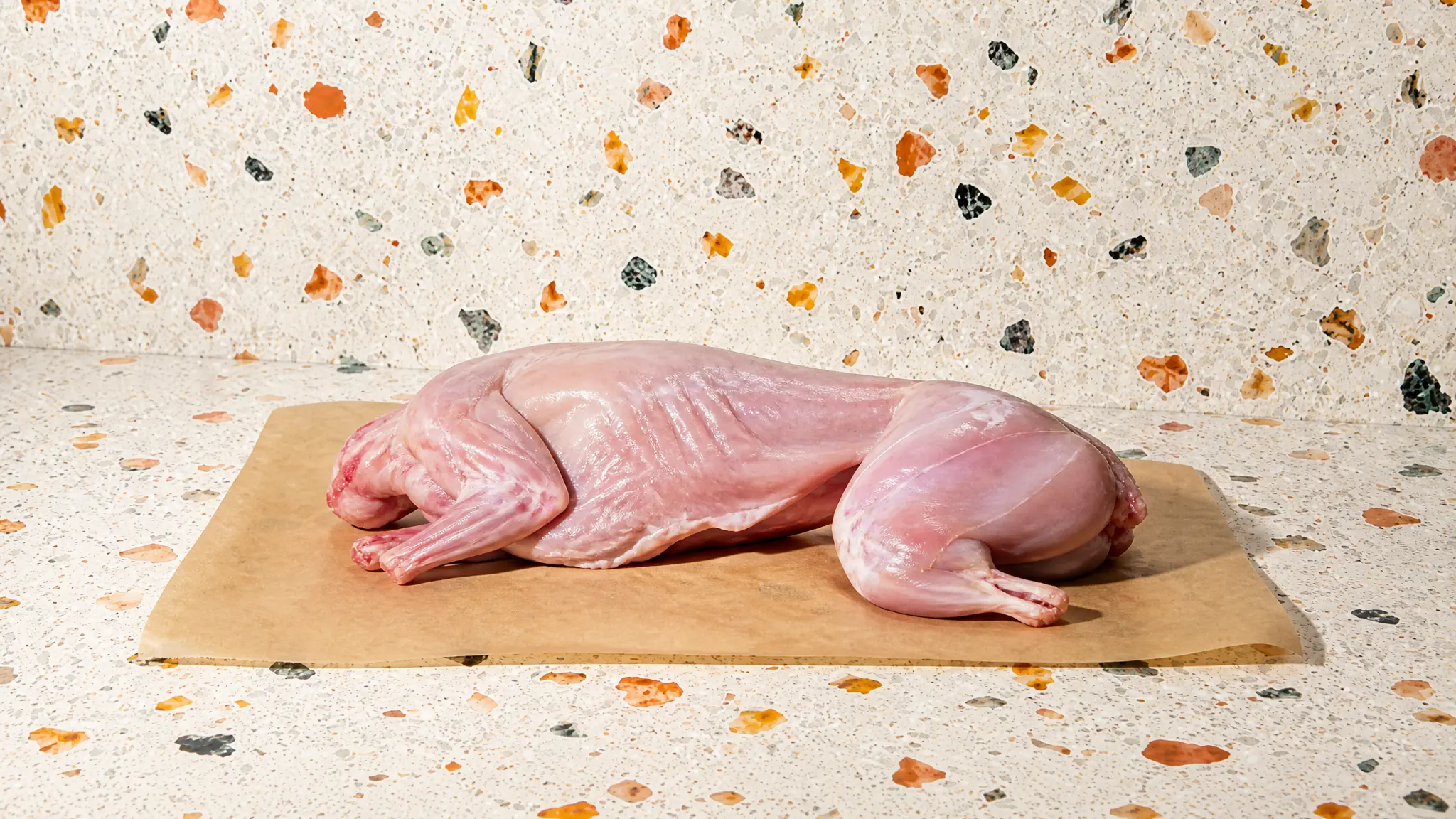
Rabbit
Meat
Last updated July 5, 2026. The Tummi Food Team maintains this Can I Feed This safety guide guide. Supporting links appear in Sources when available.



Clinically reviewed by Andria Procopio and Arefa Mohamed
Direct answer
Can babies eat Rabbit?
Yes, babies can eat rabbit meat starting around 6 months when solids are introduced, ensuring it is thoroughly cooked and finely pureed.
- Serve Age6+months
Most babies start solids around 6 months once they show readiness signs. Match the texture and serving size to your baby's skills.
- No Allergens
Rabbit is not flagged as one of the major allergens tracked in this database. Still watch your baby closely when serving any new food.
- Choking Risk123451
Lower choking risk when served in the right texture. Always supervise meals and adjust the shape for your baby.
This guide is for everyday food prep questions. Ask your pediatrician about medical concerns, feeding delays, allergy plans, or serious reactions.
How Do You Serve Rabbit?
How to serve Rabbit to a 8-month-old baby
- 1Prepare one thick, tender strip of cooked rabbit about the size of two adult fingers pressed together; remove all skin and bones so baby can grasp and chew safely.
- 2If the piece might flake into small, hard fragments, shred or finely chop the meat and mix it into mashed vegetables, porridge, or yogurt to make self-feeding safer and easier.
- 3Use very moist, slow-cooked methods (braise or slow-cook) until the meat is fork-tender; soft and easily mashed texture reduces choking risk.
- 4Always supervise within arm’s reach while offering rabbit, serve small amounts on a high-chair tray, and stop feeding immediately if the baby coughs or gags.
How to serve Rabbit to a 11-month-old baby
- 1Cut tender rabbit from braises, confits, or stews into thin, bite-sized slices; if the meat is dry, shred or finely chop into very small pieces.
- 2Mix a small amount of warm cooking liquid, sauce, or mashed vegetable with the meat to moisten it and make swallowing easier.
- 3Remove all bones and cartilage—run your fingers through the meat to check for any tiny fragments before serving.
- 4Sit with your baby and offer one small piece at a time; ensure food is warm (not hot) and supervise closely, stopping feeding if coughing or choking occurs.
How to serve Rabbit to a 24-month-old baby
- 1Remove all bones and visible cartilage, then shred or slice the meat into thin, flat pieces so they aren’t round.
- 2Serve thin slices or finely shredded braised/confit strips, or rabbit sausage quartered lengthwise so pieces lie flat and are easy to chew.
- 3Avoid chunks, cubes, or whole round sausages, which significantly increase choking risk.
- 4Cook rabbit thoroughly and add moisture with healthy fats (olive oil, butter) or a mild sauce or purée to help with swallowing.
- 5Offer small, supervised portions, introduce the meat gradually, and watch for any chewing difficulties or allergic reactions.
Is Rabbit a Common Allergen?
Rabbit is not a common food allergen for most children, but because it is mammalian meat it can trigger reactions in people with alpha‑gal syndrome (a tick‑bite–related red‑meat allergy). If your child has a history of mammal‑meat allergy or experiences delayed hives, vomiting, or abdominal symptoms after red meat, avoid rabbit and discuss testing or guidance with your pediatrician or an allergist. For most families, rabbit can be introduced like other meats—watch for any new reactions and seek care if you see concerning symptoms.
Is Rabbit a Choking Hazard?
Low Choking Risk
Yes — rabbit is a notable choking hazard because its meat is very lean and can become tough or stringy, and small bones or cartilage may be present. Check the meat carefully and remove any bones or cartilage, and keep your baby within arm’s reach while they’re eating so you can quickly assist if needed. Stay calm if gagging happens and be prepared to intervene if your child can’t manage a piece on their own.
Have More Questions?
Yes. You can introduce cooked, pureed rabbit to babies around 6 months old when they start solids, ensuring it is prepared safely and served in age-appropriate textures.
Yes. Rabbit meat is a good source of iron and protein for babies, similar to other meats, but always ensure it is thoroughly cooked and served in small, manageable pieces.
Yes. Wild rabbit is safe for babies if it has been properly hunted, handled, and cooked to at least 160°F (71°C), just like farmed rabbit.
No. Rabbit is low in fiber and high in protein, which do not promote pooping; a balanced diet with fiber-rich foods supports healthy digestion.
It depends. When serving rabbit to babies, avoid high-sodium or processed rabbit products like cured or smoked meats until after their first year.
Save Rabbit to your food log
Track foods, reactions, and prep notes in Tummi when you want to keep your baby's feeding history in one place.
Sources
- Comparative evaluation of the quality and fatty acid profile of meat from brown hares and domestic rabbits offered the same diet doi.org
- Nutrient Content of Rabbit Meat as Compared to Chicken, Beef and Pork Meat doi.org
- Plant-animal subsistence ratios and macronutrient energy estimations in worldwide hunter-gatherer diets doi.org
- How ancestral subsistence strategies solve salmon starvation and the "protein problem" of Pacific Rim resources doi.org
- Rabbit meat as a source of bacterial foodborne pathogens doi.org
- Tularemia FAQs (CDC) cdc.gov
What Other Meat Can Babies Eat?
See all →
Source-Linked Guidance
See the evidence behind the guide.
Food guides show direct links to public-health guidance and research when supporting references are available. Source inclusion does not imply endorsement.
 Centers for Disease Control and Prevention
Developmental milestones, nutrition guidelines, and allergen introduction timelines.
 American Academy of Pediatrics
Evidence-based feeding recommendations from the leading pediatric authority.
 National Institutes of Health
Peer-reviewed research on infant nutrition, allergies, and food safety.