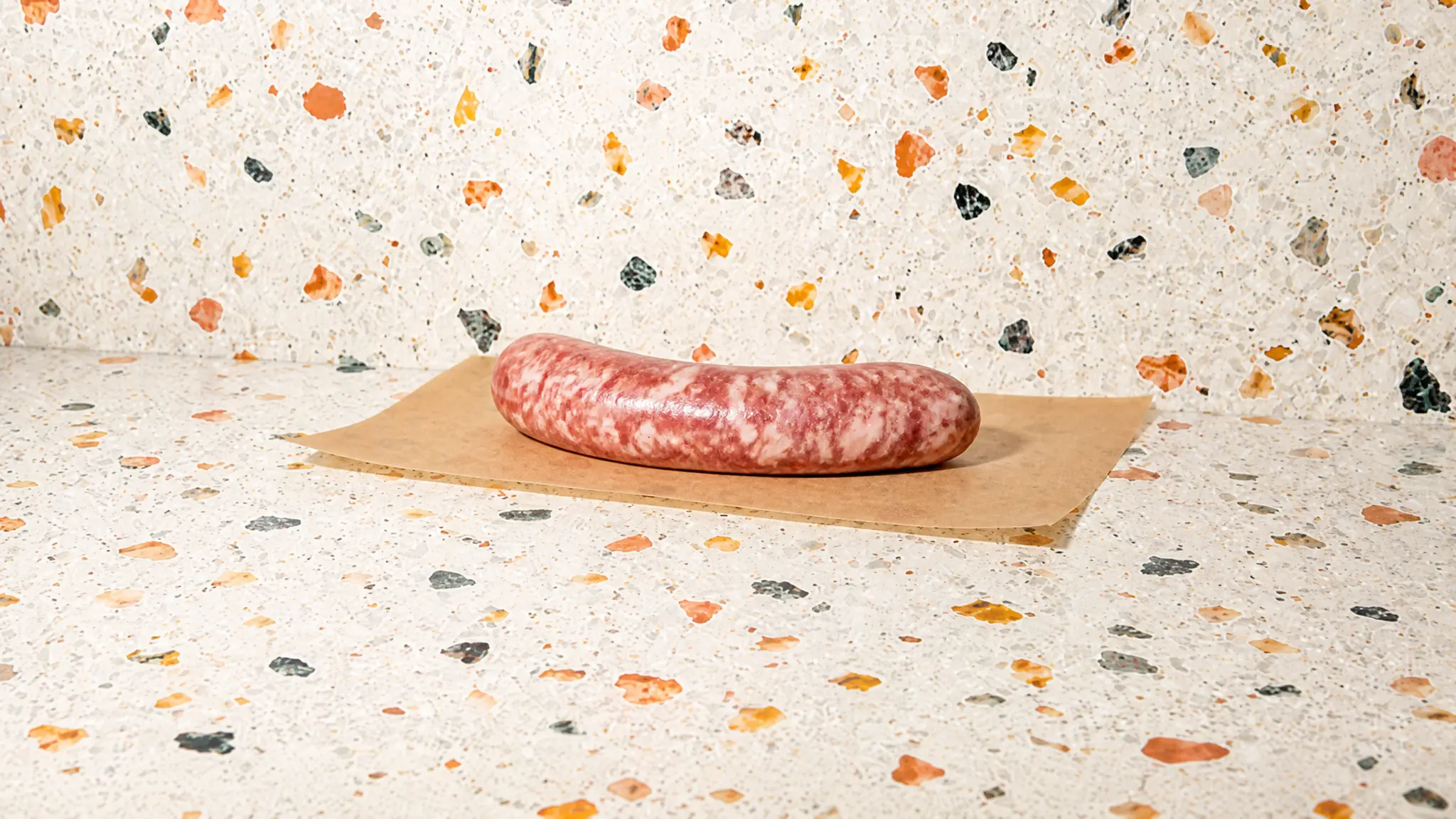

Sausage
Meat
Last updated July 5, 2026. The Tummi Food Team maintains this Can I Feed This safety guide guide. Supporting links appear in Sources when available.



Clinically reviewed by Andria Procopio and Arefa Mohamed
Direct answer
Can babies eat Sausage?
Yes, sausages can be introduced around 6 months if well-cooked, age-appropriate, and free of honey.
- Serve Age6+months
Most babies start solids around 6 months once they show readiness signs. Match the texture and serving size to your baby's skills.
- No Allergens
Sausage is not flagged as one of the major allergens tracked in this database. Still watch your baby closely when serving any new food.
- Choking Risk123454
Higher choking risk. Watch the prep steps closely, especially because this food can be small and round and slippery.
This guide is for everyday food prep questions. Ask your pediatrician about medical concerns, feeding delays, allergy plans, or serious reactions.
How Do You Serve Sausage?
How to serve Sausage to babies 6 months and older
- 1Crumble well-cooked sausage into very small pieces and stir into scoopable foods like mashed vegetables, porridge, or thick stews.
- 2Remove and discard the sausage casing before crumbling to reduce choking risk.
- 3Avoid slices or large pieces; instead offer a soft whole sausage patty at least 2 in (5 cm) across that the baby can mash with their gums.
- 4Check texture and temperature before serving, and supervise every bite to ensure safe eating.
How to serve Sausage to babies 12 months and older
- 1Remove the casing and crumble cooked sausage into small, soft pieces that are moist and easy to mash with your fingers.
- 2If you keep the casing, slice the sausage lengthwise and cut into long quartered sticks; trim tapered ends to reduce choking risk.
- 3For patties, serve only if they are soft—otherwise cut into thin strips or break into bite-sized pieces; avoid coin-shaped rounds.
- 4Cook sausage to an internal temperature of 160°F (71°C) and let cool slightly before serving. Test texture by squashing a piece between fingers to ensure it's soft enough.
How to serve Sausage to babies 18 months and older
- 1Cut cooked sausage lengthwise into long halves or quarters so pieces are narrow and easy to grasp.
- 2Remove the casing if your child struggles to bite or chew it.
- 3For ground sausage, crumble into sauces or make small, flat patties, then break into bite-size pieces for easy chewing.
- 4Avoid rounds, coin-shaped slices, or large chunks because these shapes can block the airway and increase choking risk.
- 5Serve warm (not hot) and supervise meals; have your child sit upright and take small bites.
How to serve Sausage: Varies
- 1Cook sausages until fully done and let cool slightly, then slice lengthwise into long, thin strips that are easy to grip and chew.
- 2Remove any tough casing and cut into matchstick-style pieces; for firmer dried sausages, slice very thinly so they’re not choking hazards.
- 3Serve only when the child is seated in a calm setting and give small portions. Close supervision is essential while they eat.
- 4Avoid adding honey, sticky glazes, or high-sodium toppings. Test one piece first to confirm the child can chew it safely.
Is Sausage a Common Allergen?
Many sausages are not inherently one of the top allergens, but processed sausages commonly contain or may be contaminated with milk, soy, wheat/gluten, and sulfites. Always read the product label for “contains” statements and advisory warnings, and avoid any sausage with listed allergens that affect your child. When possible choose single-ingredient fresh sausage (meat, salt, simple spices) or contact the manufacturer if you need clarification.
Is Sausage a Choking Hazard?
Elevated Choking Risk
Sausage is often cylindrical and can be firm and springy, which increases choking risk for babies. Always keep your baby seated and supervised within arm’s reach during meals, maintain a calm eating environment, and avoid offering it when caregivers can’t closely watch. Make sure you know the signs of choking and basic infant choking first aid so you can respond quickly if needed.
Have More Questions?
Yes, parents can store sausage in the refrigerator for up to 3-4 days if cooked and kept in an airtight container. For longer storage, freeze cooked sausage in portions for up to 2-3 months.
Yes, freezing pureed or chopped sausage in ice cube trays allows easy portioning and extended storage, typically up to 2-3 months in the freezer.
Yes, choosing organic sausage ensures fewer added preservatives or artificial ingredients, but always check labels for safety and ingredient transparency for baby food.
Yes, combining sausage with vegetables or other foods can introduce new flavors and nutrients to your baby’s diet, as long as the textures are age-appropriate and smooth enough for them to eat safely.
Yes, parents should serve appropriate portion sizes based on their baby’s age and appetite, starting with small pieces or bits and adjusting as they grow and develop better chewing skills.
Save Sausage to your food log
Track foods, reactions, and prep notes in Tummi when you want to keep your baby's feeding history in one place.
Sources
- Meat Allergy — American College of Allergy, Asthma & Immunology acaai.org
- Alpha-gal and Red Meat Allergy — American Academy of Allergy, Asthma & Immunology aaaai.org
- Meat allergy and allergens — Wilson J.M., Platts-Mills T. (2018), Molecular Immunology pmc.ncbi.nlm.nih.gov
What Other Meat Can Babies Eat?
See all →

Source-Linked Guidance
See the evidence behind the guide.
Food guides show direct links to public-health guidance and research when supporting references are available. Source inclusion does not imply endorsement.
 Centers for Disease Control and Prevention
Developmental milestones, nutrition guidelines, and allergen introduction timelines.
 American Academy of Pediatrics
Evidence-based feeding recommendations from the leading pediatric authority.
 National Institutes of Health
Peer-reviewed research on infant nutrition, allergies, and food safety.