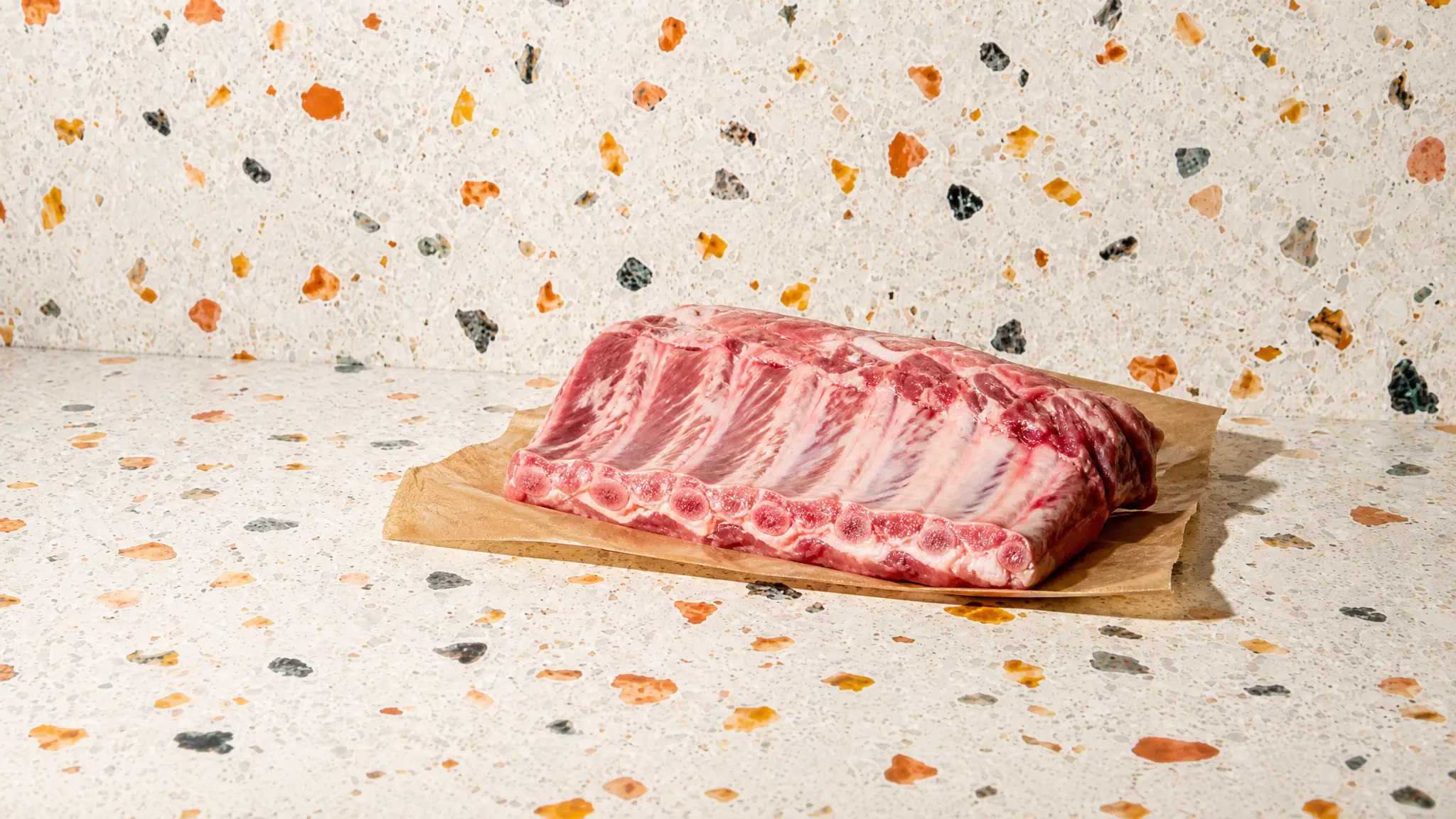
Ribs
Meat
Last updated July 5, 2026. The Tummi Food Team maintains this Can I Feed This safety guide guide. Supporting links appear in Sources when available.



Clinically reviewed by Andria Procopio and Arefa Mohamed
Direct answer
Can babies eat Ribs?
Yes, well-cooked ribs can be introduced around 6 months when babies are ready for solids, ensuring the meat is tender and bones are removed for safe eating.
- Serve Age6+months
Most babies start solids around 6 months once they show readiness signs. Match the texture and serving size to your baby's skills.
- No Allergens
Ribs is not flagged as one of the major allergens tracked in this database. Still watch your baby closely when serving any new food.
- Choking Risk123451
Lower choking risk when served in the right texture. Always supervise meals and adjust the shape for your baby.
This guide is for everyday food prep questions. Ask your pediatrician about medical concerns, feeding delays, allergy plans, or serious reactions.
How Do You Serve Ribs?
How to serve Ribs to babies 6 months and older
- 1Shred or finely chop very well‑cooked rib meat, removing all bone fragments, excess fat, and gristle, then mix into mashed vegetables, porridge, or another soft food so baby can scoop and manage the texture.
- 2Aim for small, soft pieces that loosely hold together; test by pressing a portion between your fingers—if it falls into soft strands, the texture is appropriate for self-feeding.
- 3Alternatively, offer one well‑cooked, non‑brittle rib bone as a supervised teether to encourage mouthing and early chewing—always check the bone for splintering or loose pieces and discard if any are present.
- 4Serve warm (not hot), supervise every bite closely, and remove the food once the meal is finished to avoid prolonged gnawing or choking risk.
How to serve Ribs to babies 9 months and older
- 1Slow-cook ribs until very tender, then remove all bones and cartilage and finely shred or chop the meat into small, flat pieces your baby can pick up.
- 2If offering a well-cooked rib bone as a teether, supervise closely and remove any loose fragments immediately; do not use bones that splinter.
- 3Trim away large chunks of fat and all gristle so pieces are soft and easy to chew.
- 4Serve plain or lightly seasoned — avoid sauces or seasonings that contain honey.
How to serve Ribs to babies 12 months and older
- 1Cook ribs until very tender so the meat pulls away easily with a fork.
- 2Decide how to serve based on your child’s chewing: leave meat on the bone for practice or remove most meat and cut into small, easy-to-chew strips if they struggle.
- 3Remove all loose pieces, large fat chunks, and gristle before serving—discard any detached fragments.
- 4Before offering any rib bone, gently bend it and run your fingers along the edges; if it cracks, splinters, or feels sharp, do not serve it.
Is Ribs a Common Allergen?
Plain pork or beef ribs are not common food allergens. However, BBQ sauces, marinades, and rubs commonly contain allergens—especially soy (soy sauce), wheat/gluten (some sauces), dairy (butter), sesame, or tree nuts—so always check ingredient lists or ask the cook. Cross-contamination can occur at grills or in restaurants. If your child has a specific allergy, verify sauces and preparation methods before serving.
Is Ribs a Choking Hazard?
Low Choking Risk
Ribs can pose a choking risk because small pieces of meat and fragments of bone may be difficult for young children to chew and can potentially obstruct the airway. Bones that are brittle enough to splinter increase that risk. Always stay within arm’s reach and watch closely while baby is handling or eating ribs, and make sure caregivers know the signs of choking and basic infant choking first aid.
Have More Questions?
Yes. Ribs, when well-cooked, can be introduced to babies around 6 months old as part of their solid food journey.
Yes. Ribs are a good source of iron, protein, and other nutrients beneficial for a baby's growth and brain development.
No. Beef, pork, and lamb are not common allergens, but prepare ribs carefully and watch for any reactions, especially if using seasonings or marinades that contain allergens.
Yes. Choking is a risk with ribs, especially if chunks are cut from the bone or meat is not tender enough; always serve ribs in an age-appropriate way and supervise eating.
It depends. Ribs can be a good family meal when properly prepared, but consider your baby's chewing ability and cut meat into very small, manageable pieces.
Save Ribs to your food log
Track foods, reactions, and prep notes in Tummi when you want to keep your baby's feeding history in one place.
Sources
- Alpha-gal and Red Meat Allergy (American Academy of Allergy, Asthma & Immunology) aaaai.org
- Meat Allergy (American College of Allergy, Asthma & Immunology) acaai.org
- Milk Allergy Diet (Johns Hopkins Medicine) hopkinsmedicine.org
- Meat allergy and allergens (Wilson, J.M.; Platts-Mills, T.A.E., 2018) — Molecular Immunology doi.org
What Other Meat Can Babies Eat?
See all →
Source-Linked Guidance
See the evidence behind the guide.
Food guides show direct links to public-health guidance and research when supporting references are available. Source inclusion does not imply endorsement.
 Centers for Disease Control and Prevention
Developmental milestones, nutrition guidelines, and allergen introduction timelines.
 American Academy of Pediatrics
Evidence-based feeding recommendations from the leading pediatric authority.
 National Institutes of Health
Peer-reviewed research on infant nutrition, allergies, and food safety.