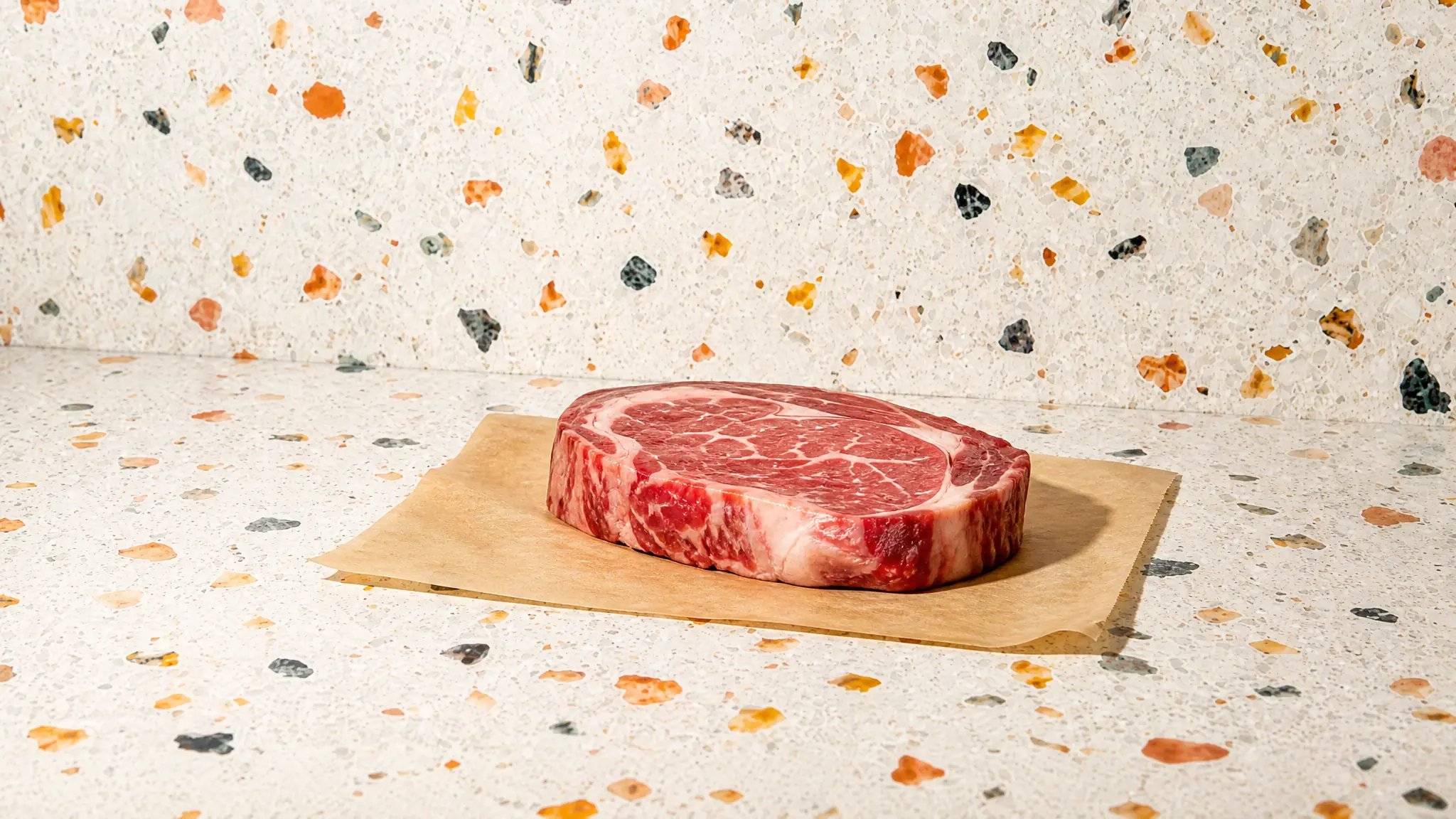
Steak
Meat
Last updated July 5, 2026. The Tummi Food Team maintains this Can I Feed This safety guide guide. Supporting links appear in Sources when available.



Clinically reviewed by Andria Procopio and Arefa Mohamed
Direct answer
Can babies eat Steak?
Yes, babies can eat small, tender, well-cooked, and cut into manageable pieces from around 6 months onwards.
- Serve Age6+months
Most babies start solids around 6 months once they show readiness signs. Match the texture and serving size to your baby's skills.
- No Allergens
Steak is not flagged as one of the major allergens tracked in this database. Still watch your baby closely when serving any new food.
- Choking Risk123453
Some choking risk. Use the prep section to change the size, shape, or texture before serving.
This guide is for everyday food prep questions. Ask your pediatrician about medical concerns, feeding delays, allergy plans, or serious reactions.
How Do You Serve Steak?
How to serve Steak to babies 6 months and older
- 1Offer well-cooked steak as a long strip or on the bone, and remove any loose chunks and excess fat before serving.
- 2Cut the meat into strips and then into pieces about the width of two adult fingers pressed together so the baby can latch, suck, and gnaw safely.
- 3Stay within arm’s reach and supervise closely while the baby eats; sit facing them and minimize distractions.
- 4If a piece is too large, encourage the baby to spit it out and gently remove it. Do not put your fingers into the baby’s mouth.
How to serve Steak to babies 9 months and older
- 1Finely chop or shred steak into small, soft pieces so they are easy to pick up and chew.
- 2If your child has trouble picking up tiny bits, fold minced steak into scoopable foods like mashed potatoes, polenta, or mashed root vegetables for easier handling.
- 3Warm and test the texture—make sure the meat flakes or mashes easily and is tender enough to chew.
- 4Remove visible fat, gristle, or long strands and serve only small spoonfuls or hand-sized pieces to reduce choking risk.
- 5Always supervise closely, encourage small bites and chewing. Stay within arm's reach to intervene quickly if needed.
How to serve Steak to babies 18 months and older
- 1Cut steak into small, thin strips or bite-sized cubes about 1/2 inch (1–1.5 cm) to reduce choking risk and make pieces easy to chew.
- 2For utensil practice, preload a single strip or cube on a fork so the child takes one piece at a time and eats more slowly.
- 3Offer slightly larger strips occasionally for biting and tearing practice. Stay within arm’s reach and supervise closely while they try these.
- 4Slice across the grain and cook until tender, removing gristle and large fat pieces so fibers are easier to chew.
Is Steak a Common Allergen?
Plain steak is not one of the major food allergens, so unseasoned beef is unlikely to trigger common food-allergy reactions in most children. Rarely, some people do have meat (beef) allergies, and children with cow’s‑milk allergy can occasionally react to beef. More commonly, risk comes from cross-contact or added ingredients—marinades, rubs, sauces, or finishing butter—that may contain milk, soy, wheat (gluten), eggs, nuts, or sesame. When serving steak to a child with allergies, confirm how it’s prepared and avoid shared utensils or surfaces; ask restaurants about ingredients.
Is Steak a Choking Hazard?
Moderate Choking Risk
Steak is firm and can be a significant choking hazard for babies because tough, chewy pieces can be hard to bite and swallow. Parents should stay within arm’s reach and closely supervise meals, watching for signs of distress such as persistent coughing, gagging, difficulty breathing, or trouble swallowing. If a piece appears lodged or the child cannot clear it, seek emergency help immediately.
Have More Questions?
Yes. When properly cooked and served in small, manageable pieces, steak can be introduced to babies as young as 6 months, especially if they are already eating solids.
Yes. Steak is a good source of iron and protein, which support rapid growth and brain development in babies and toddlers.
No. Beef is not a common allergen, but some rare allergies exist. Ensure your baby shows no signs of allergy when trying it for the first time.
Yes. Steak can be challenging to chew and swallow for babies, increasing the choking risk. Serve it in small, tender pieces suitable for your child's age and chewing ability.
It depends. Cooking steak to an internal temperature of at least 145°F (63°C) and allowing it to rest ensures safety, and serving it in age-appropriate, soft, small pieces is recommended.
Save Steak to your food log
Track foods, reactions, and prep notes in Tummi when you want to keep your baby's feeding history in one place.
Sources
- Alpha-gal and Red Meat Allergy — American Academy of Allergy, Asthma & Immunology aaaai.org
- Meat Allergy — American College of Allergy, Asthma & Immunology (ACAAI) acaai.org
- Milk Allergy Diet — Johns Hopkins Medicine hopkinsmedicine.org
- Meat allergy and allergens — Wilson & Platts‑Mills (2018), Molecular Immunology doi.org
- Meat allergy — Restani et al. (2009), Current Opinion in Allergy and Clinical Immunology pubmed.ncbi.nlm.nih.gov
- Safe Minimum Internal Temperature Chart — U.S. Department of Agriculture (FSIS) fsis.usda.gov
What Other Meat Can Babies Eat?
See all →

Source-Linked Guidance
See the evidence behind the guide.
Food guides show direct links to public-health guidance and research when supporting references are available. Source inclusion does not imply endorsement.
 Centers for Disease Control and Prevention
Developmental milestones, nutrition guidelines, and allergen introduction timelines.
 American Academy of Pediatrics
Evidence-based feeding recommendations from the leading pediatric authority.
 National Institutes of Health
Peer-reviewed research on infant nutrition, allergies, and food safety.